CGM Global Summit 2025 – Reflections Through a Banker’s Lens (Series 7/9)
ESG, Investors & Impact: Staying on Course - Chitra Hepburn - Sustainability and Climate Finance Leader, moderated by Jenifer Thien, the session unpacked how ESG performance is shaping investor confidence and long-term value.
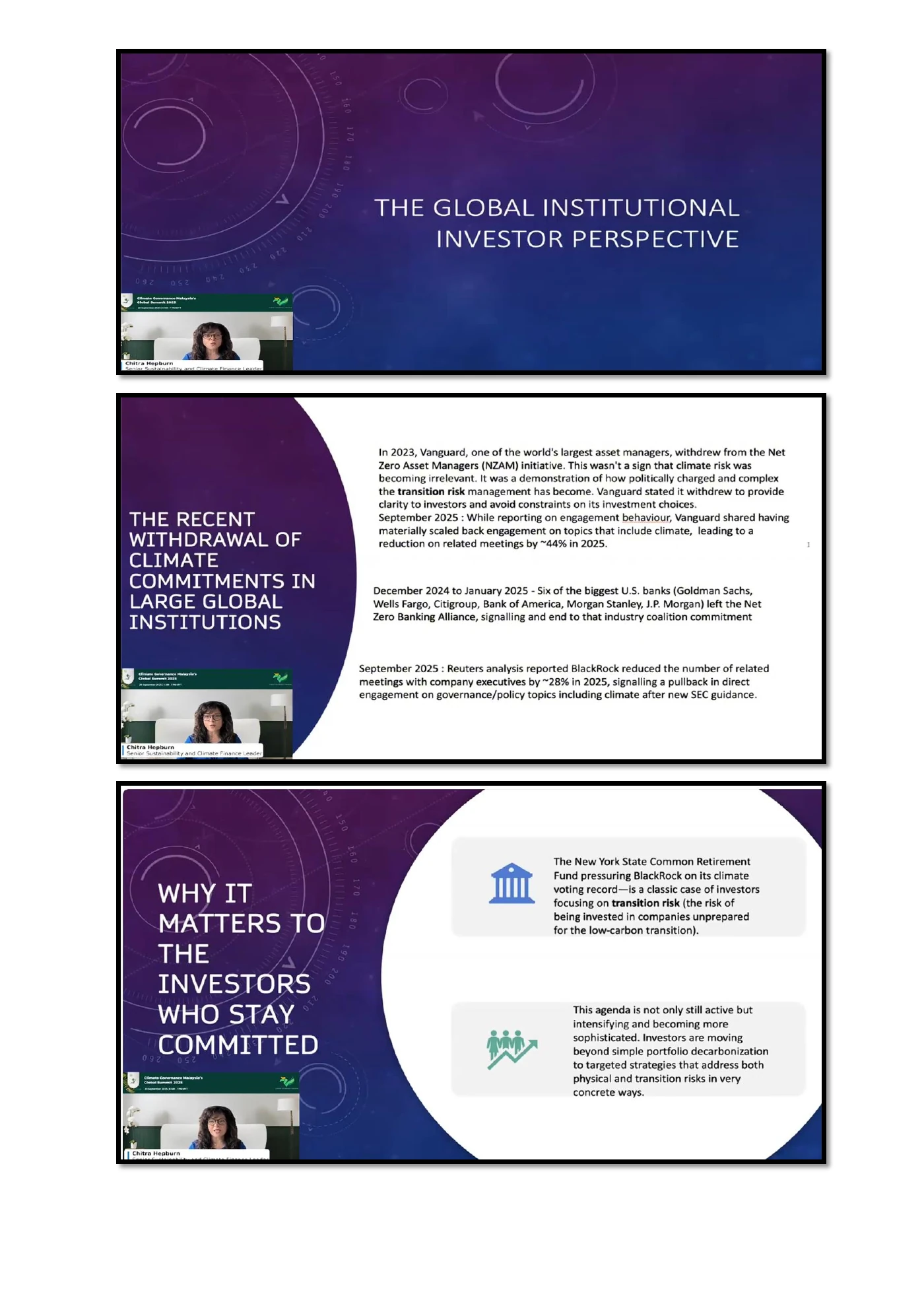
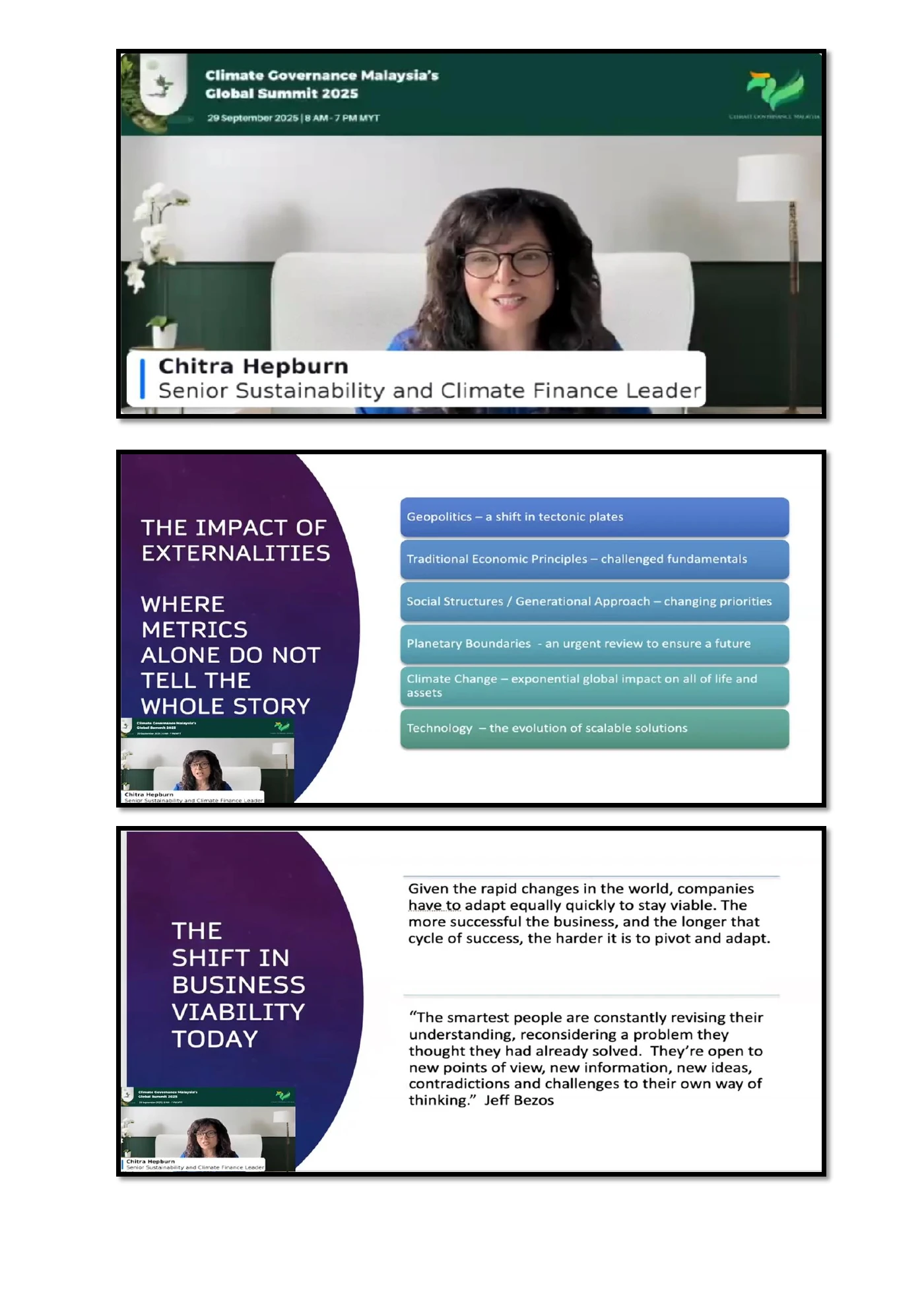
1️⃣ ESG in Transition Chitra reminded that ESG isn’t fading, it’s maturing. While some global funds have stepped back from net-zero alliances, others are doubling down with stricter expectations. Investors are no longer satisfied with glossy reports; they now demand credible transition plans, board-level literacy, and evidence of execution.
“The focus is shifting from what is reported to who decides, and how credible those decisions are.”
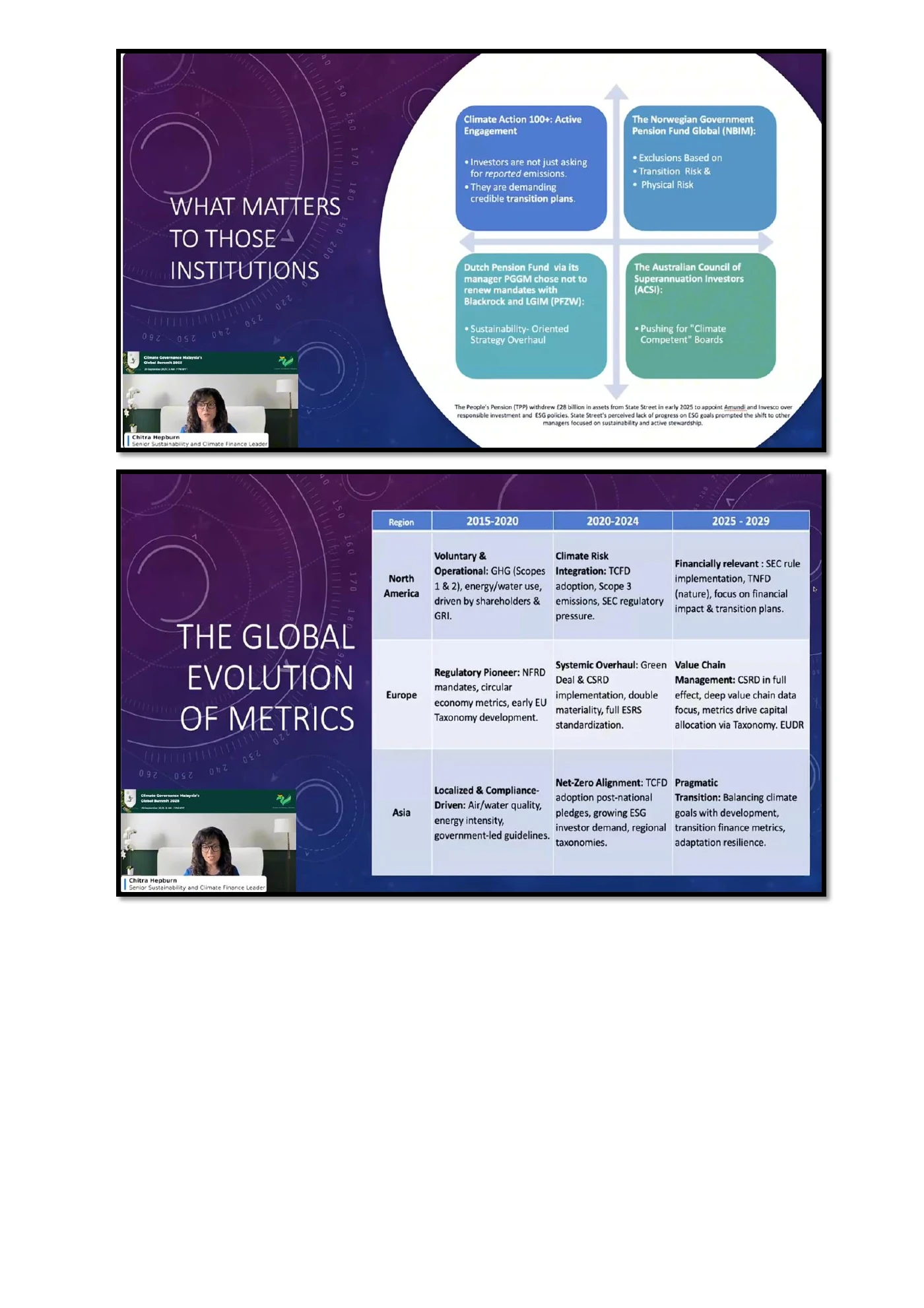
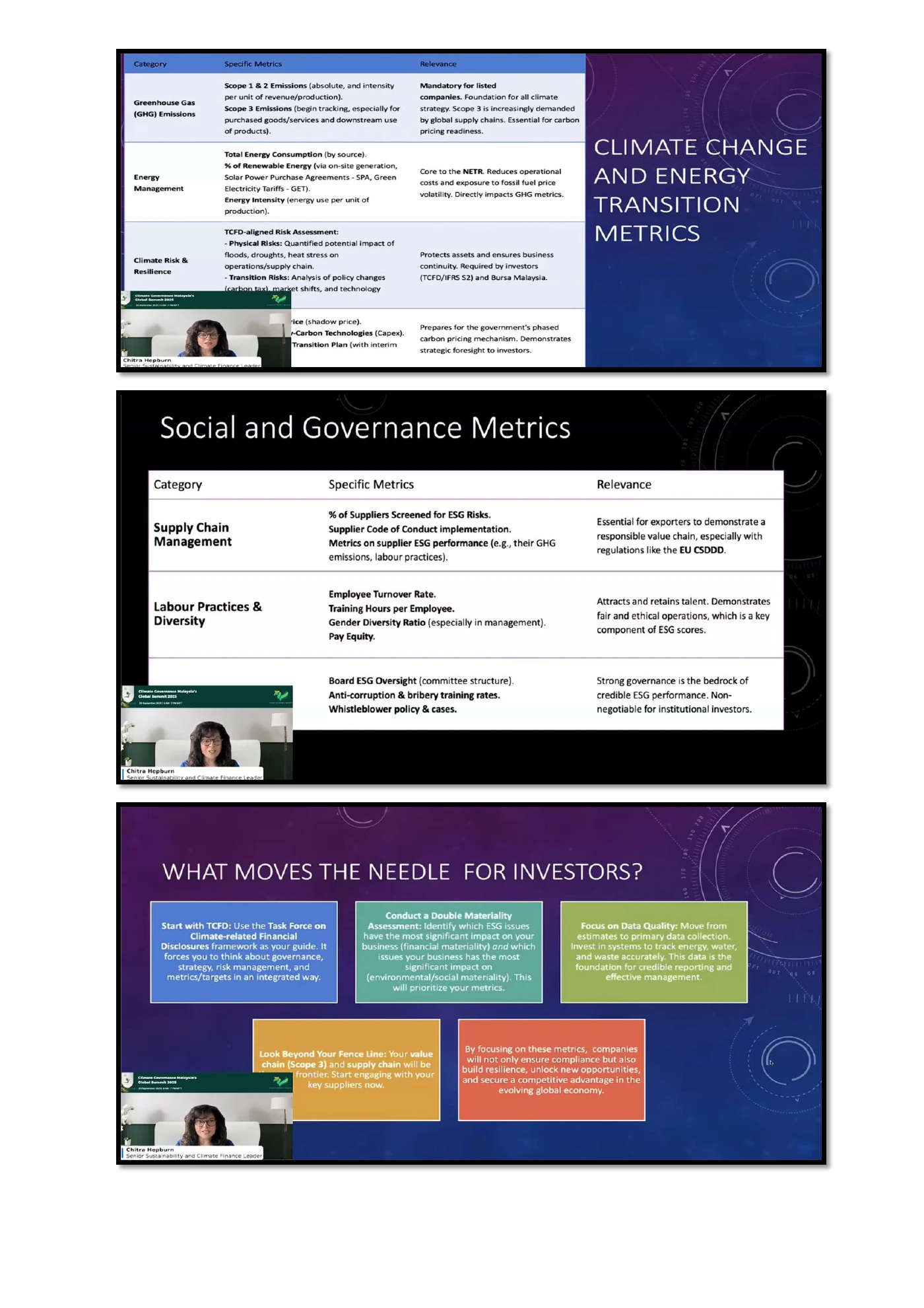
2️⃣ Data, Metrics & the Asian Lens Metrics remain uneven globally: Europe is policy-heavy, North America is polarized, and Asia is taking a pragmatic, transition-based approach- balancing growth and climate goals. For companies in this region, baseline tracking and measurable progress are critical to stay investable. Diversity and inclusion are also economic necessities, not just social commitments, especially in aging economies like Japan and Korea.
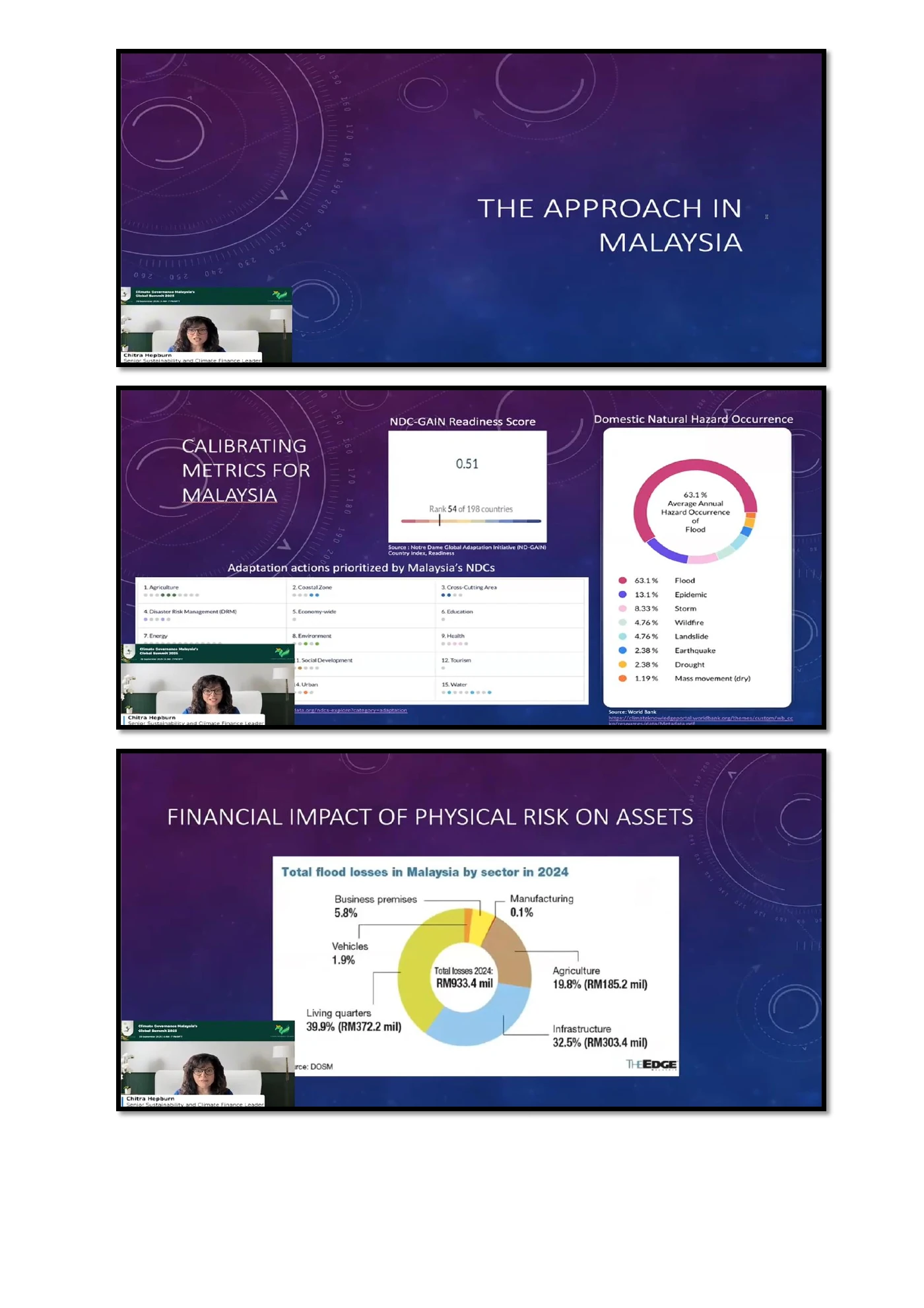
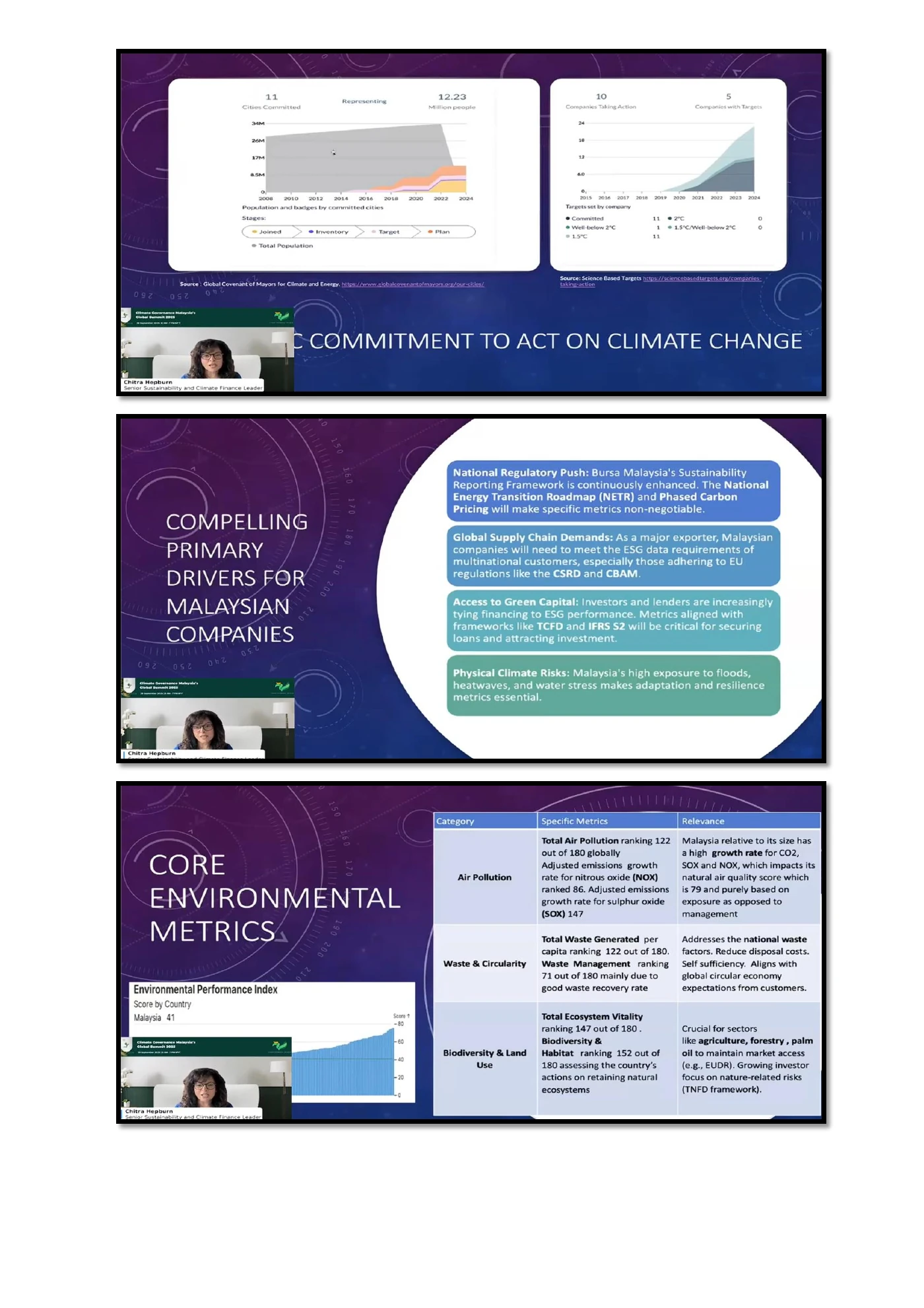
3️⃣ Malaysia’s Readiness & Gaps Malaysia ranks 54th out of 198 countries in the Global Adaptation Index - reflecting readiness, but with clear risks. 63% of disasters stem from floods, threatening long-term GDP if unmanaged. While frameworks like the National Energy Transition Roadmap and Bursa’s sustainability reporting are progress markers, fewer than 10 companies have active Science-Based Targets - a gap we must close quickly.
4️⃣ Looking Forward Chitra highlighted two underutilized levers: human capital and data credibility. Both are now essential for investor trust, adaptation and the flow of climate finance.
My Reflection Chitra Hepburn’s session made me reflect on how far we’ve come and how much further we must go in turning ESG from reporting into real action. As a banker, I could relate deeply to her point: ESG is no longer about what we report, but how credible our decisions are.
The message that struck me most was about Human Capital. Behind every sustainability strategy are people - the Relationship Managers, Credit Officers, and Risk Teams - translating ESG principles into real lending conversations. This is where change truly happens. If they see ESG as a compliance exercise, progress will be slow. But if they understand it as part of building trust and long-term value, transformation becomes possible.
As I continue sharing and training teams on CCPT and VBIAF, this session reinforced my belief that ESG and climate integration in finance is not a trend, it’s a transition. It’s about building a banking ecosystem that values responsibility as much as results.
Sustainability is not something we do after business; it is the business. It’s about earning trust — one decision, one disclosure, and one conversation at a time. Climate Governance Malaysia