Document & post

CGM Global Summit FY25 - Dr Ali Izadi-Najafabadi

Captured 13 August 2026 · LinkedIn displayed “9mo •” at capture. Original publication date unverified.

Read the original LinkedIn post Jump to original text ↓
Governance & leadership

Original illustrated document

20 pages to explore

Download PDF (5.8 MB)
Page 1 of CGM Global Summit FY25 - Dr Ali Izadi-Najafabadi. Read the extracted page text below or open the original PDF.

Page 1 of 20

Read the document text, page by page

Automatically extracted from the original PDF. Reading order and symbols may differ from the designed pages; the PDF remains the authoritative visual version.

Page 1

No selectable text was available on this page. View the page image or original document.

Page 2

No selectable text was available on this page. View the page image or original document.

Page 3

No selectable text was available on this page. View the page image or original document.

Page 4

No selectable text was available on this page. View the page image or original document.

Page 5

No selectable text was available on this page. View the page image or original document.

Page 6

No selectable text was available on this page. View the page image or original document.

Page 7

No selectable text was available on this page. View the page image or original document.

Page 8

No selectable text was available on this page. View the page image or original document.

Page 9

No selectable text was available on this page. View the page image or original document.

Page 10

No selectable text was available on this page. View the page image or original document.

Page 11

No selectable text was available on this page. View the page image or original document.

Page 12

No selectable text was available on this page. View the page image or original document.

Page 13

No selectable text was available on this page. View the page image or original document.

Page 14

No selectable text was available on this page. View the page image or original document.

Page 15

No selectable text was available on this page. View the page image or original document.

Page 16

No selectable text was available on this page. View the page image or original document.

Page 17

No selectable text was available on this page. View the page image or original document.

Page 18

No selectable text was available on this page. View the page image or original document.

Page 19

No selectable text was available on this page. View the page image or original document.

Page 20

No selectable text was available on this page. View the page image or original document.

Open the complete original PDF

In Yasotha’s words

Original post

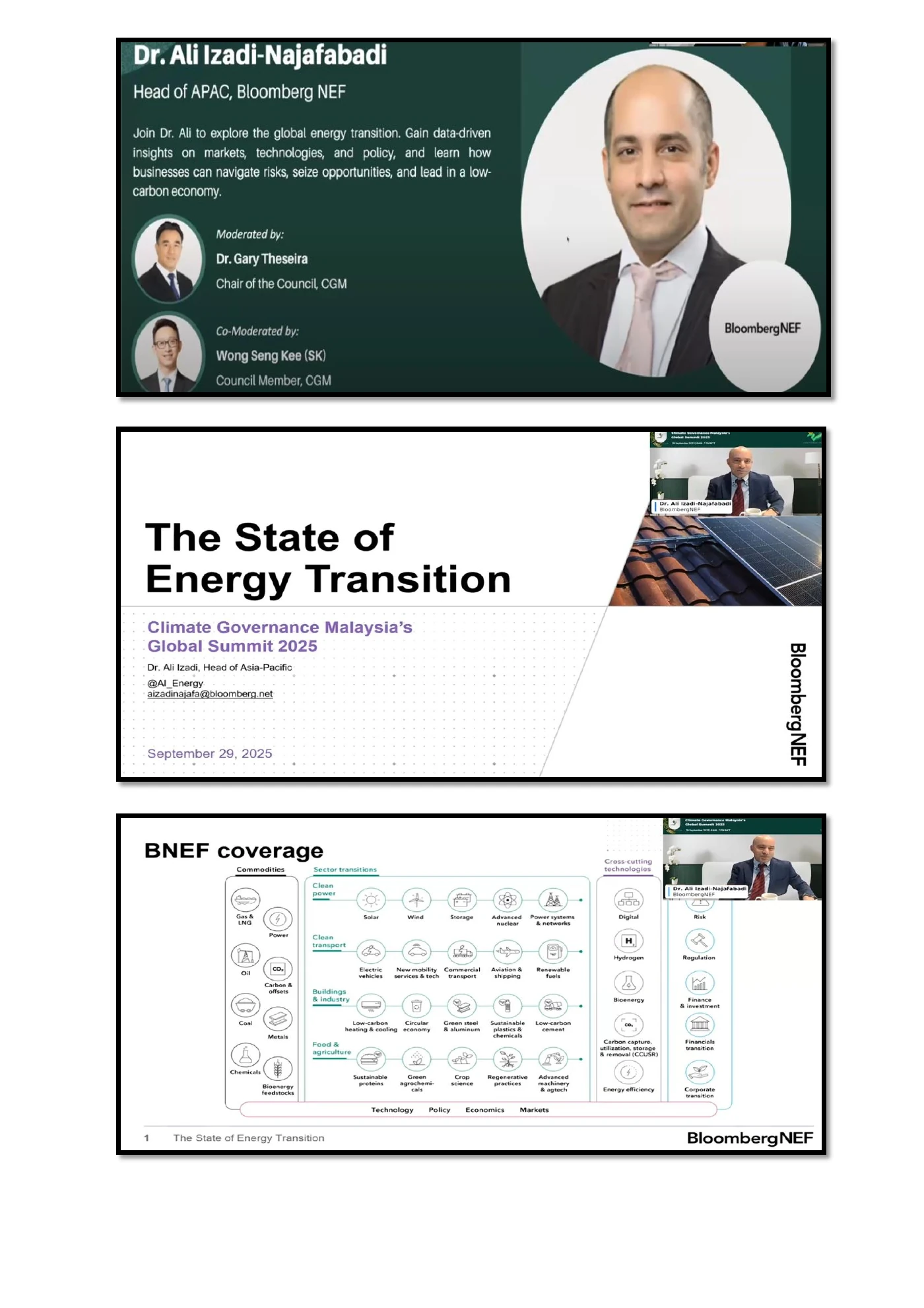
CGM Global Summit 2025 – Reflections Through a Banker’s Lens (Series 3/9)

“The Energy Transition Imperative” — Dr. Ali Izadi-Najafabadi, BloombergNEF moderated by Dr Gary Theseira and Seng Kee Wong

A data-driven look at the clean-energy transition—linking global power shifts, AI-driven demand, and Malaysia’s NETR journey.

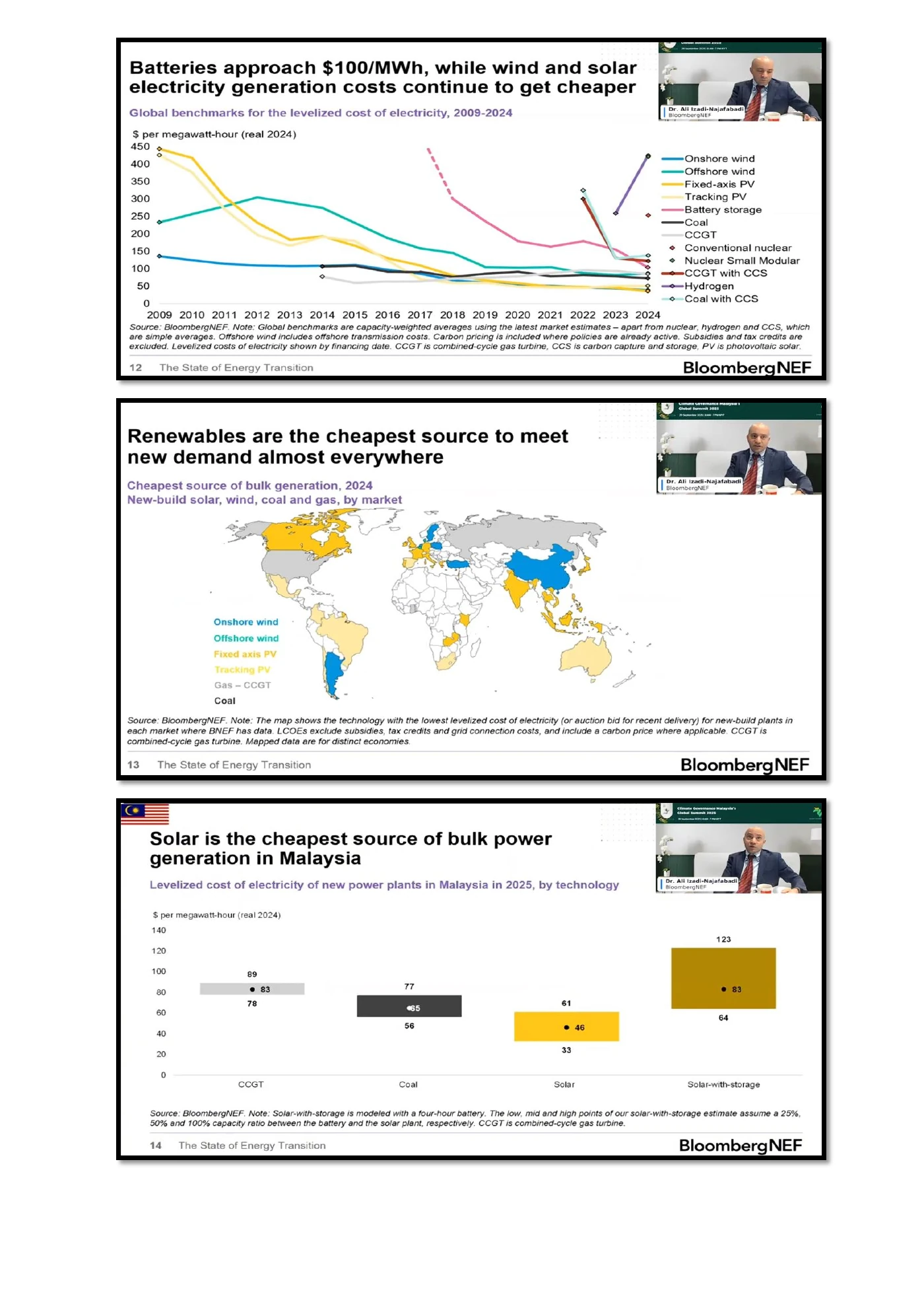
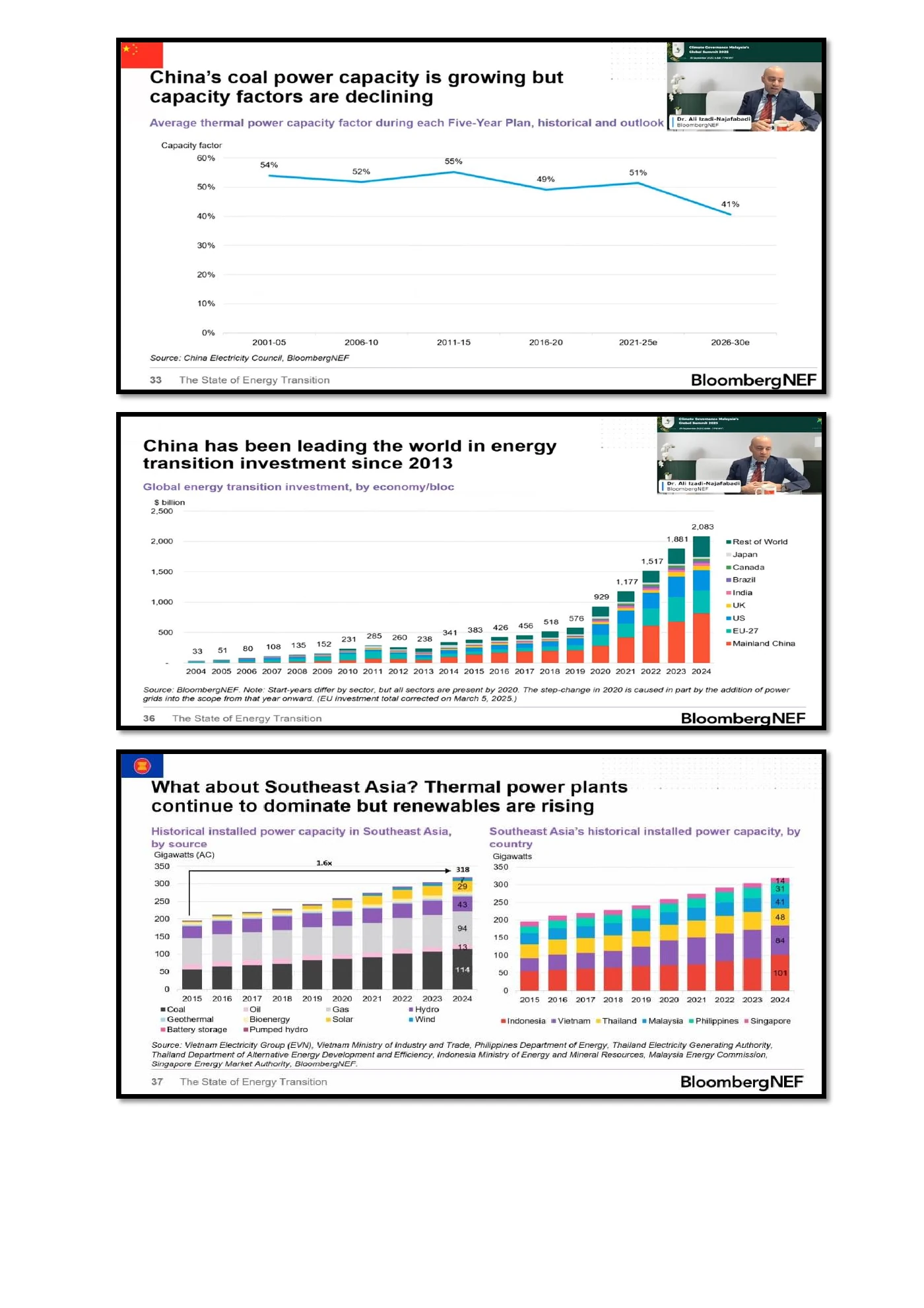
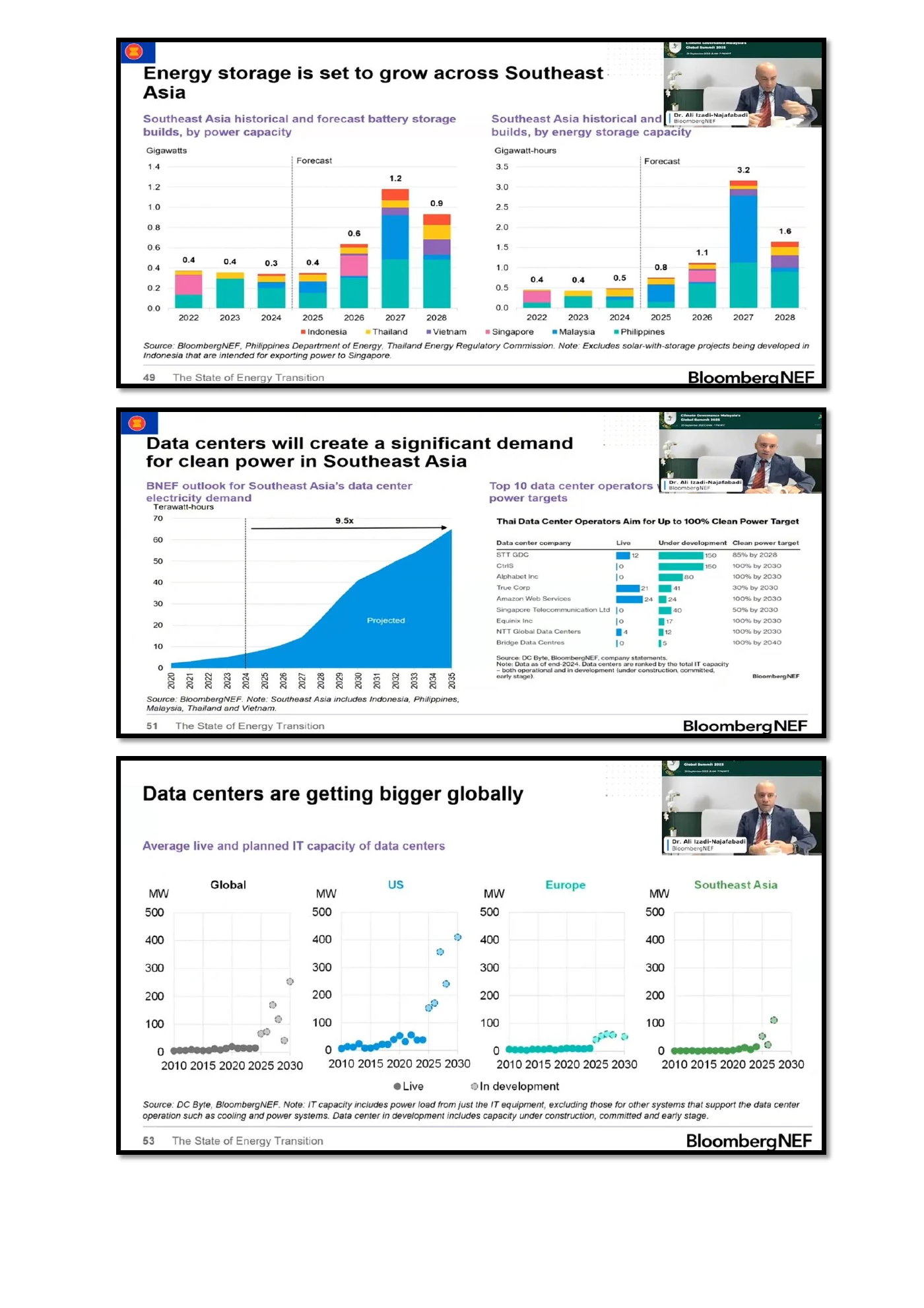
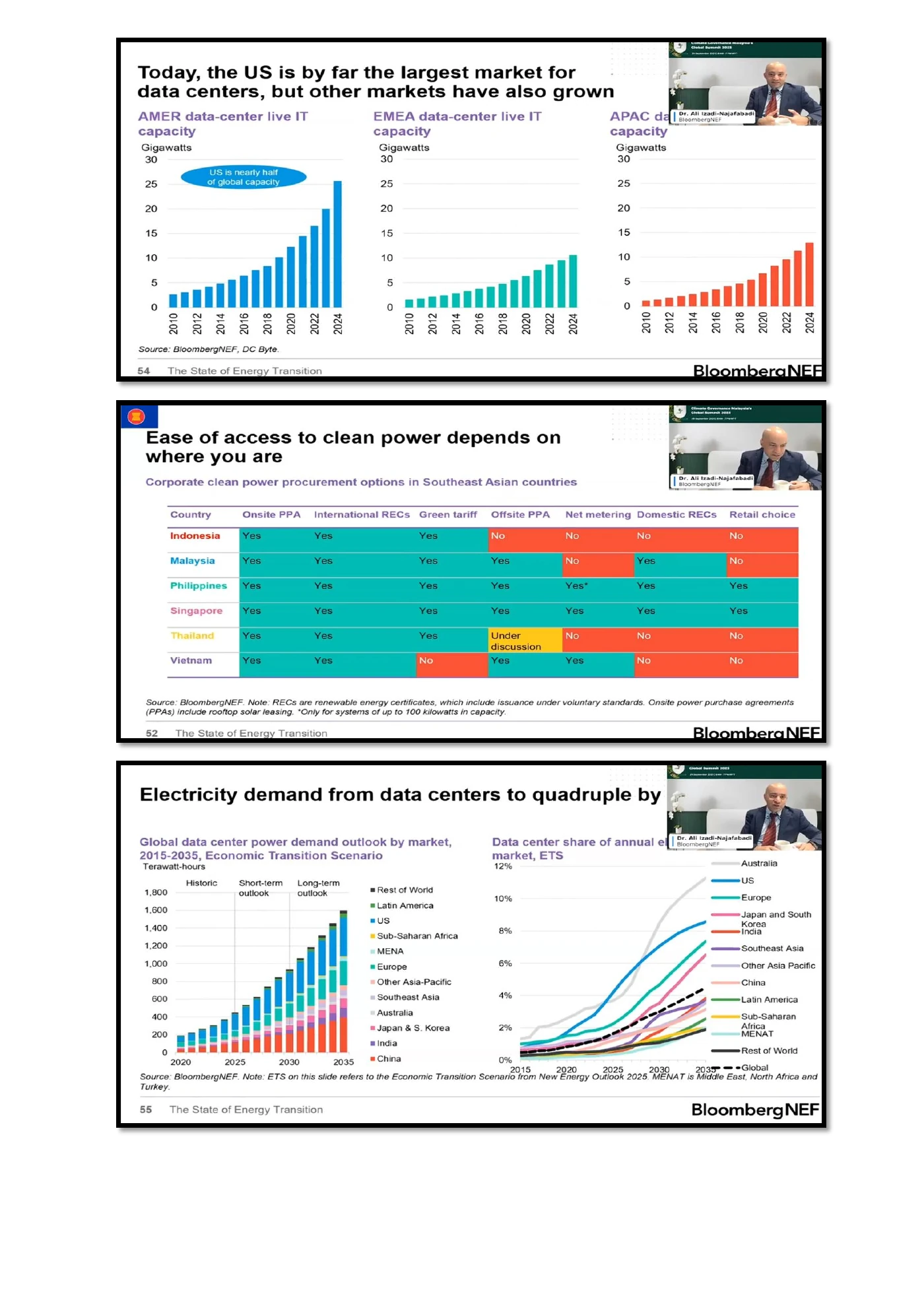
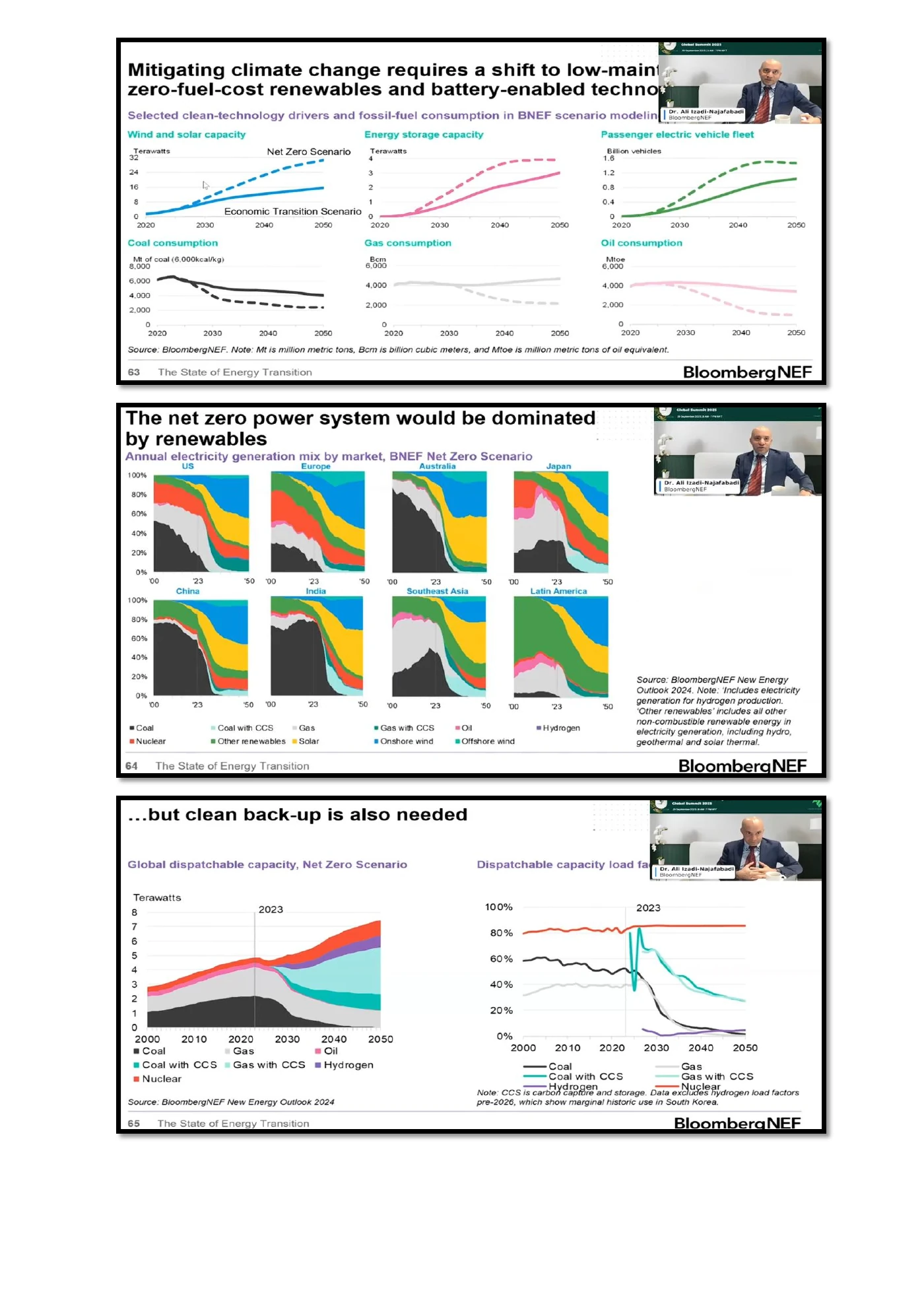
1️⃣ Global Energy Landscape 📌 AI & Data Centers as a New Demand Driver: Global data-center capacity has doubled since 2014 and may reach ~254 MW per site by 2030. They already consume ≈ 400 TWh — comparable to Saudi Arabia — and could quadruple by 2035, led by the US and Asia-Pacific.

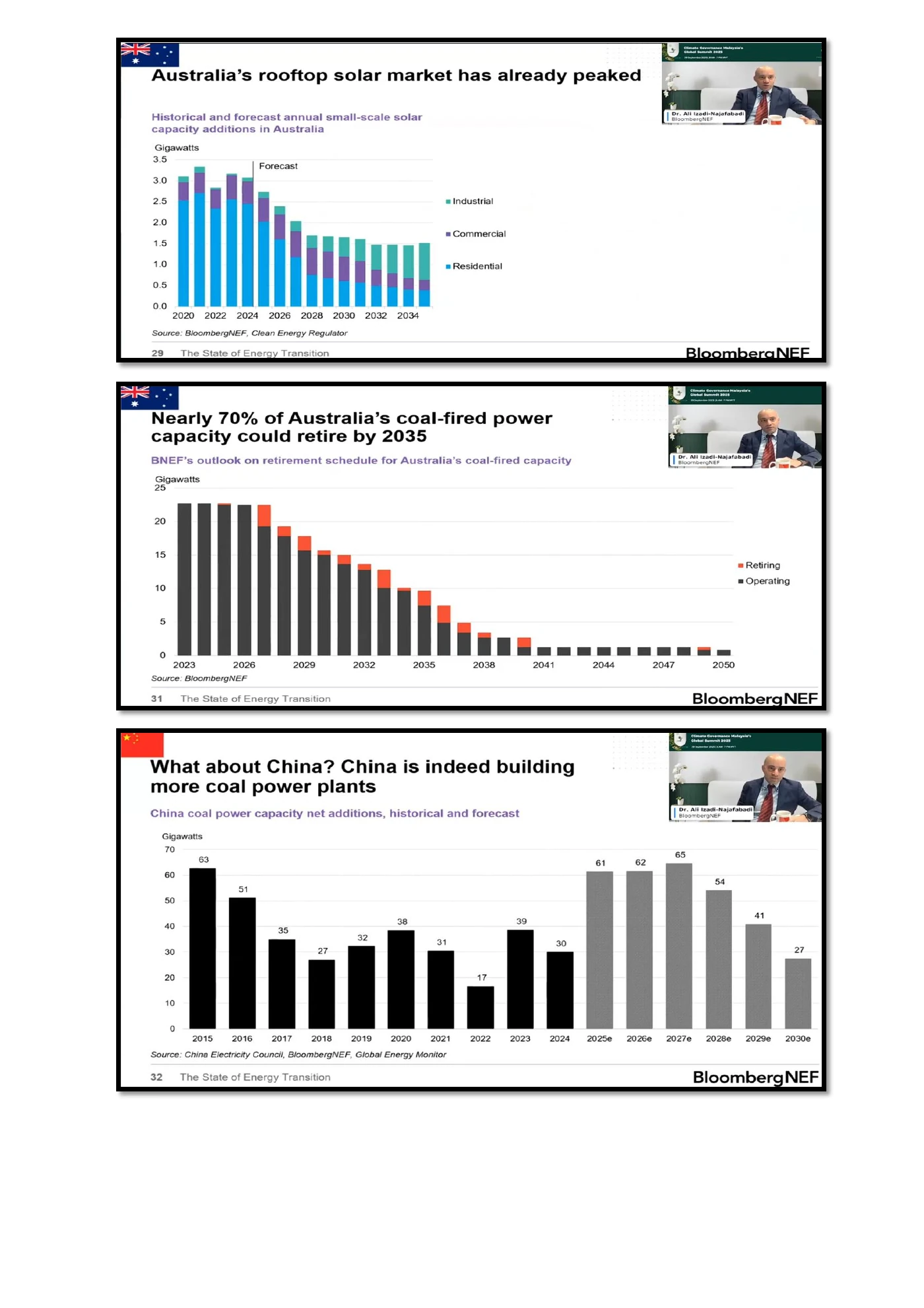
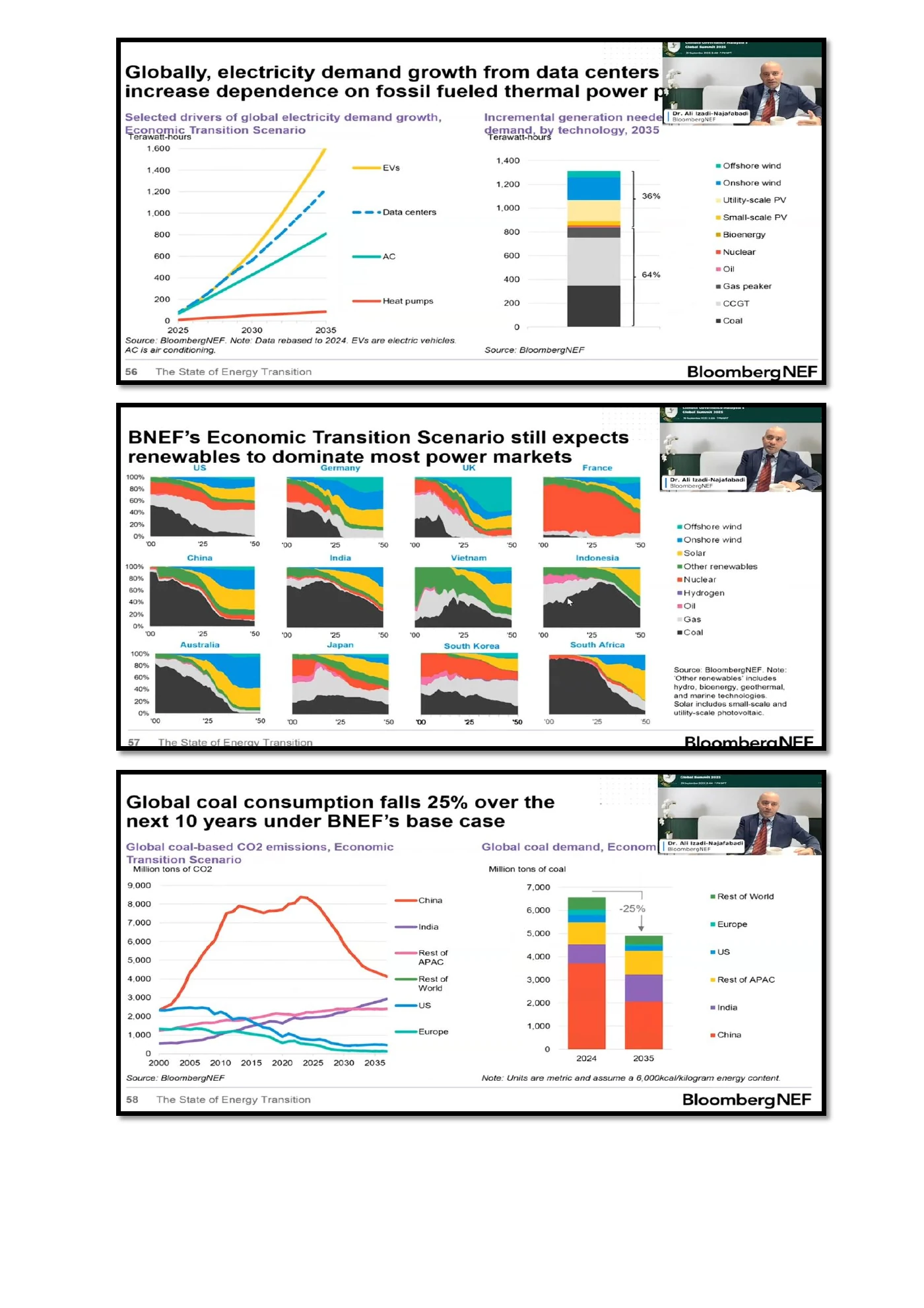
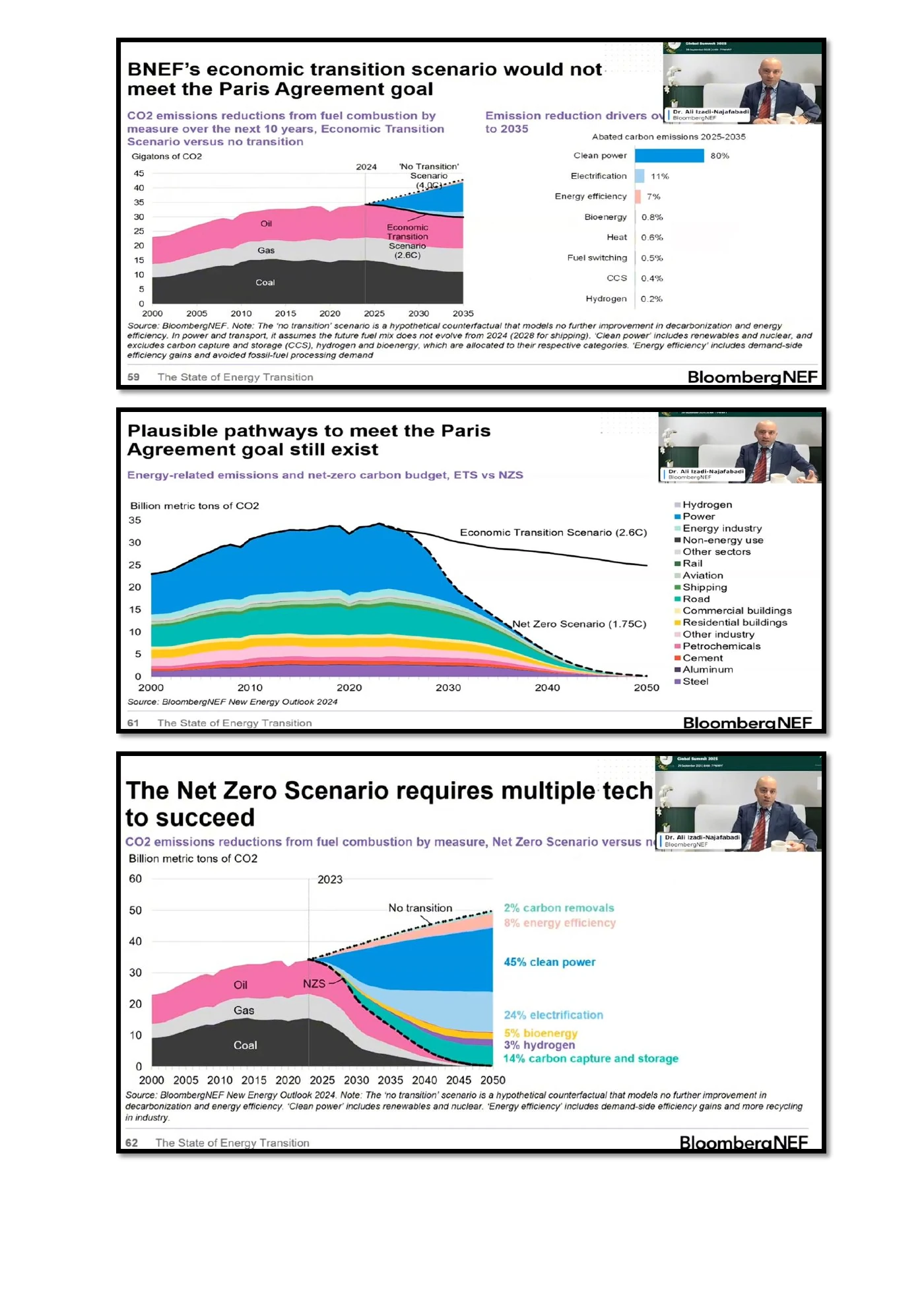
📌 Emission Challenge: Without stronger policy action, thermal generation will still dominate, pushing warming toward ~2.6 °C.

📌 Main Decarbonisation Levers: Clean power + electrification + clean fuels can deliver > 75 % of needed emission cuts. Wind, solar, storage and EV adoption must accelerate beyond current trends.

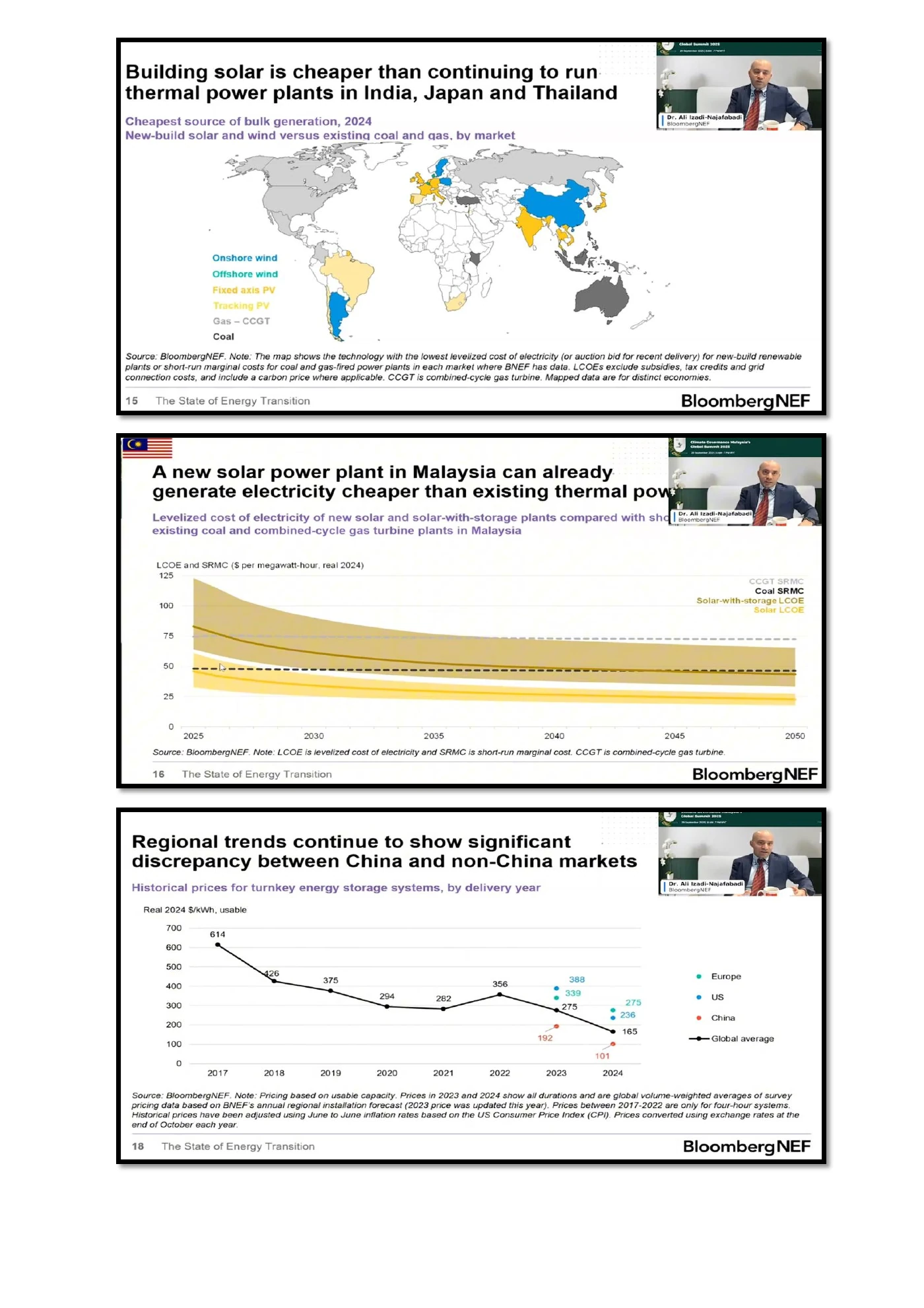
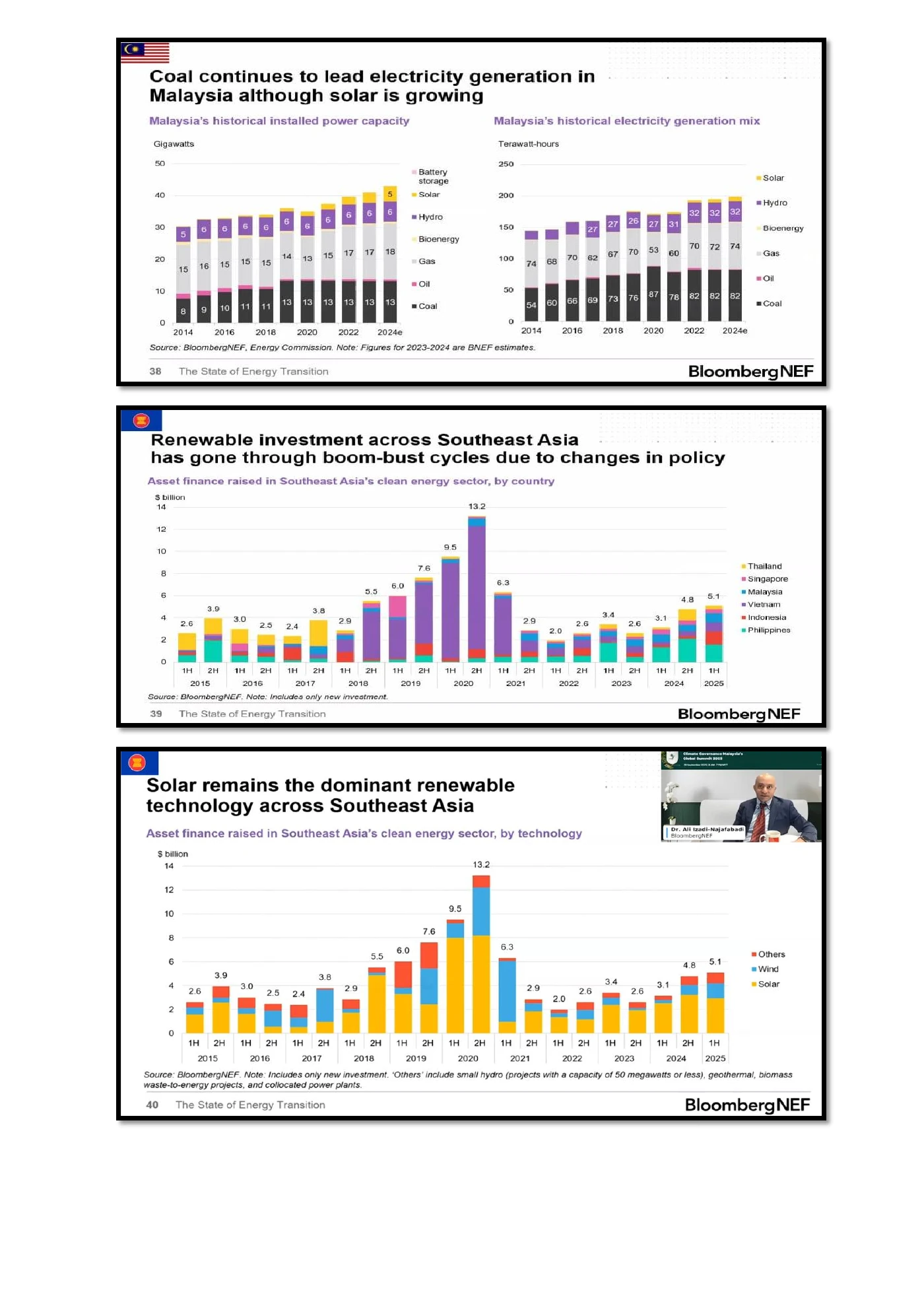
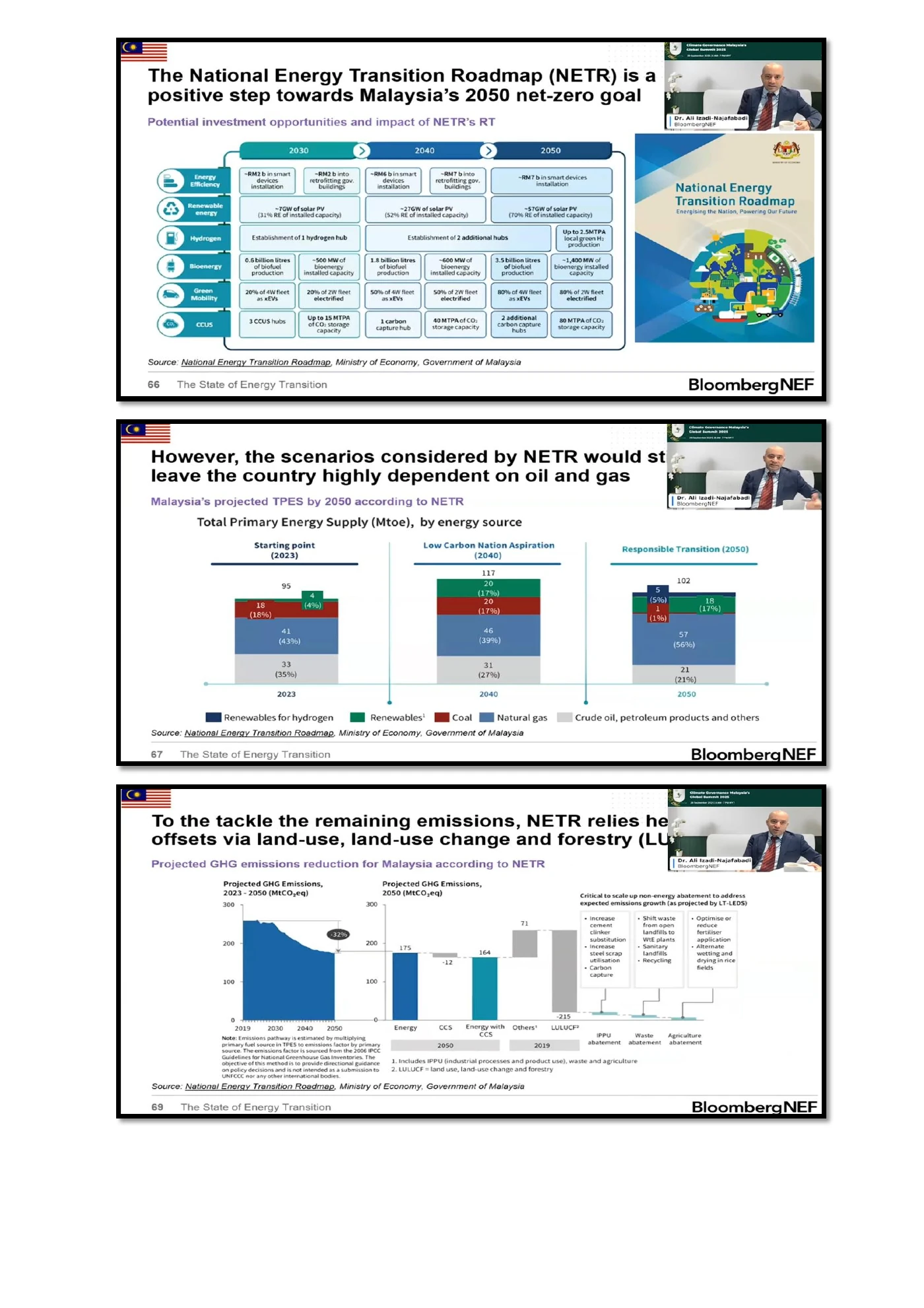
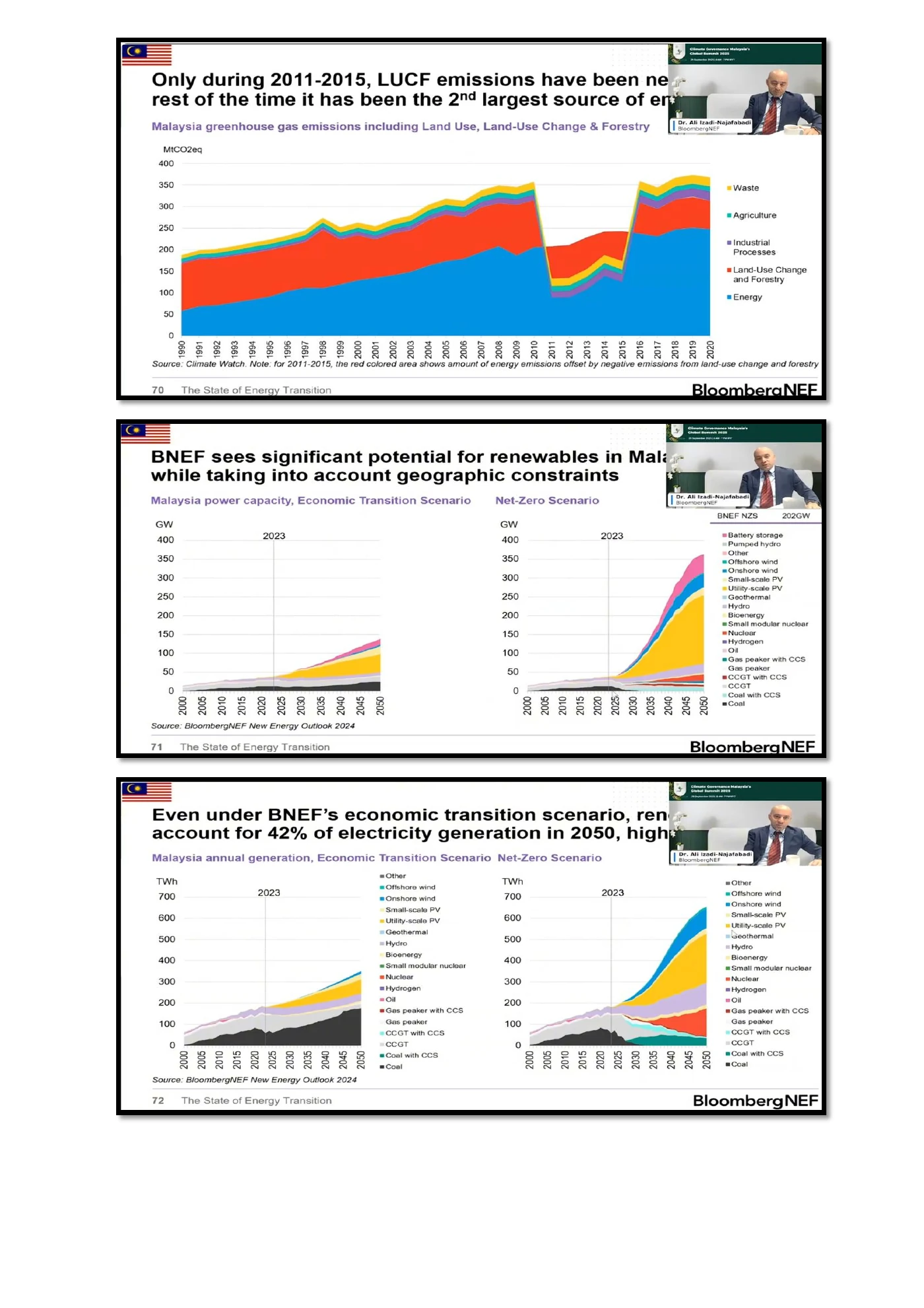
2️⃣ Malaysia’s Transition Outlook 📌 Positive Momentum: JC3 and the NETR mark solid starts, but Malaysia still relies heavily on gas and offsets from land use and forestry.

📌 Offset Risk: Over-reliance is unsustainable — Malaysia’s LULUCF sector has been a carbon sink only briefly.

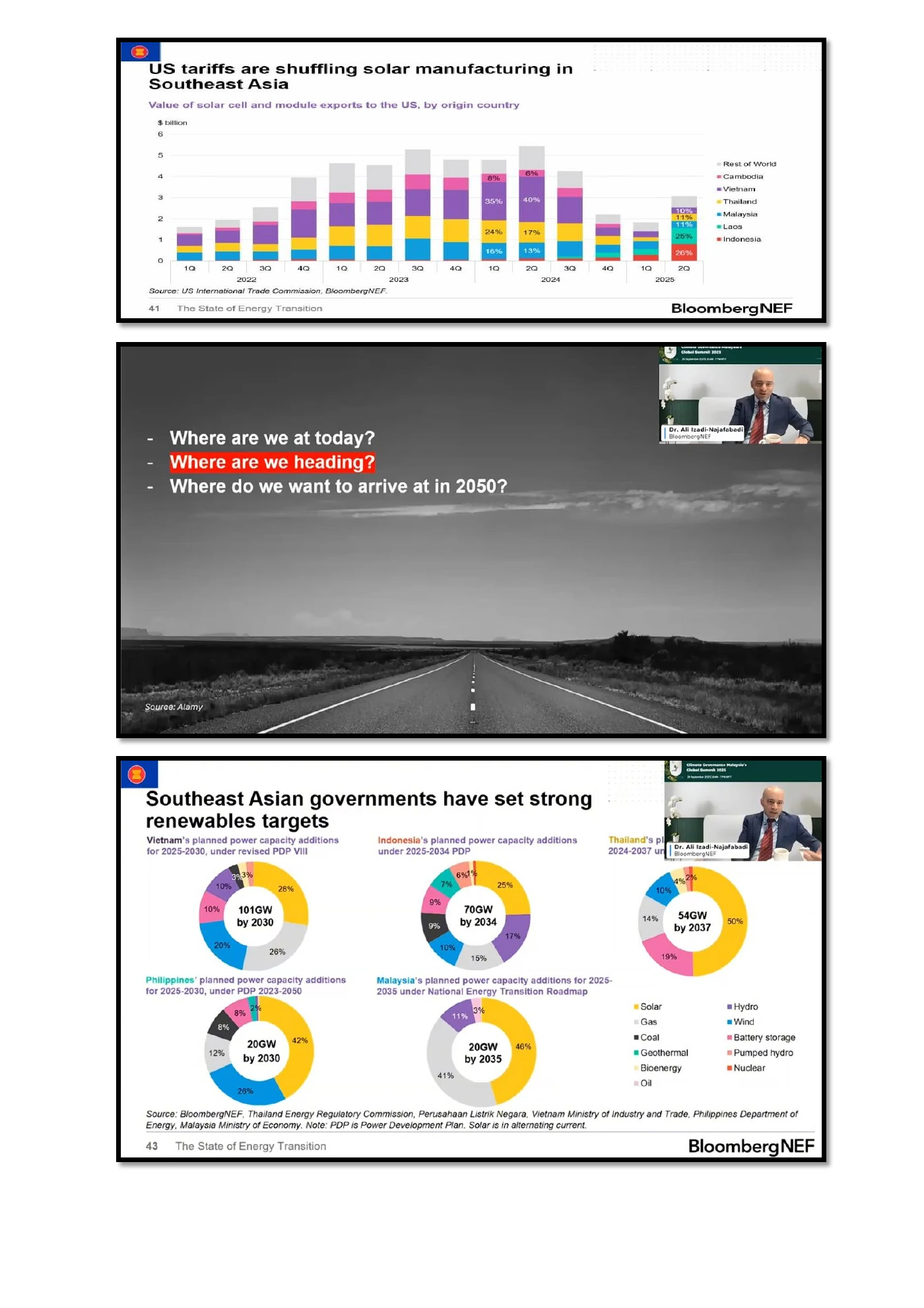
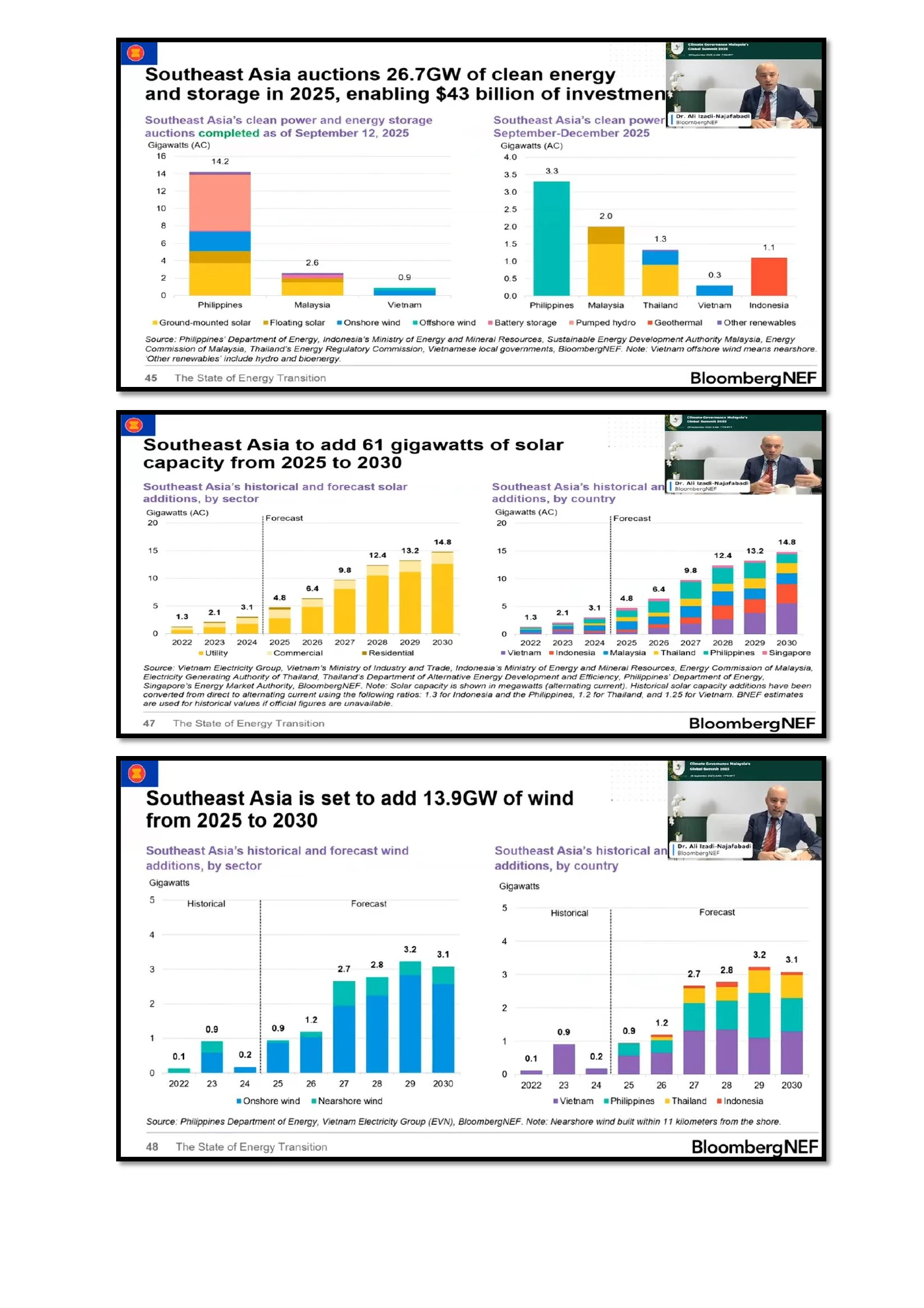
📌 What Net Zero Needs: Rapid solar and battery growth, possible small-scale nuclear, and regional grid interconnections.

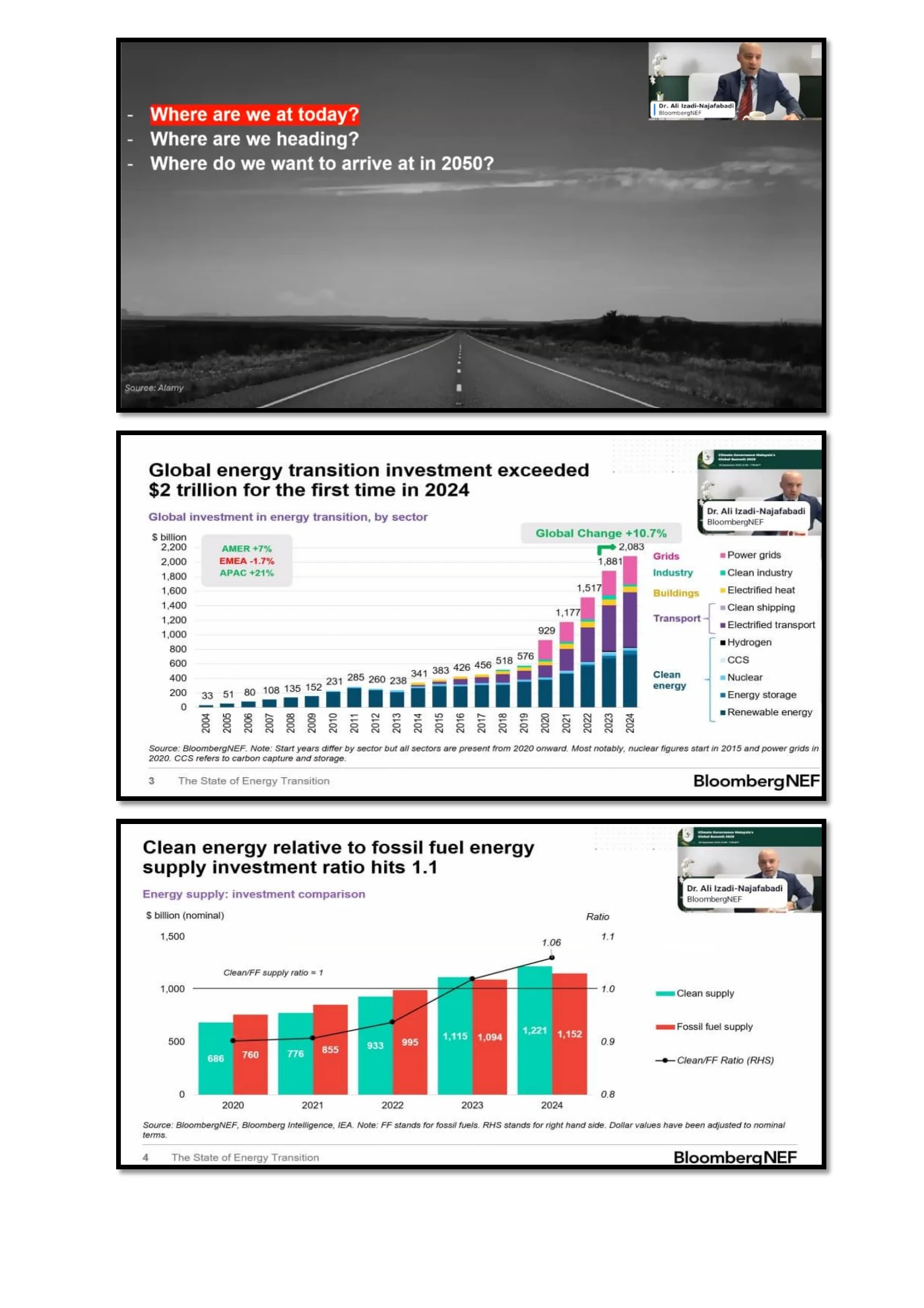
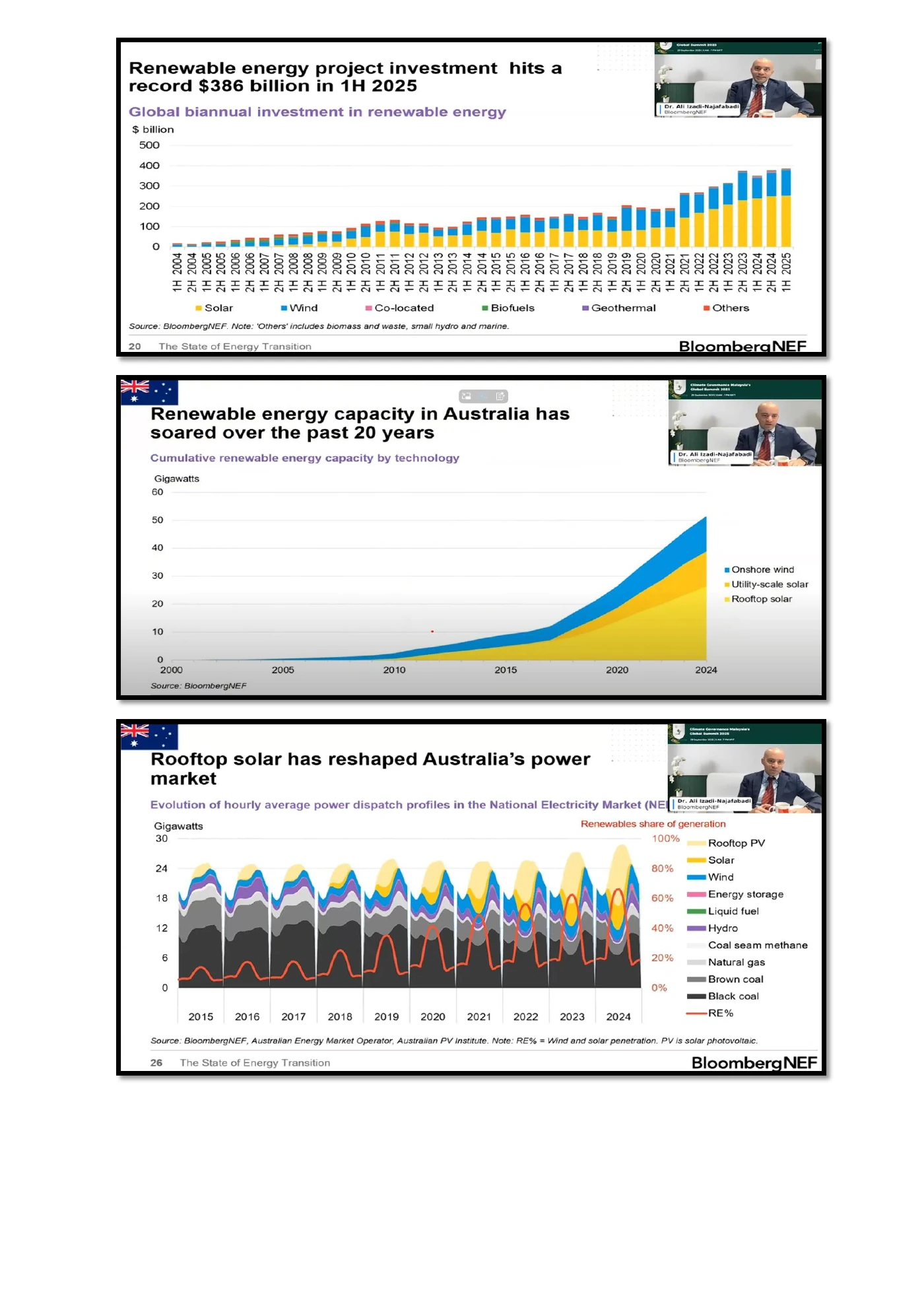
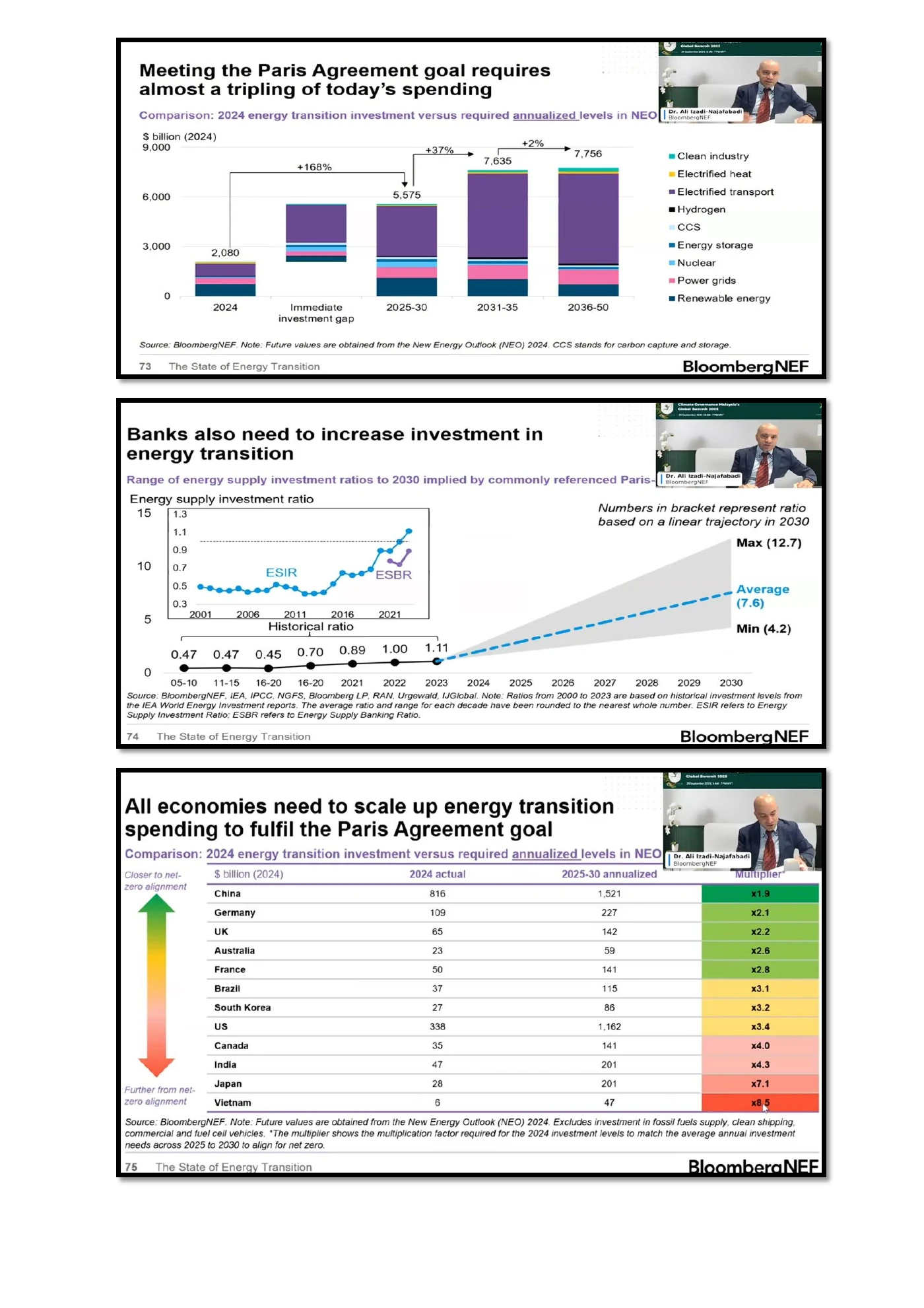
3️⃣ Financing & Market Reform 📌 Global Investment Gap: Clean-energy funding must rise from USD 2.1 trillion (2024) to ≈ USD 5.6 trillion annually this decade.

📌 Regional Priority: Southeast Asia needs regulatory and power-market reform. ☑️ Malaysia’s subsidised tariffs hinder cost-reflective pricing and private-sector entry. ☑️ “We can’t solve power-market-design problems with technology — it requires policy reform.”

4️⃣ Biomass & Waste-to-Energy 📌 Low energy density and transport costs limit biomass for power generation. 📌 Better use: prioritise bio-feedstocks for aviation and shipping fuels where energy density matters most.

My Reflections:

Dr. Ali’s session reminded me that the clean-energy transition is not just a technology issue — it is a financial and policy one.

From a banking view, his points resonated deeply. The AI-driven rise in power use shows how digitalisation and decarbonisation are now intertwined, reshaping how we assess risk and fund resilience.

His message that policy reform will unlock the transition is especially relevant for Malaysia. Subsidised tariffs make it hard to scale renewables sustainably. Banks must champion innovative financing models — blended structures and sustainability-linked instruments — to enable a just and affordable shift.

His warning against over-reliance on offsets echoes what we see in BNM’s CCPT: real decarbonisation means transforming core activities, not compensating after the fact.

💡 Technology may power the transition, but finance and policy will decide its pace.

#CGMGlobalSummit2025#BloombergNEF hashtag #CCPT hashtag #ClimateGovernanceMalaysia
Yasotha K.R Gopal

Banking insight. Practical learning. Thoughtful transition.

LinkedIn

Briefing enquiry

Shape a useful first conversation.

Choose a few starting points, then copy the summary into the channel you prefer. This website prepares a summary; it does not send a message.

Continue on LinkedIn