Document & post

From Principles to Precision: Journey From VBIAF to CCPT

Captured 13 August 2026 · LinkedIn displayed “10mo •” at capture. Original publication date unverified.

Read the original LinkedIn post Jump to original text ↓
CCPT & sustainable finance

Original illustrated document

10 pages to explore

Download PDF (578 KB)
Page 1 of From Principles to Precision: Journey From VBIAF to CCPT. Read the extracted page text below or open the original PDF.

Page 1 of 10

Read the document text, page by page

Automatically extracted from the original PDF. Reading order and symbols may differ from the designed pages; the PDF remains the authoritative visual version.

Page 1

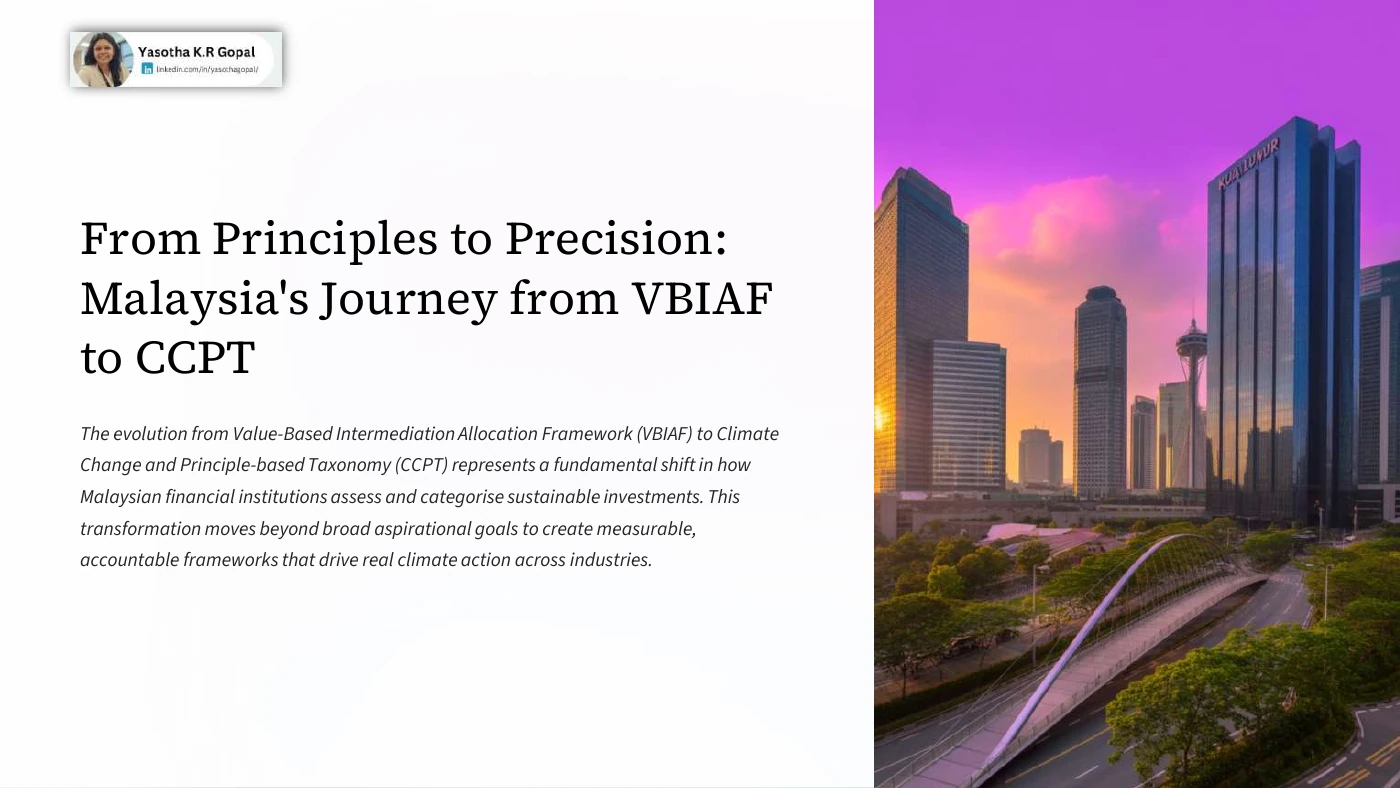
From Principles to Precision: Malaysia's Journey from VBIAF to CCPT The evolution from Value-Based Intermediation Allocation Framework (VBIAF) to Climate Change and Principle-based Taxonomy (CCPT) represents a fundamental shift in how Malaysian financial institutions assess and categorise sustainable investments. This transformation moves beyond broad aspirational goals to create measurable, accountable frameworks that drive real climate action across industries.

Page 2

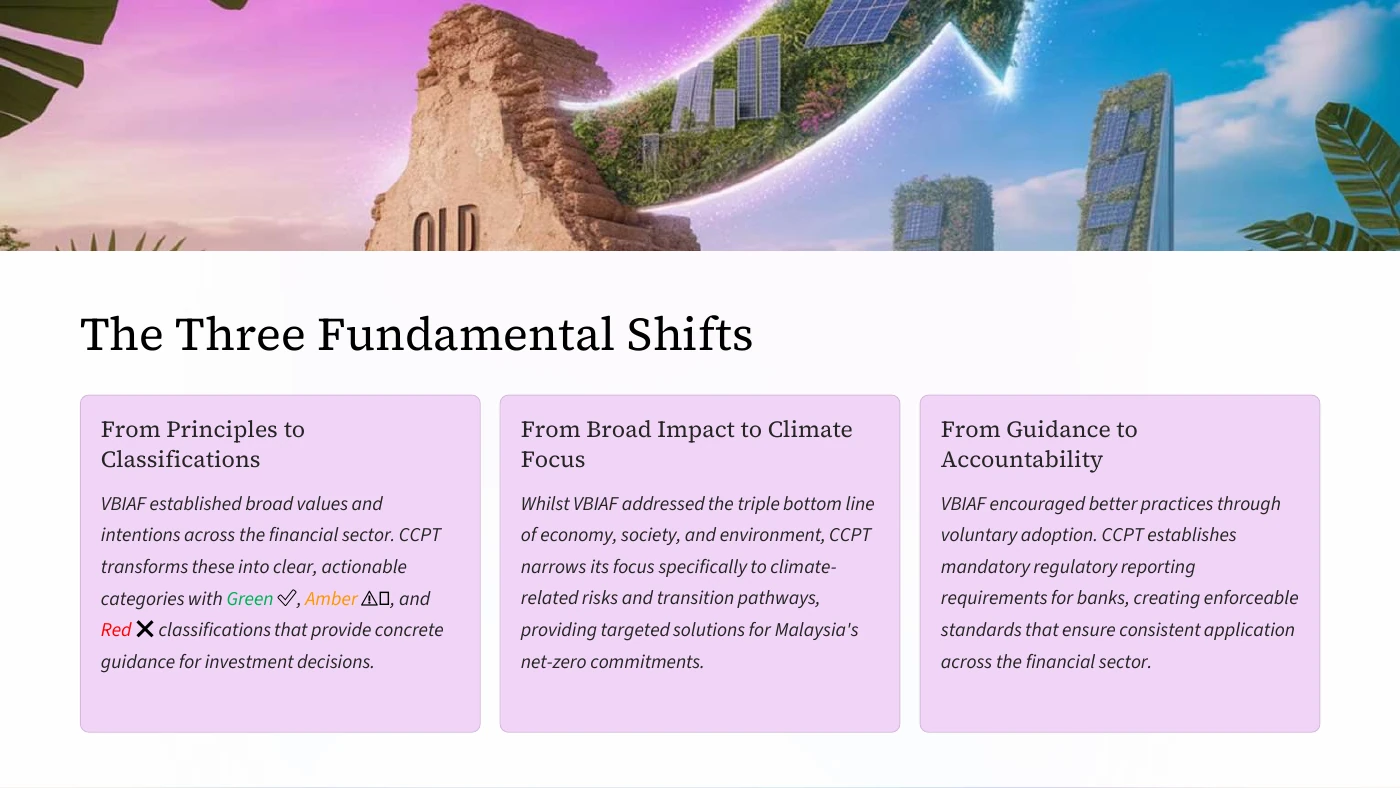
The Three Fundamental Shifts From Principles to Classifications VBIAF established broad values and intentions across the financial sector. CCPT transforms these into clear, actionable categories with Green ✅, Amber ⚠️, and Red ❌ classifications that provide concrete guidance for investment decisions. From Broad Impact to Climate Focus Whilst VBIAF addressed the triple bottom line of economy, society, and environment, CCPT narrows its focus specifically to climate- related risks and transition pathways, providing targeted solutions for Malaysia's net-zero commitments. From Guidance to Accountability VBIAF encouraged better practices through voluntary adoption. CCPT establishes mandatory regulatory reporting requirements for banks, creating enforceable standards that ensure consistent application across the financial sector.

Page 3

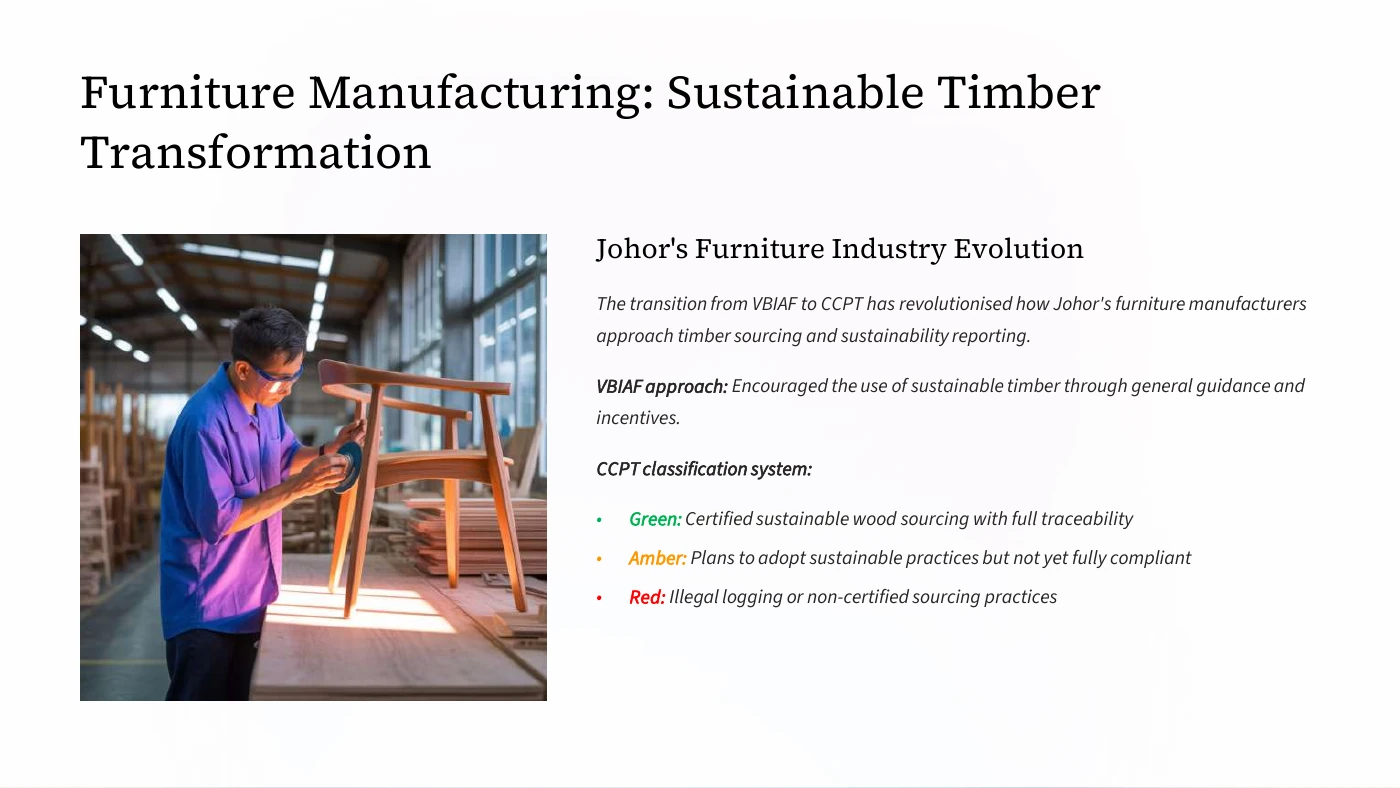
Furniture Manufacturing: Sustainable Timber Transformation Johor's Furniture Industry Evolution The transition from VBIAF to CCPT has revolutionised how Johor's furniture manufacturers approach timber sourcing and sustainability reporting. VBIAF approach: Encouraged the use of sustainable timber through general guidance and incentives. CCPT classification system: • Green: Certified sustainable wood sourcing with full traceability • Amber: Plans to adopt sustainable practices but not yet fully compliant • Red: Illegal logging or non-certified sourcing practices

Page 4

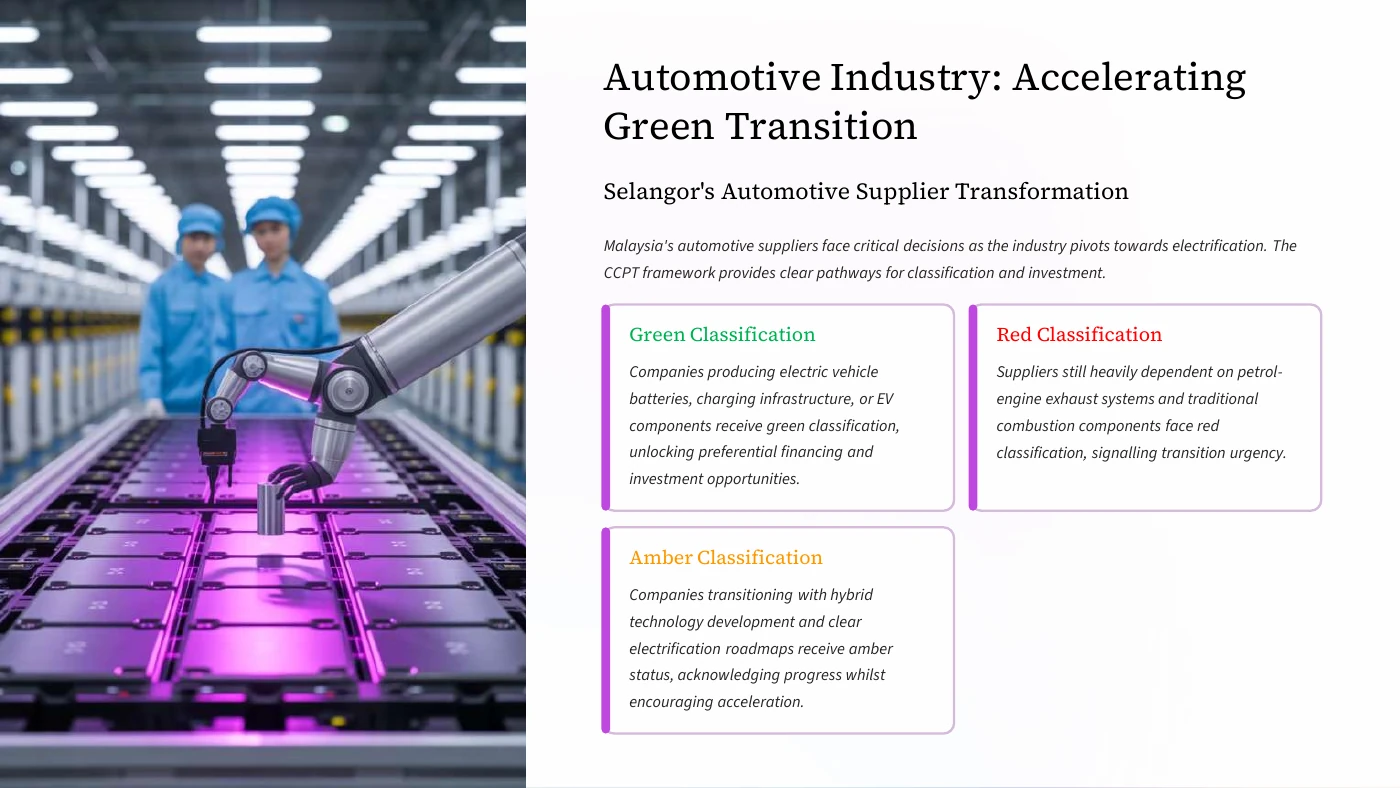
Automotive Industry: Accelerating Green Transition Selangor's Automotive Supplier Transformation Malaysia's automotive suppliers face critical decisions as the industry pivots towards electrification. The CCPT framework provides clear pathways for classification and investment. Green Classification Companies producing electric vehicle batteries, charging infrastructure, or EV components receive green classification, unlocking preferential financing and investment opportunities. Red Classification Suppliers still heavily dependent on petrol - engine exhaust systems and traditional combustion components face red classification, signalling transition urgency. Amber Classification Companies transitioning with hybrid technology development and clear electrification roadmaps receive amber status, acknowledging progress whilst encouraging acceleration.

Page 5

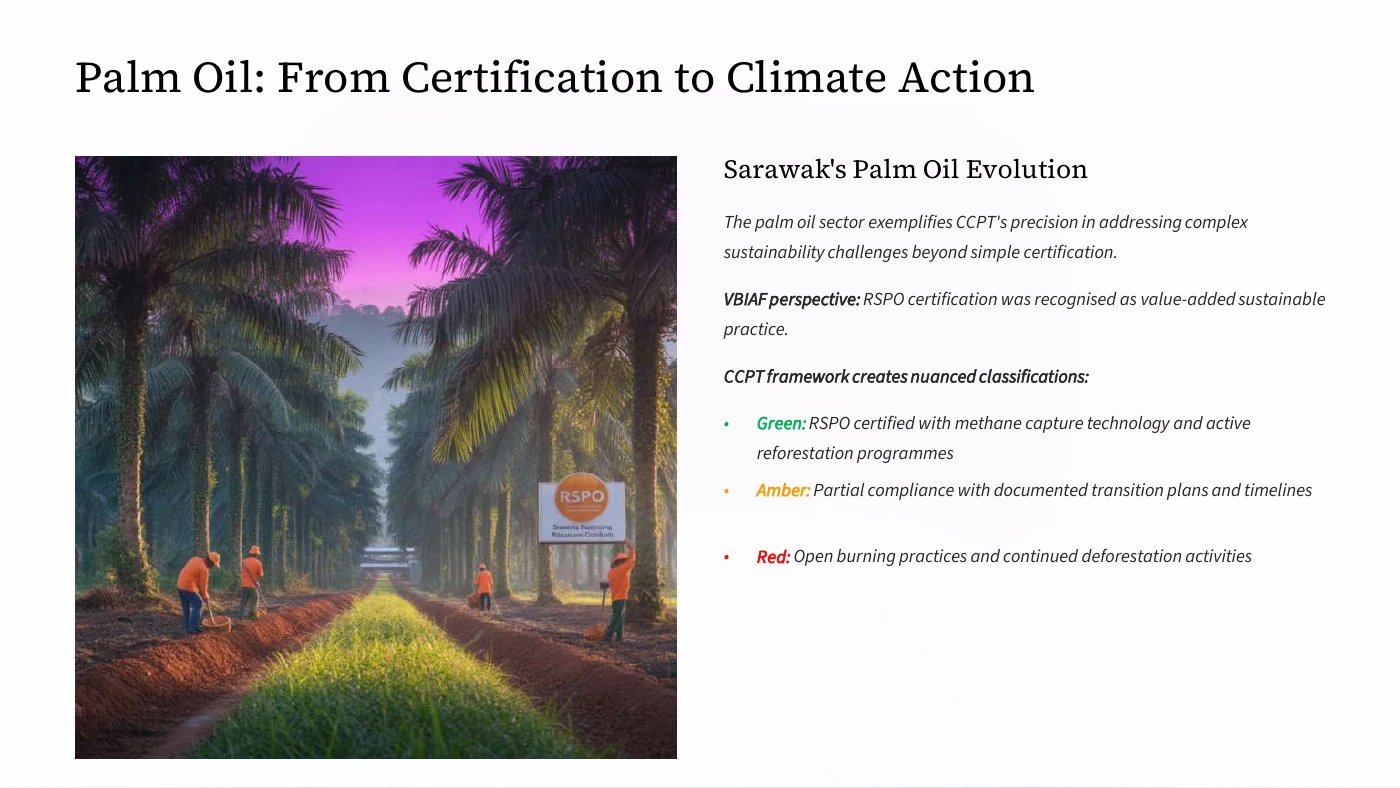
Palm Oil: From Certification to Climate Action Sarawak's Palm Oil Evolution The palm oil sector exemplifies CCPT's precision in addressing complex sustainability challenges beyond simple certification. VBIAF perspective: RSPO certification was recognised as value-added sustainable practice. CCPT framework creates nuanced classifications: • Green: RSPO certified with methane capture technology and active reforestation programmes • Amber: Partial compliance with documented transition plans and timelines • Red: Open burning practices and continued deforestation activities

Page 6

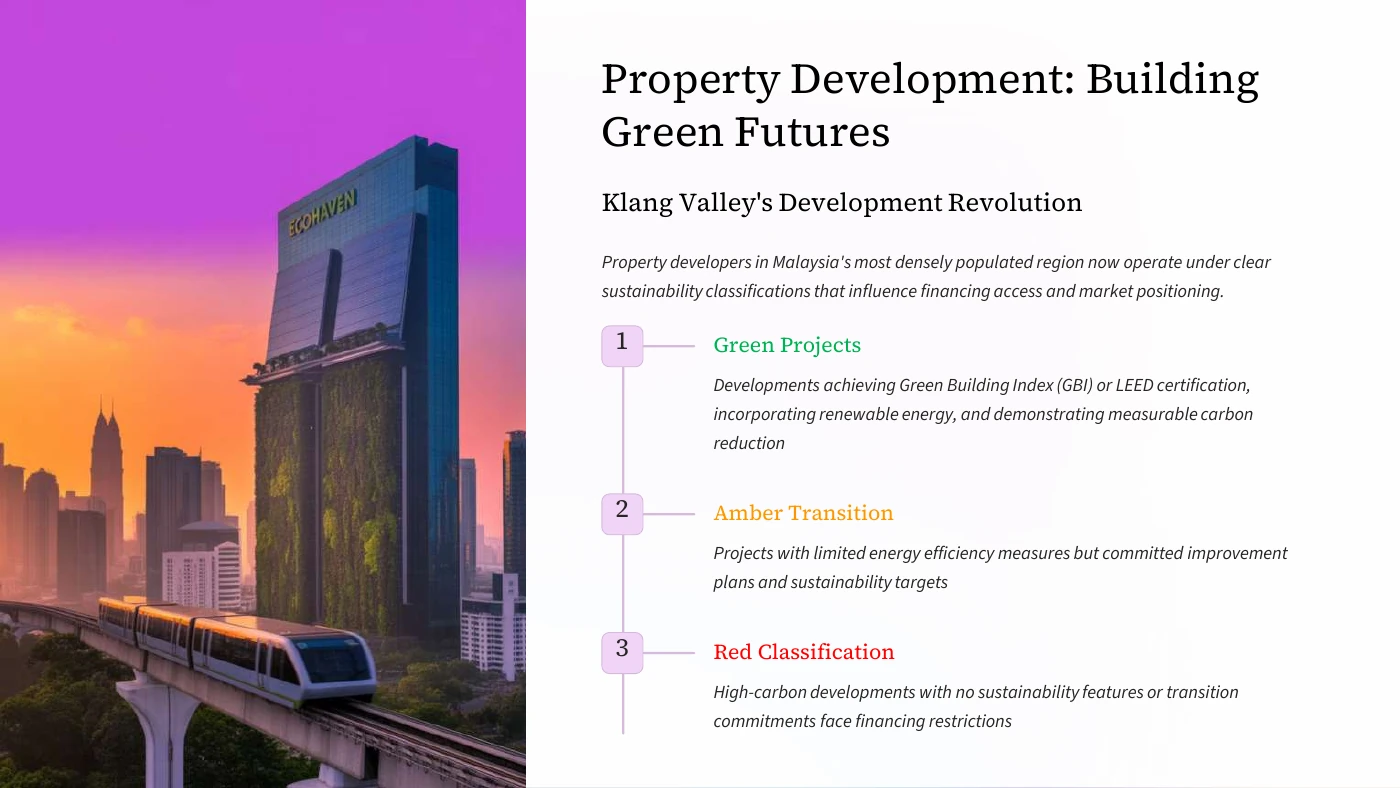
Property Development: Building Green Futures Klang Valley's Development Revolution Property developers in Malaysia's most densely populated region now operate under clear sustainability classifications that influence financing access and market positioning. 1 Green Projects Developments achieving Green Building Index (GBI) or LEED certification, incorporating renewable energy, and demonstrating measurable carbon reduction 2 Amber Transition Projects with limited energy efficiency measures but committed improvement plans and sustainability targets 3 Red Classification High-carbon developments with no sustainability features or transition commitments face financing restrictions

Page 7

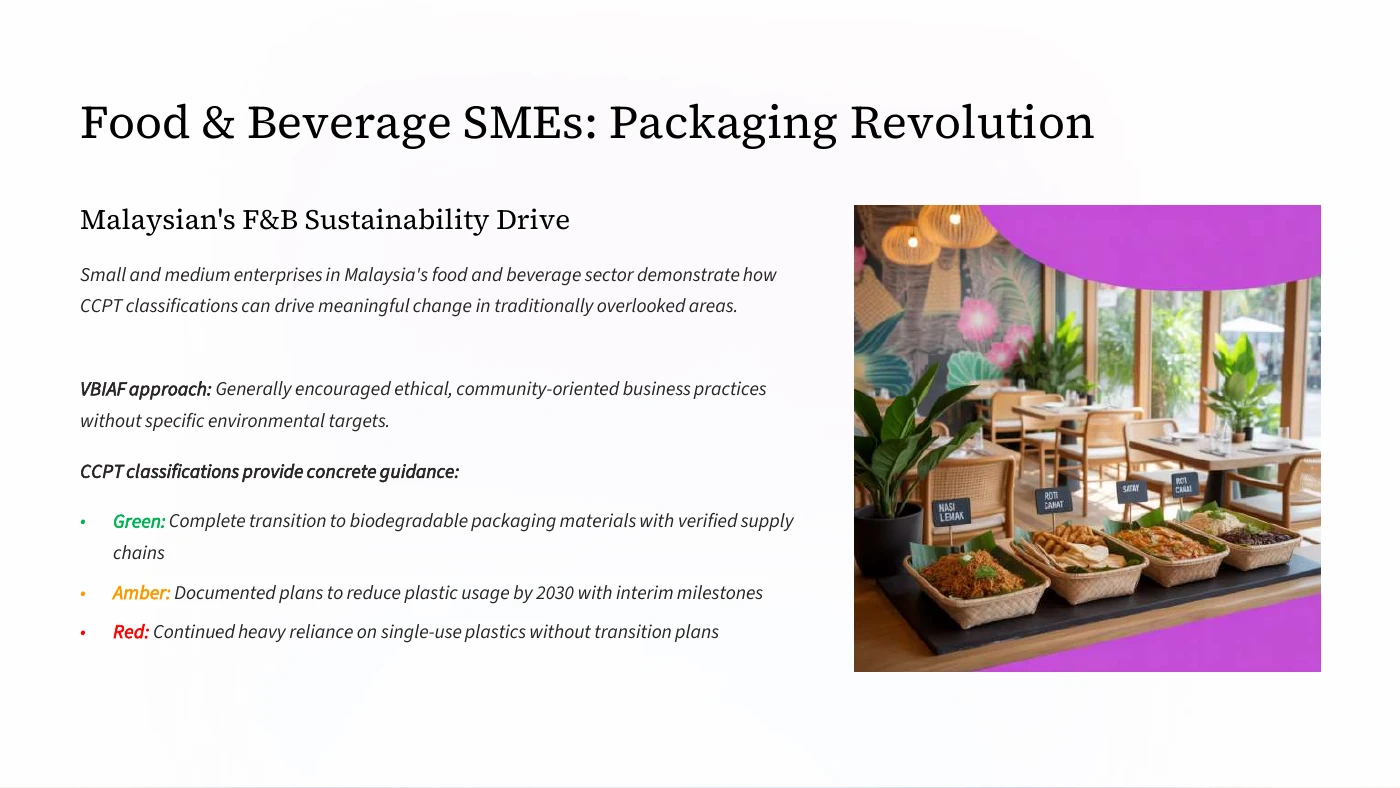
Food & Beverage SMEs: Packaging Revolution Malaysian's F&B Sustainability Drive Small and medium enterprises in Malaysia's food and beverage sector demonstrate how CCPT classifications can drive meaningful change in traditionally overlooked areas. VBIAF approach: Generally encouraged ethical, community-oriented business practices without specific environmental targets. CCPT classifications provide concrete guidance: • Green: Complete transition to biodegradable packaging materials with verified supply chains • Amber: Documented plans to reduce plastic usage by 2030 with interim milestones • Red: Continued heavy reliance on single-use plastics without transition plans

Page 8

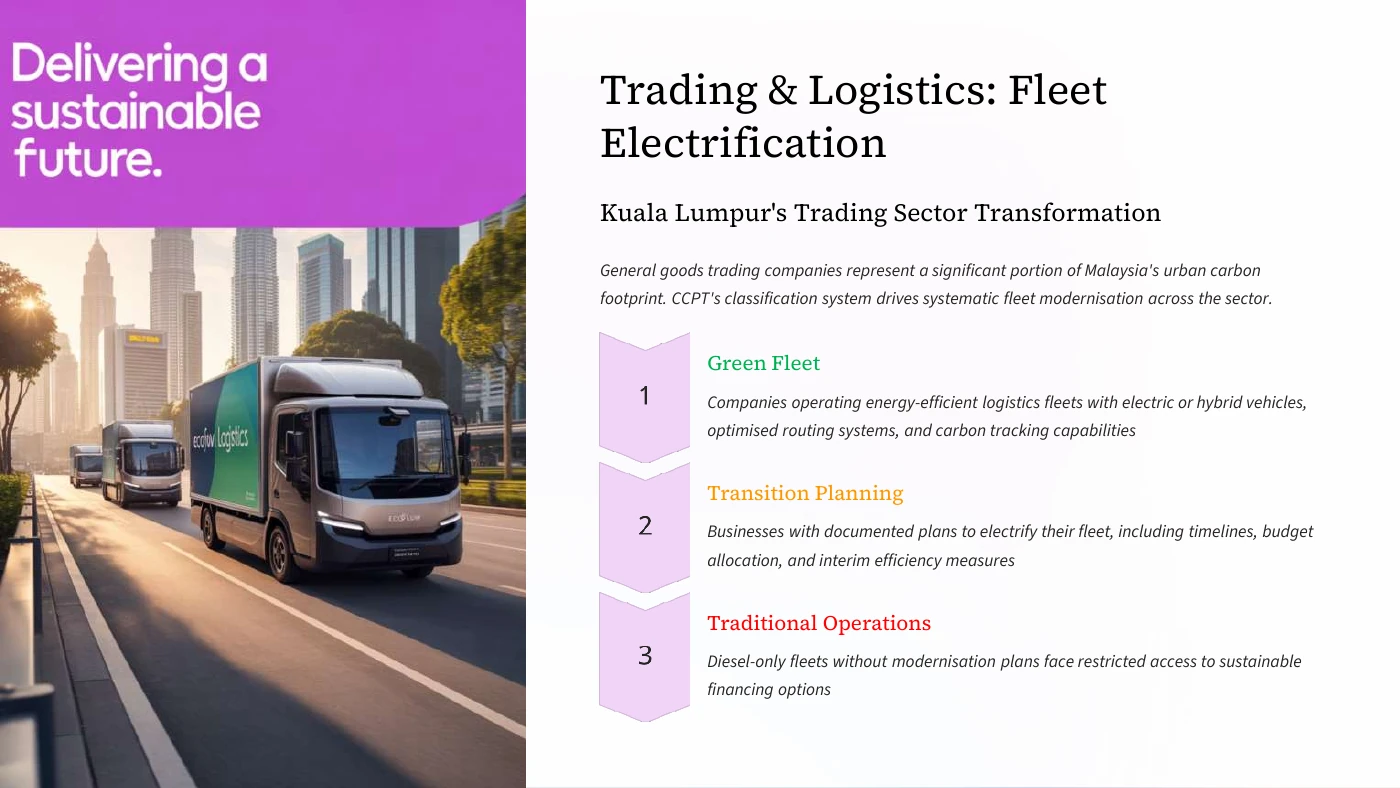
Trading & Logistics: Fleet Electrification Kuala Lumpur's Trading Sector Transformation General goods trading companies represent a significant portion of Malaysia's urban carbon footprint. CCPT's classification system drives systematic fleet modernisation across the sector. Green Fleet Companies operating energy-efficient logistics fleets with electric or hybrid vehicles, optimised routing systems, and carbon tracking capabilities Transition Planning Businesses with documented plans to electrify their fleet, including timelines, budget allocation, and interim efficiency measures Traditional Operations Diesel-only fleets without modernisation plans face restricted access to sustainable financing options

Page 9

The Strategic Importance for Malaysian Industry Why This Evolution Matters The transition from VBIAF to CCPT represents more than regulatory change—it's a fundamental shift in how Malaysian businesses access capital, measure success, and position themselves in global markets. VBIAF established the foundational understanding that value extends beyond profit margins to encompass social and environmental impact. This framework educated the market and created awareness of sustainable business practices. CCPT builds upon this foundation by providing the operational framework needed to implement sustainable practices at scale. The classification system creates: • Measurable standards that eliminate greenwashing • Comparable metrics across industries and sectors • Clear pathways for improvement and transition • Regulatory compliance that supports international standards • Investment flows towards genuinely sustainable activities

Page 10

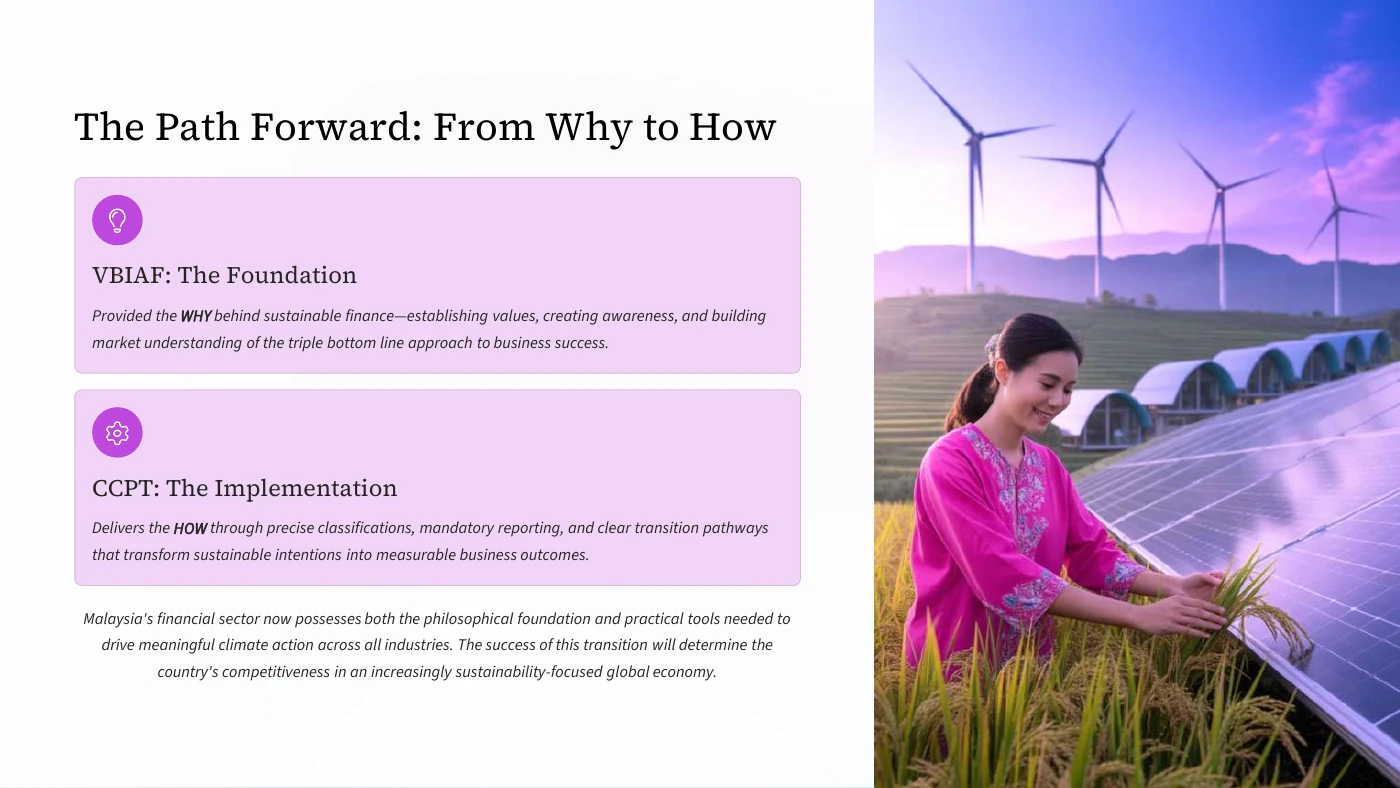
The Path Forward: From Why to How VBIAF: The Foundation Provided the WHY behind sustainable finance—establishing values, creating awareness, and building market understanding of the triple bottom line approach to business success. CCPT: The Implementation Delivers the HOW through precise classifications, mandatory reporting, and clear transition pathways that transform sustainable intentions into measurable business outcomes. Malaysia's financial sector now possesses both the philosophical foundation and practical tools needed to drive meaningful climate action across all industries. The success of this transition will determine the country's competitiveness in an increasingly sustainability -focused global economy.

Open the complete original PDF

In Yasotha’s words

Original post

From Spark to Flame: Understanding VBIAF’s Role in Shaping CCPT (Part 2)

In Part 1 of this series, I introduced VBIAF (Value-Based Intermediation Assessment Framework) — the spark that encouraged banks to move beyond short-term profit and consider the wider impact of financing on people, planet, and profit.

But a spark alone cannot drive change. To turn vision into measurable action, we need a flame. That’s where CCPT (Climate Change and Principle-based Taxonomy) comes in.

For those joining this series now, here’s the flow: 1️⃣ VBIAF laid the foundation with values and principles. 2️⃣ CCPT builds on this by turning values into clear, reportable classifications (Green ✅, Amber ⚠️, Red ❌). 3️⃣ Together, they connect principles to practice for bankers, SMEs, and Malaysia’s sustainable future.

Today in Part 2, let’s explore how CCPT sharpened the lens — transforming VBIAF’s broad guidance into a structured tool for climate-related risk. Refer to Slides below.

...........VBIAF was the spark, CCPT became the flame — and in Part 3, we’ll see why the two must work together to power Malaysia’s sustainable finance journey, and what this means for bankers and SMEs in practice.”


Yasotha K.R Gopal

Banking insight. Practical learning. Thoughtful transition.

LinkedIn

Briefing enquiry

Shape a useful first conversation.

Choose a few starting points, then copy the summary into the channel you prefer. This website prepares a summary; it does not send a message.

Continue on LinkedIn