Document & post

Transition In Action - An SME Textile

Captured 13 August 2026 · LinkedIn displayed “6mo •” at capture. Original publication date unverified.

Read the original LinkedIn post Jump to original text ↓
SME transition cases

Original illustrated document

12 pages to explore

Download PDF (606 KB)
Page 1 of Transition In Action - An SME Textile. Read the extracted page text below or open the original PDF.

Page 1 of 12

Read the document text, page by page

Automatically extracted from the original PDF. Reading order and symbols may differ from the designed pages; the PDF remains the authoritative visual version.

Page 1

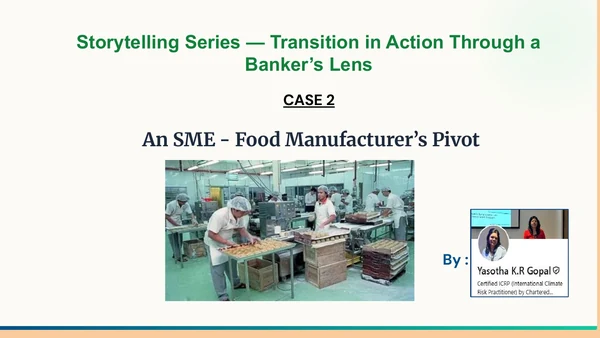
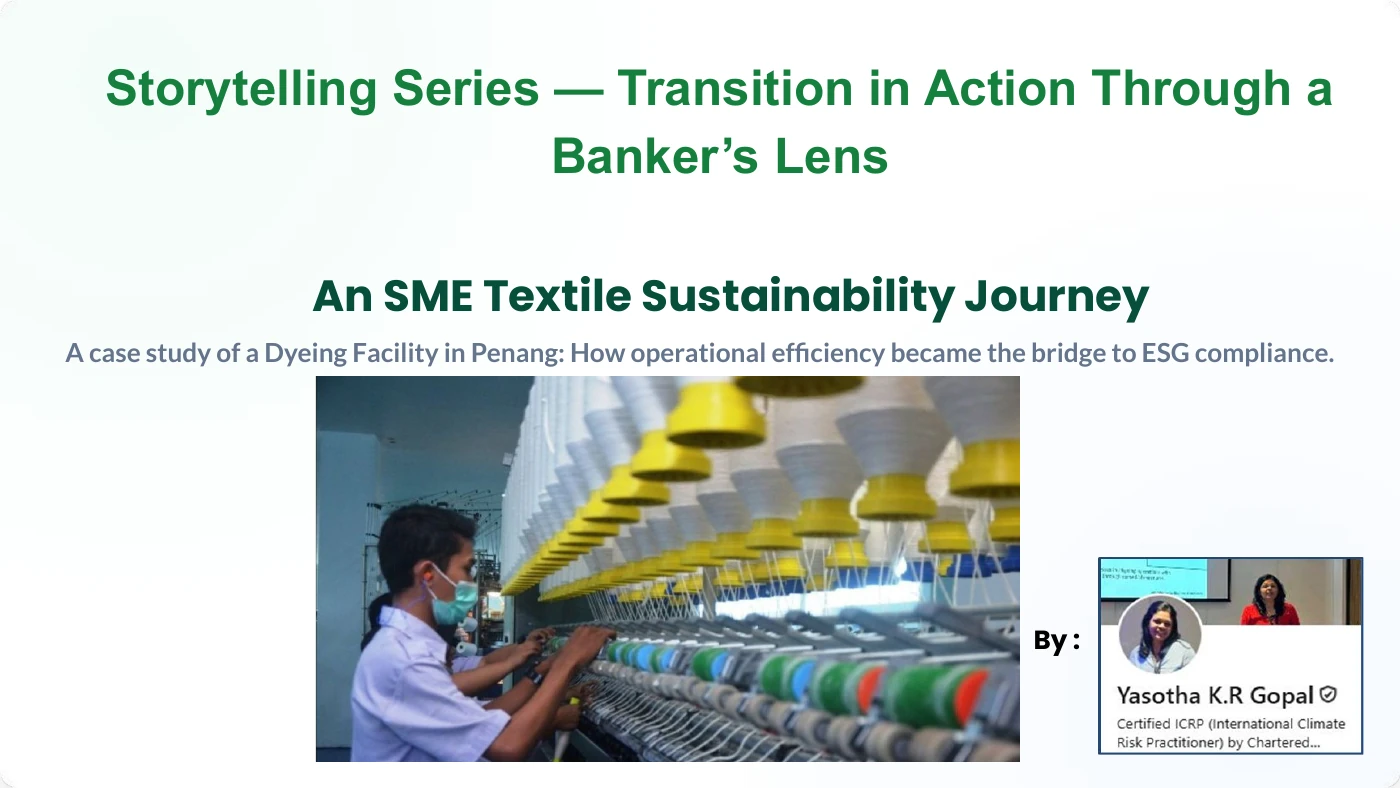
By : A case study of a Dyeing Facility in Penang: How operational efficiency became the bridge to ESG compliance. Storytelling Series — Transition in Action Through a Banker’s Lens An SME Textile Sustainability Journey

Page 2

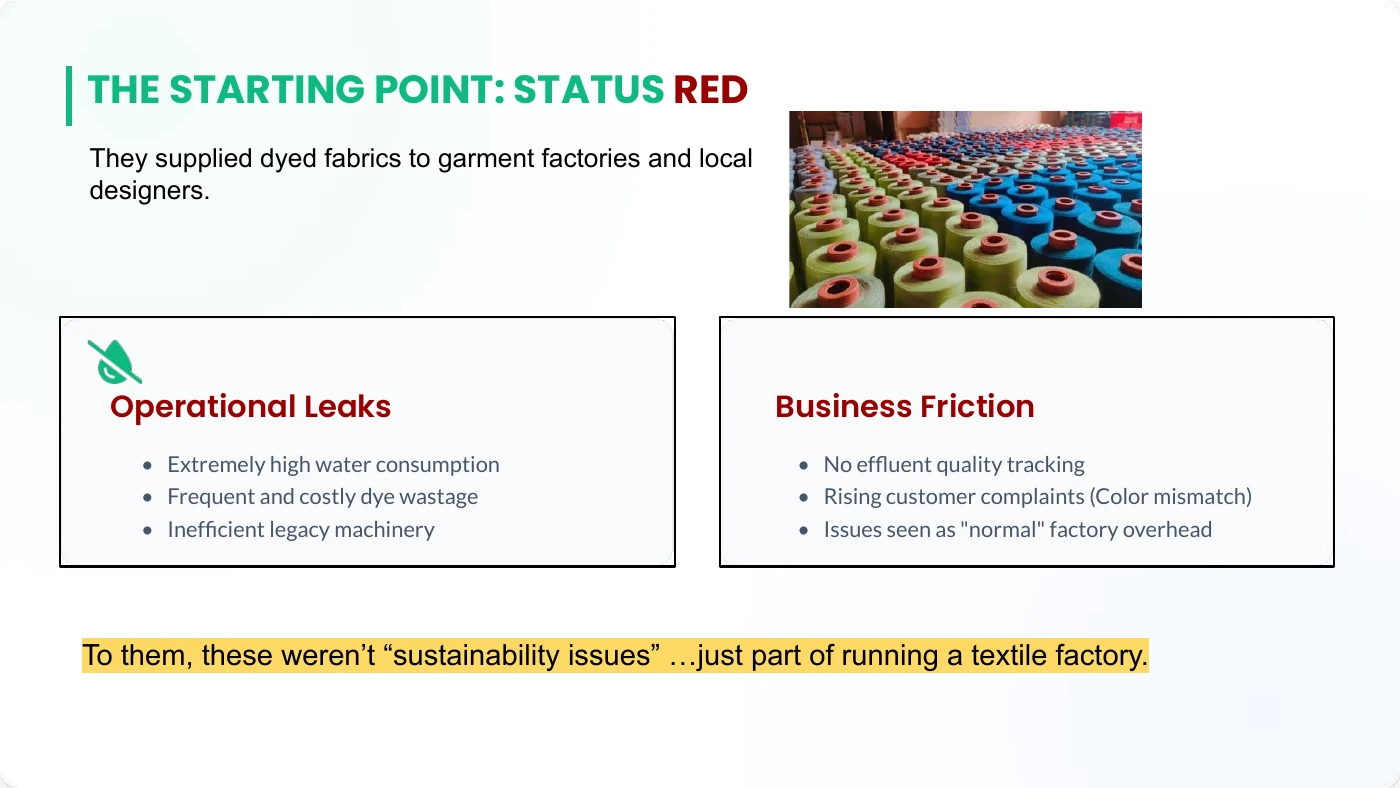
Operational Leaks Business Friction • Extremely high water consumption • Frequent and costly dye wastage • Inefficient legacy machinery • No effluent quality tracking • Rising customer complaints (Color mismatch) • Issues seen as "normal" factory overhead THE STARTING POINT: STATUS RED They supplied dyed fabrics to garment factories and local designers. To them, these weren’t “sustainability issues” …just part of running a textile factory.

Page 3

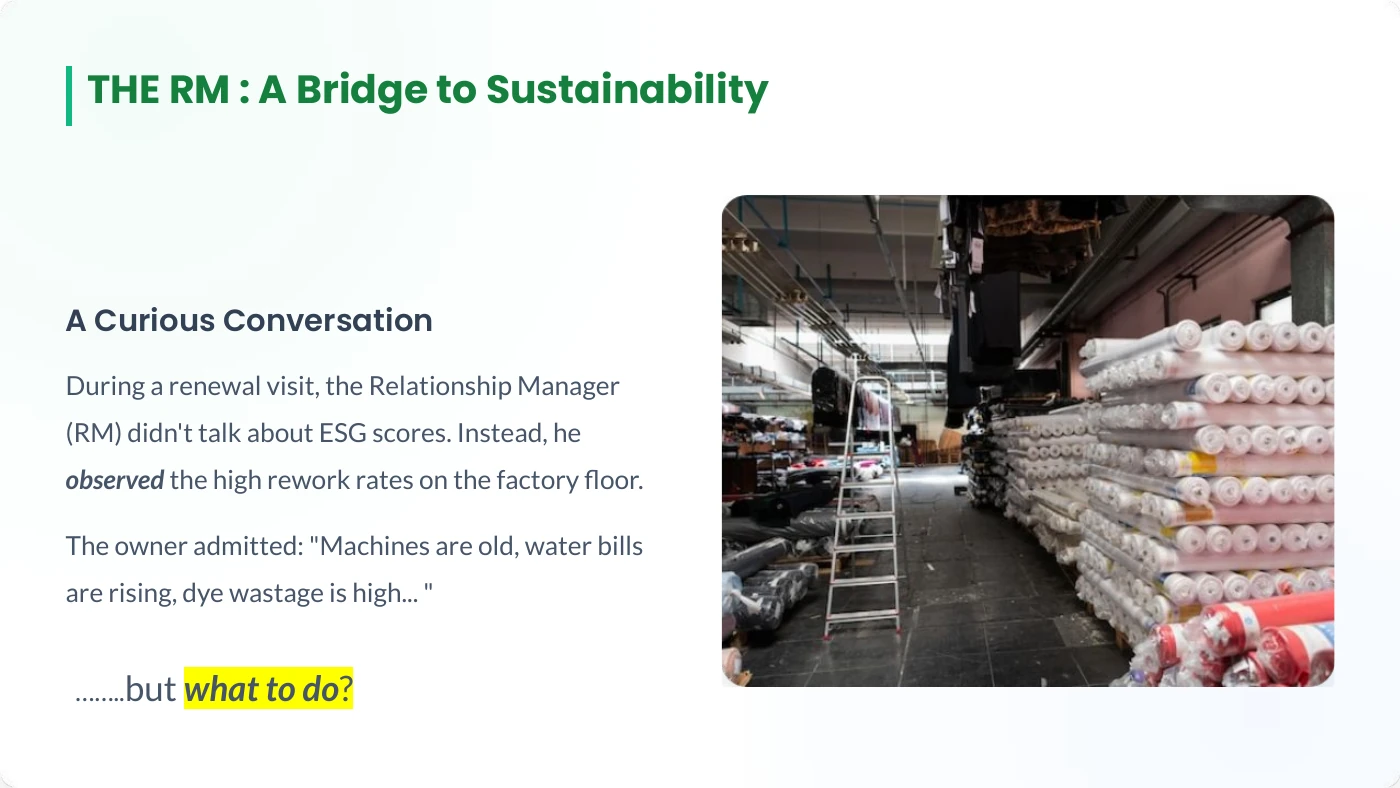
A Curious Conversation During a renewal visit, the Relationship Manager (RM) didn't talk about ESG scores. Instead, he observed the high rework rates on the factory floor. The owner admitted: "Machines are old, water bills are rising, dye wastage is high... " THE RM : A Bridge to Sustainability ……..but what to do?

Page 4

"If you could fix one issue first — water, dye, or consistency — which would save you the most cost?" The realization: Sustainability isn't a cost center; it's a profitability driver. " That one question opened everything up.

Page 5

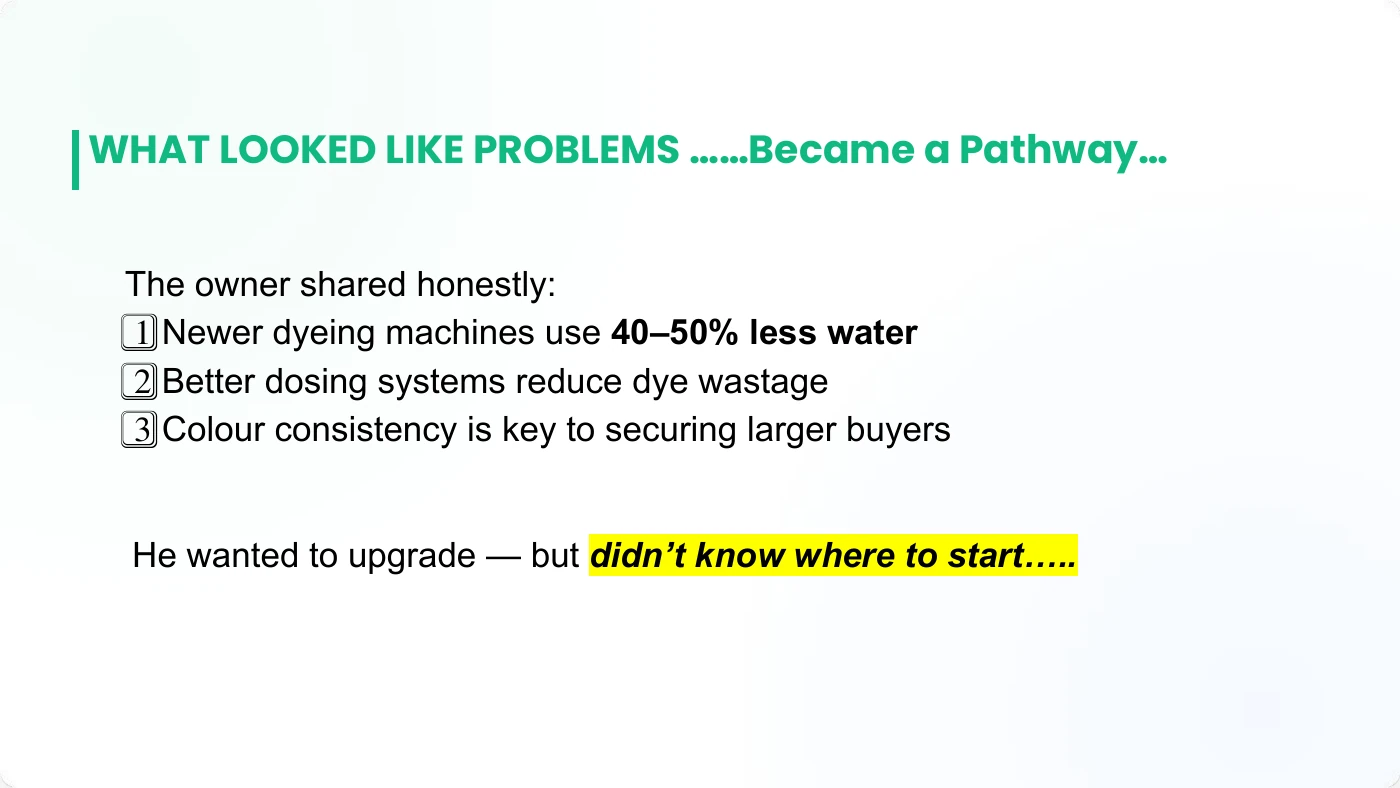
The owner shared honestly: 1⃣ Newer dyeing machines use 40–50% less water 2⃣ Better dosing systems reduce dye wastage 3⃣ Colour consistency is key to securing larger buyers WHAT LOOKED LIKE PROBLEMS ……Became a Pathway… He wanted to upgrade — but didn’t know where to start…..

Page 6

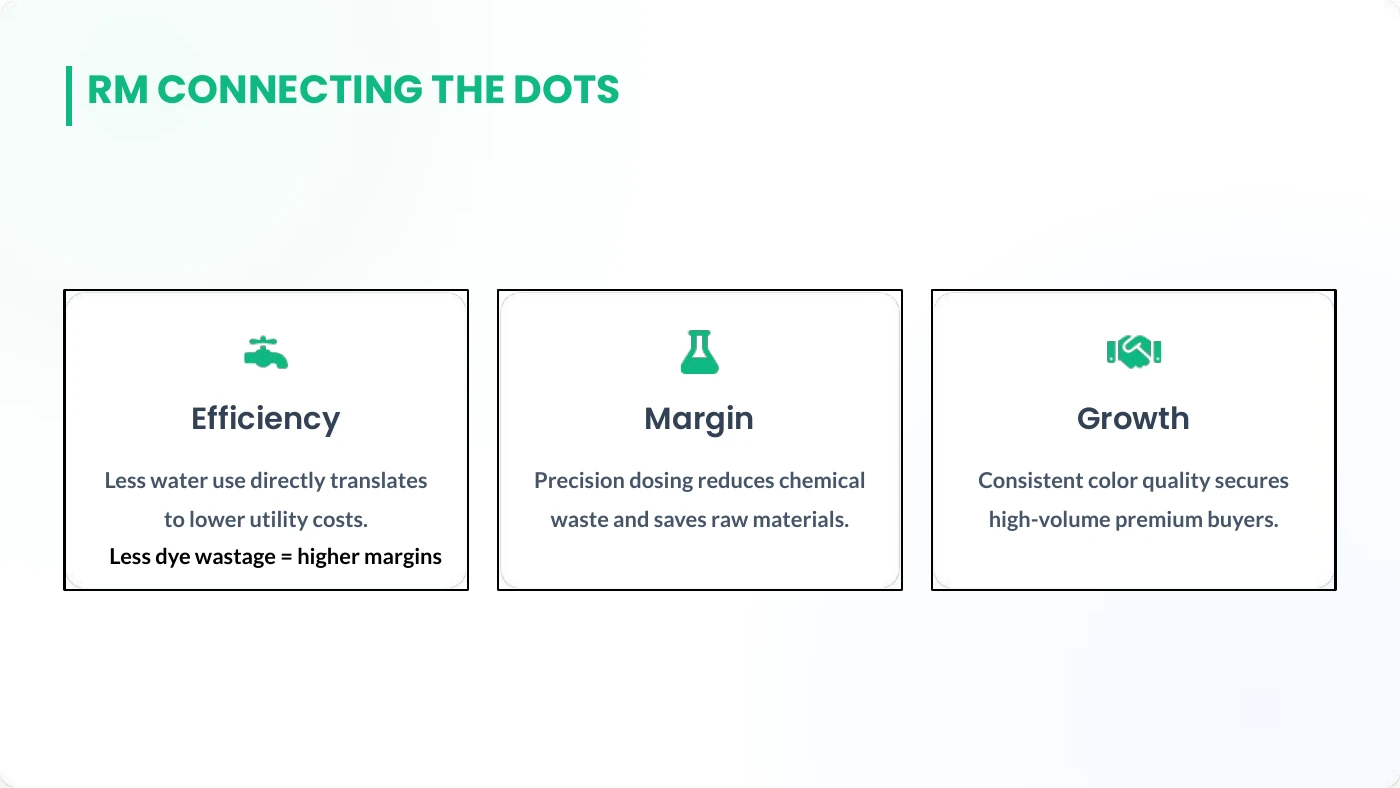
Efficiency Less water use directly translates to lower utility costs. Margin Precision dosing reduces chemical waste and saves raw materials. Growth Consistent color quality secures high-volume premium buyers. RM CONNECTING THE DOTS Less dye wastage = higher margins

Page 7

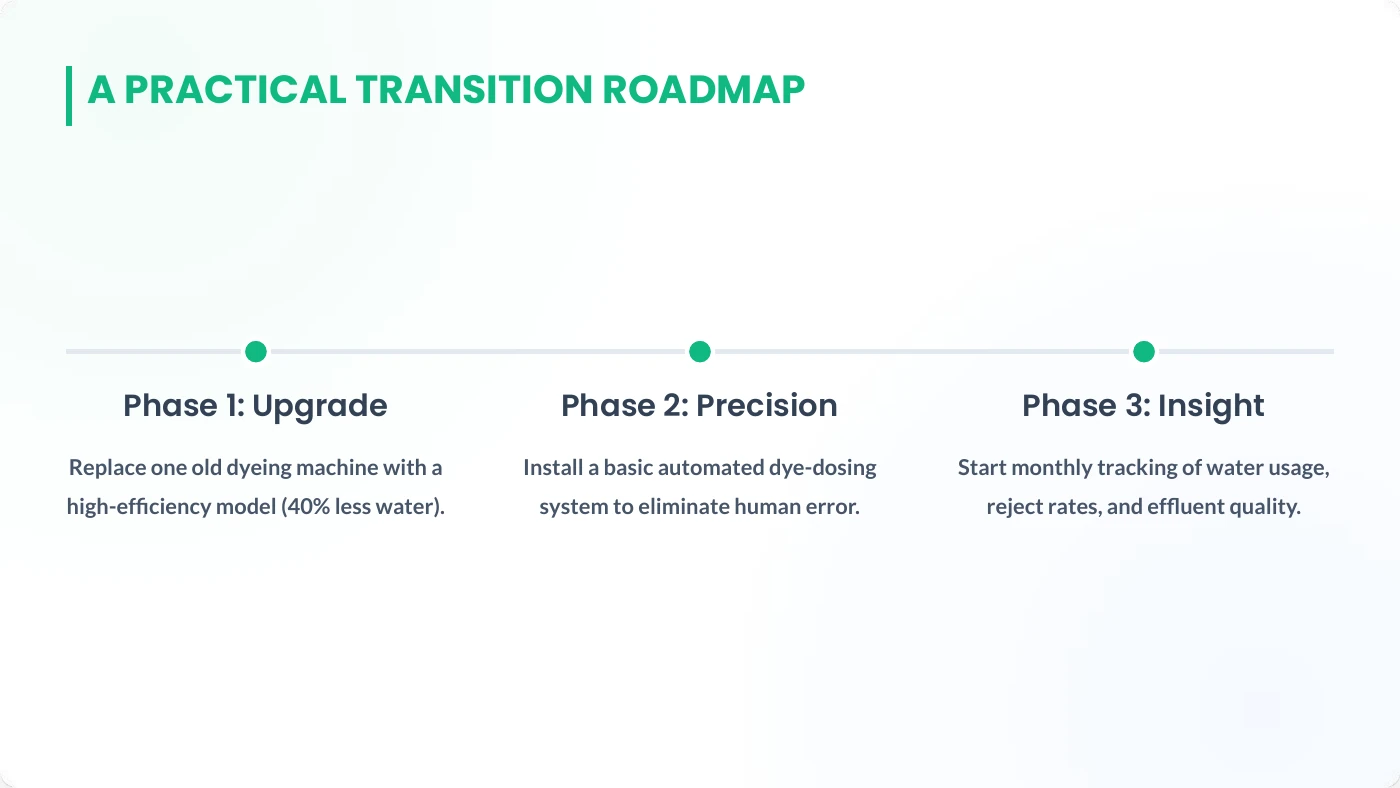
Phase 1: Upgrade Replace one old dyeing machine with a high-efficiency model (40% less water). Phase 2: Precision Install a basic automated dye-dosing system to eliminate human error. Phase 3: Insight Start monthly tracking of water usage, reject rates, and effluent quality. A PRACTICAL TRANSITION ROADMAP

Page 8

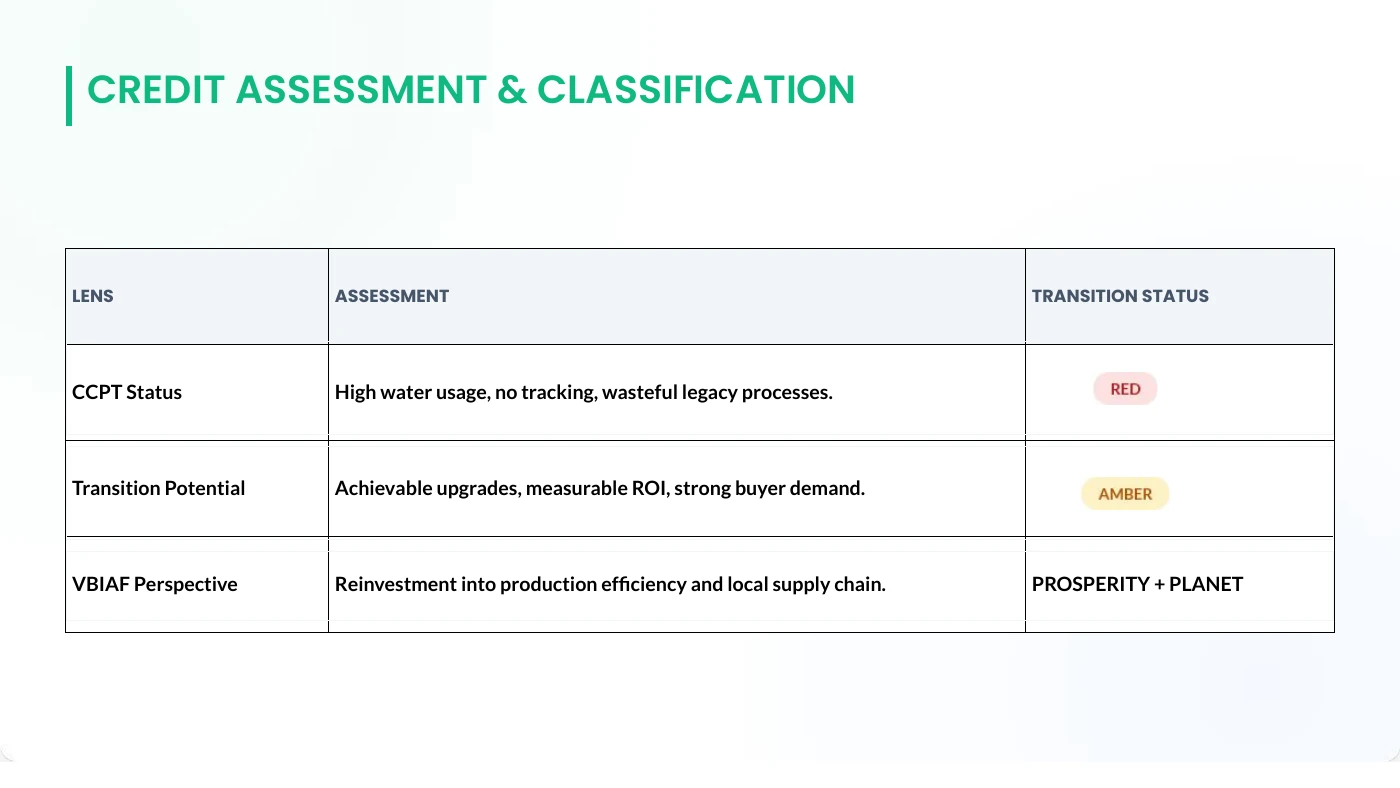
LENS ASSESSMENT TRANSITION STATUS CCPT Status High water usage, no tracking, wasteful legacy processes. Transition Potential Achievable upgrades, measurable ROI, strong buyer demand. VBIAF Perspective Reinvestment into production efficiency and local supply chain. PROSPERITY + PLANET CREDIT ASSESSMENT & CLASSIFICATION

Page 9

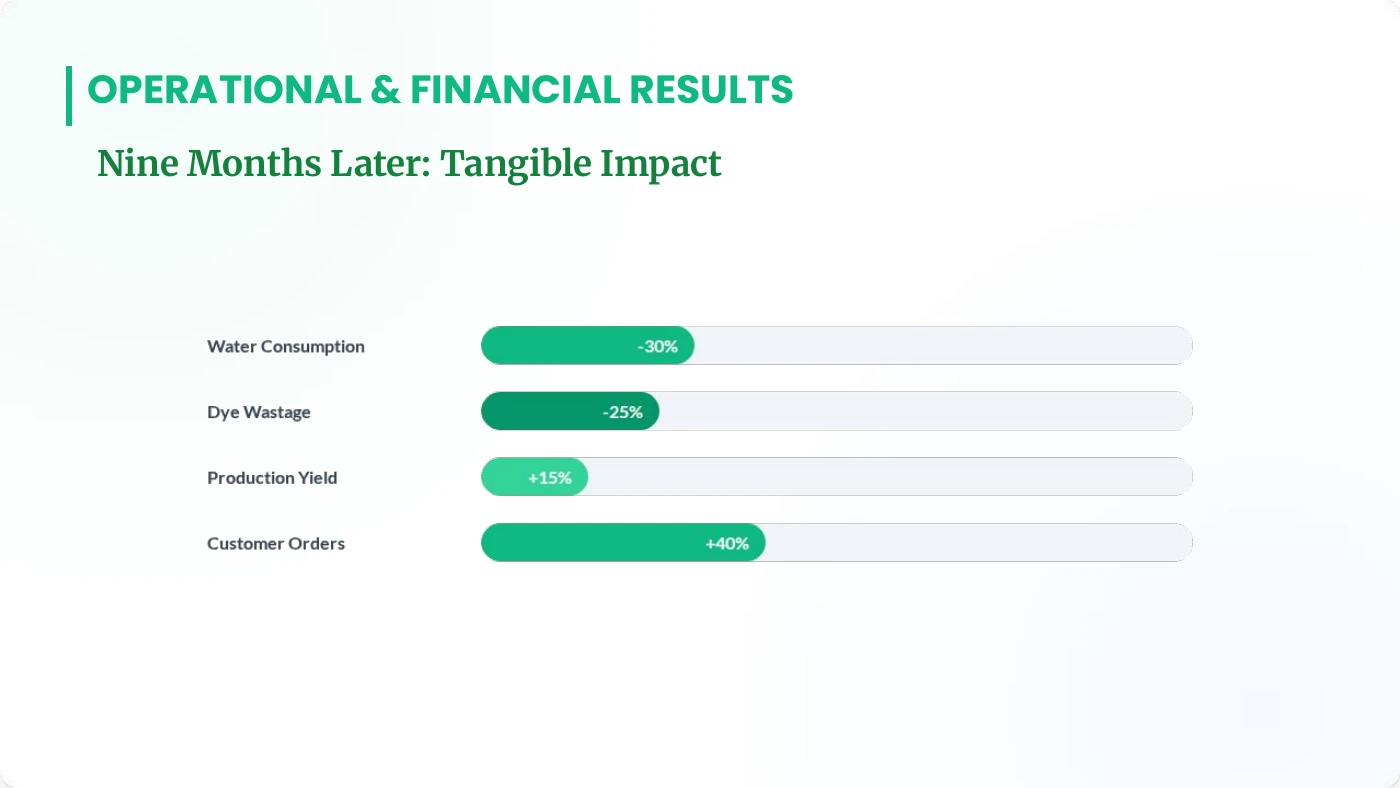
OPERATIONAL & FINANCIAL RESULTS Nine Months Later: Tangible Impact

Page 10

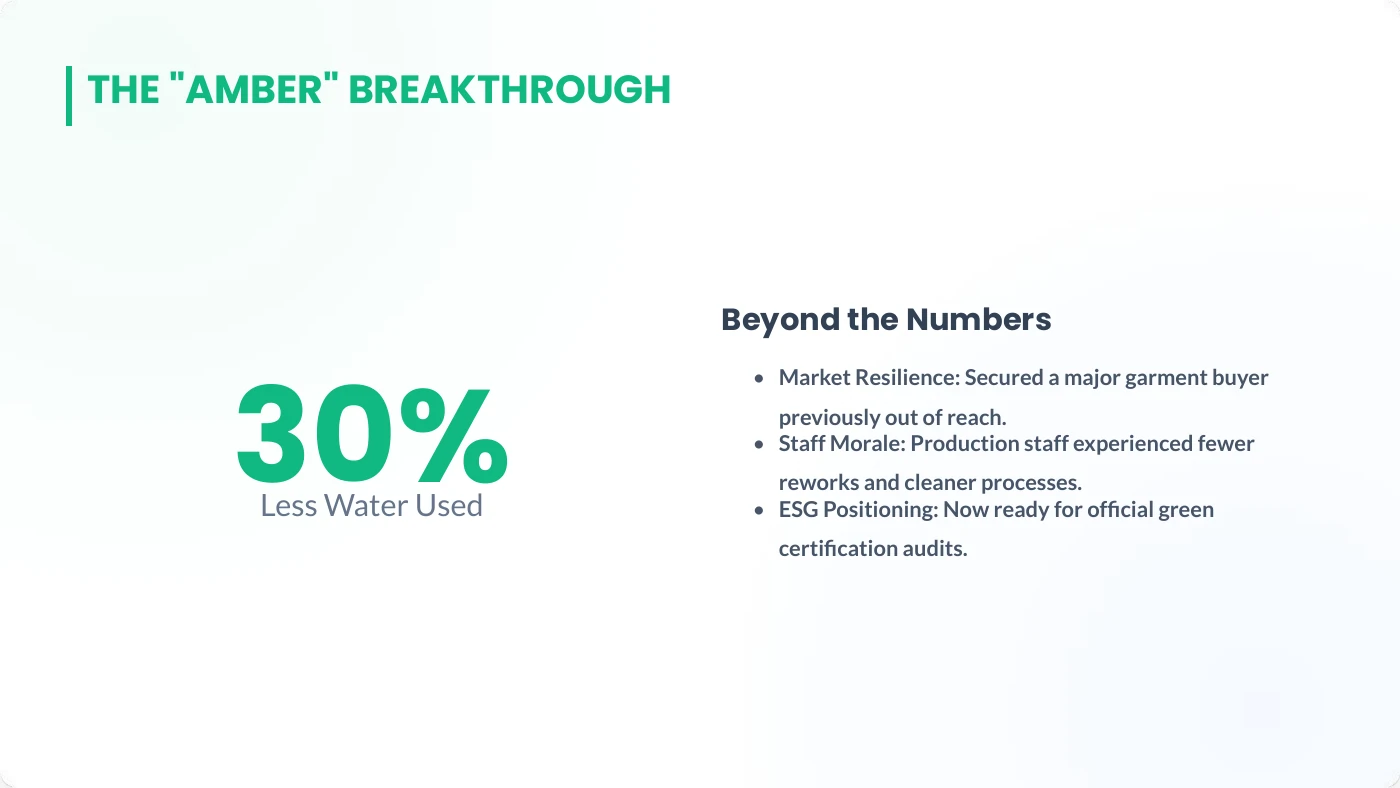
30% Less Water Used Beyond the Numbers • Market Resilience: Secured a major garment buyer previously out of reach. • Staff Morale: Production staff experienced fewer reworks and cleaner processes. • ESG Positioning: Now ready for official green certification audits. THE "AMBER" BREAKTHROUGH

Page 11

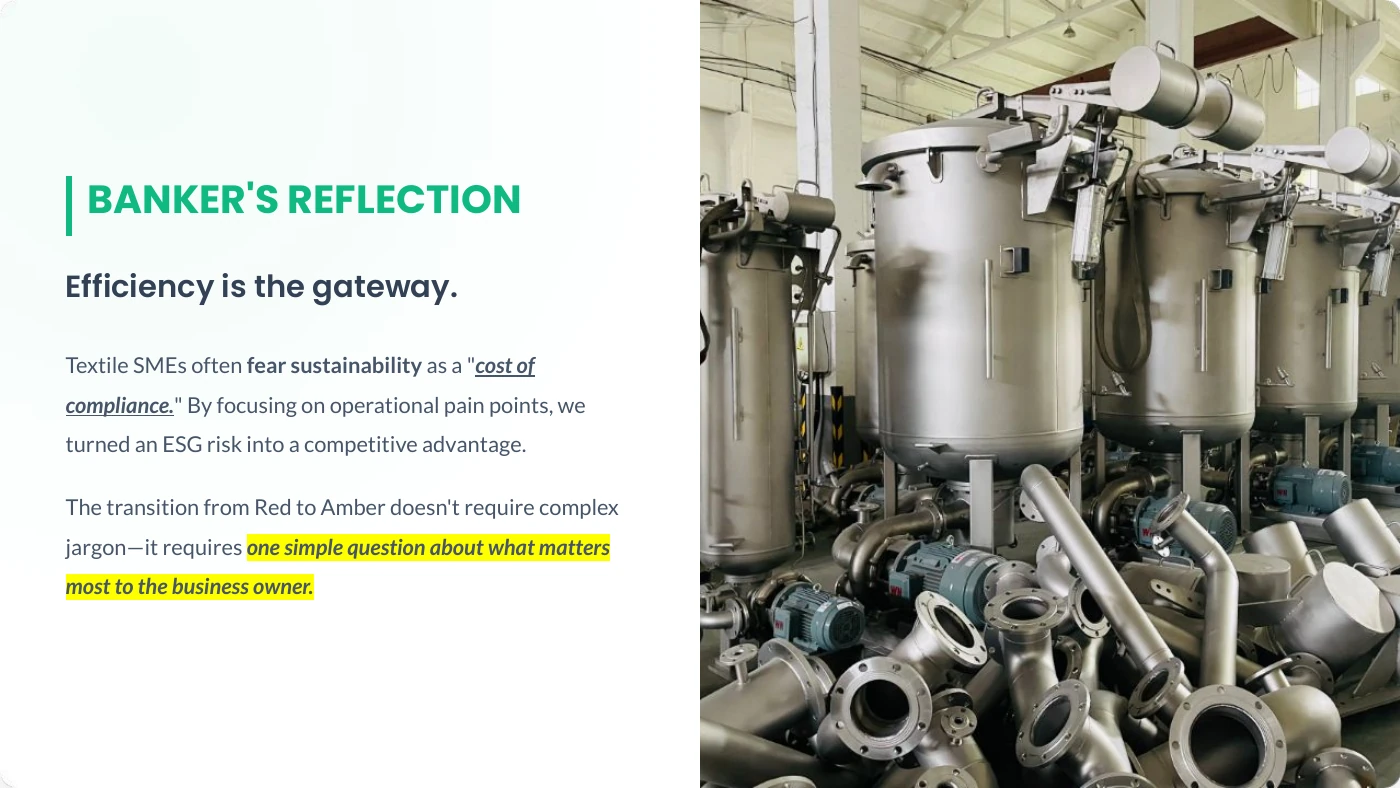
BANKER'S REFLECTION Efficiency is the gateway. T extile SMEs often fear sustainability as a "cost of compliance." By focusing on operational pain points, we turned an ESG risk into a competitive advantage. The transition from Red to Amber doesn't require complex jargon—it requires one simple question about what matters most to the business owner.

Page 12

Any Questions? Thank you for exploring this SME sustainability journey. Let's discuss how we can drive more Red to Amber transitions. Efficiency | Quality | Operational Resilience

Open the complete original PDF

In Yasotha’s words

Original post

Storytelling Series — Transition in Action Through a Banker’s Lens (Part 3)

"How an SME Textile Manufacturer Began Its Sustainability Journey from Red → Amber"

After sharing how a food manufacturing SME began its Red → Amber transition, several readers asked for examples from other traditional Malaysian sectors, especially those facing rising cost pressures and efficiency challenges.

So, for the next story in this series, I’m turning to a sector many of us know well:

Textiles and dyeing - an industry where water use, chemical handling, and consistency issues often hide powerful sustainability opportunities.

This is the next story in the series: A real-life snapshot of how an RM helped a textile SME turn operational pressures into a meaningful Red → Amber shift.
Yasotha K.R Gopal

Banking insight. Practical learning. Thoughtful transition.

LinkedIn

Briefing enquiry

Shape a useful first conversation.

Choose a few starting points, then copy the summary into the channel you prefer. This website prepares a summary; it does not send a message.

Continue on LinkedIn