Document & post

Transition in Action - FMCG

Captured 13 August 2026 · LinkedIn displayed “6mo •” at capture. Original publication date unverified.

Read the original LinkedIn post Jump to original text ↓
SME transition cases

Original illustrated document

14 pages to explore

Download PDF (574 KB)
Page 1 of Transition in Action - FMCG. Read the extracted page text below or open the original PDF.

Page 1 of 14

Read the document text, page by page

Automatically extracted from the original PDF. Reading order and symbols may differ from the designed pages; the PDF remains the authoritative visual version.

Page 1

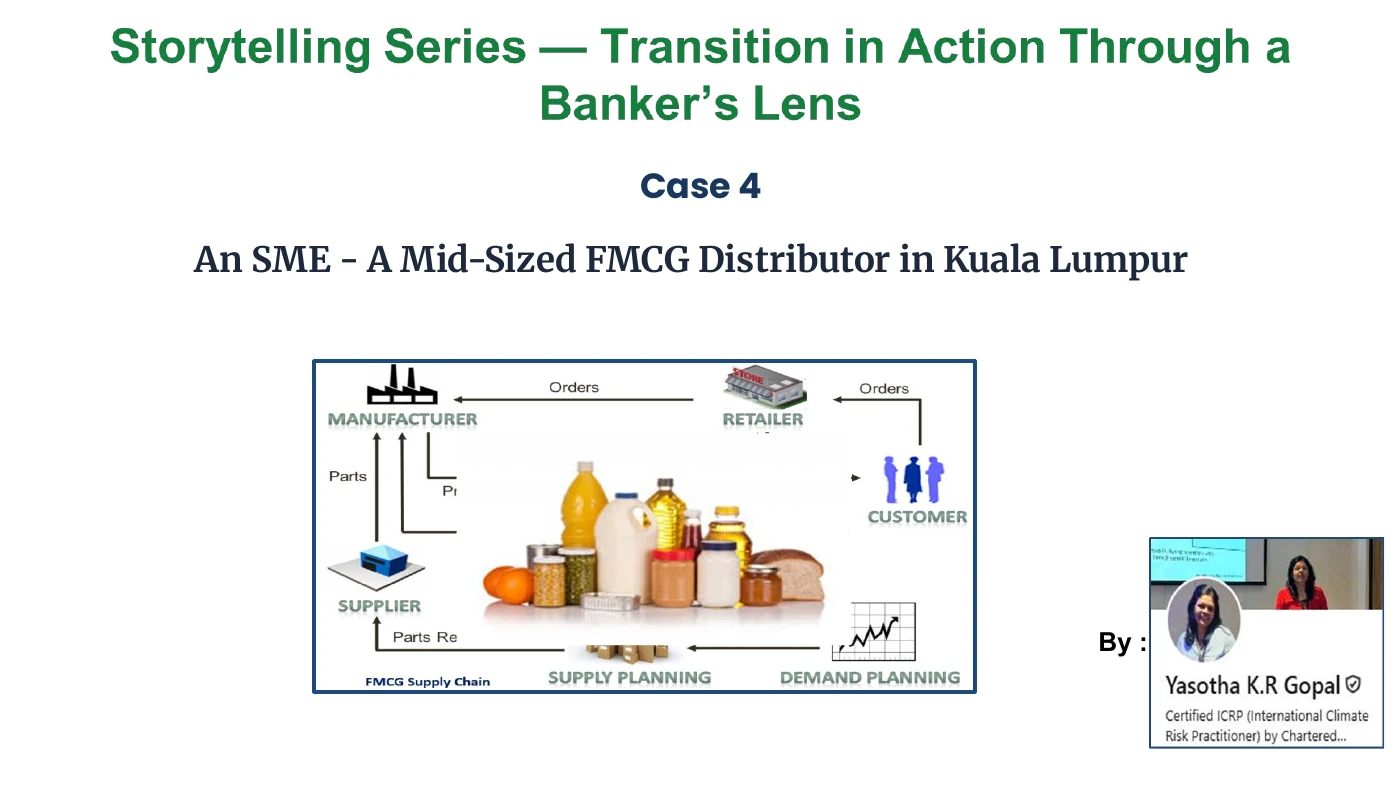
Case 4 An SME - A Mid-Sized FMCG Distributor in Kuala Lumpur By :

Page 2

The SME: A Mid-Sized FMCG Distributor in Kuala Lumpur They supplied household and personal-care products to supermarkets across Klang Valley. The business model was familiar: ✔ Buy in bulk ✔ Distribute quickly ✔ Respond to fast-moving consumer trends But challenges were rising fast…….

Page 3

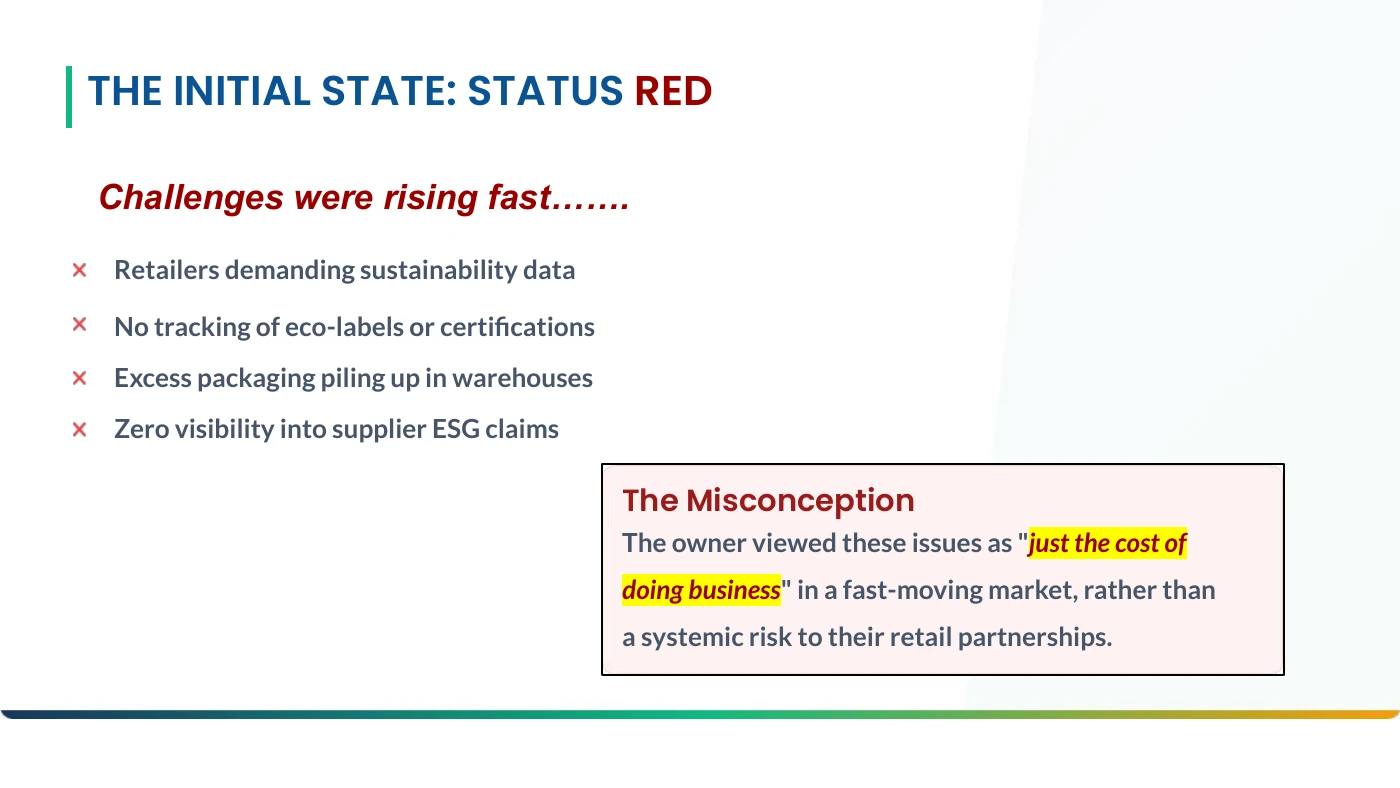
The Misconception The owner viewed these issues as "just the cost of doing business" in a fast-moving market, rather than a systemic risk to their retail partnerships. Retailers demanding sustainability data No tracking of eco-labels or certifications Excess packaging piling up in warehouses Zero visibility into supplier ESG claims THE INITIAL STATE: STATUS RED Challenges were rising fast…….

Page 4

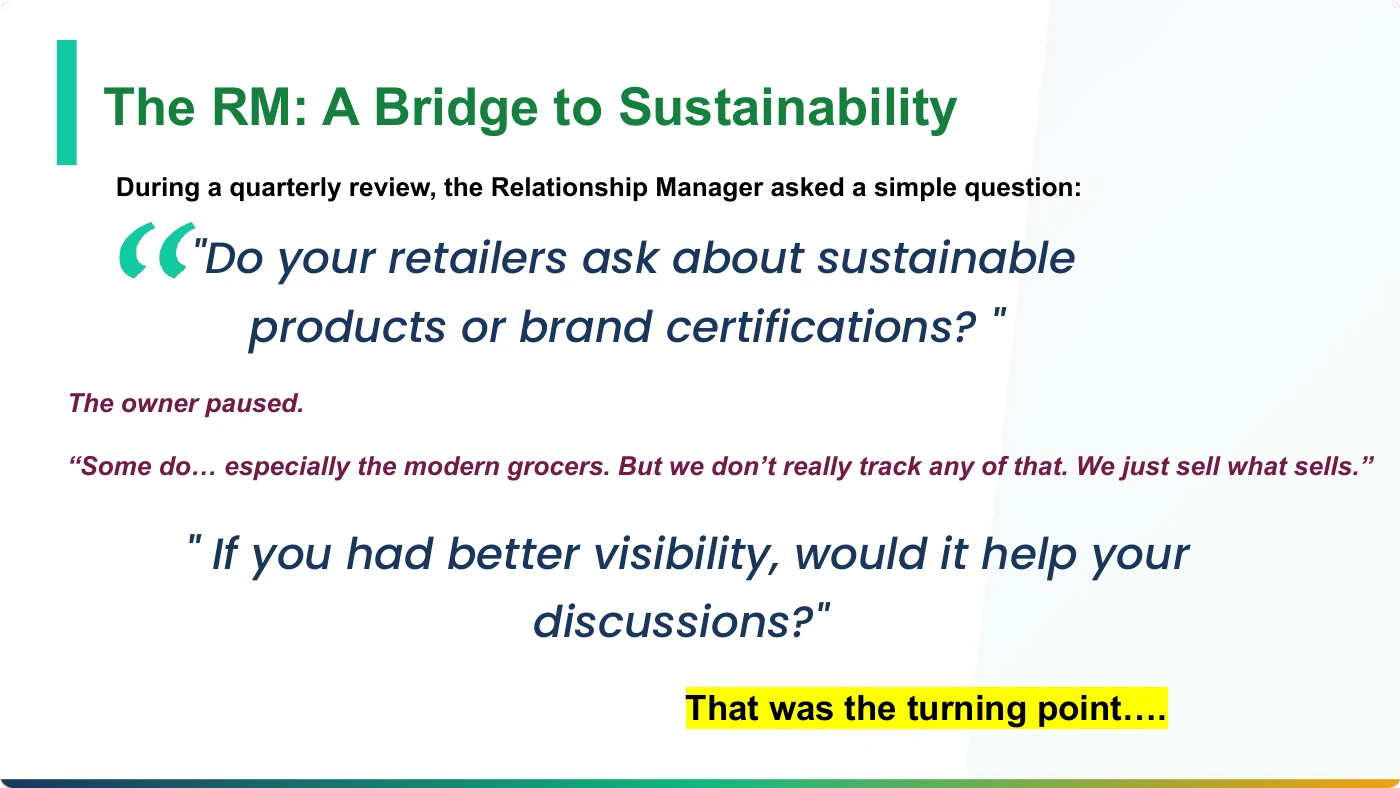
"Do your retailers ask about sustainable products or brand certifications? " The RM: A Bridge to Sustainability During a quarterly review, the Relationship Manager asked a simple question: " If you had better visibility, would it help your discussions?" The owner paused. “Some do… especially the modern grocers. But we don’t really track any of that. We just sell what sells.” That was the turning point….

Page 5

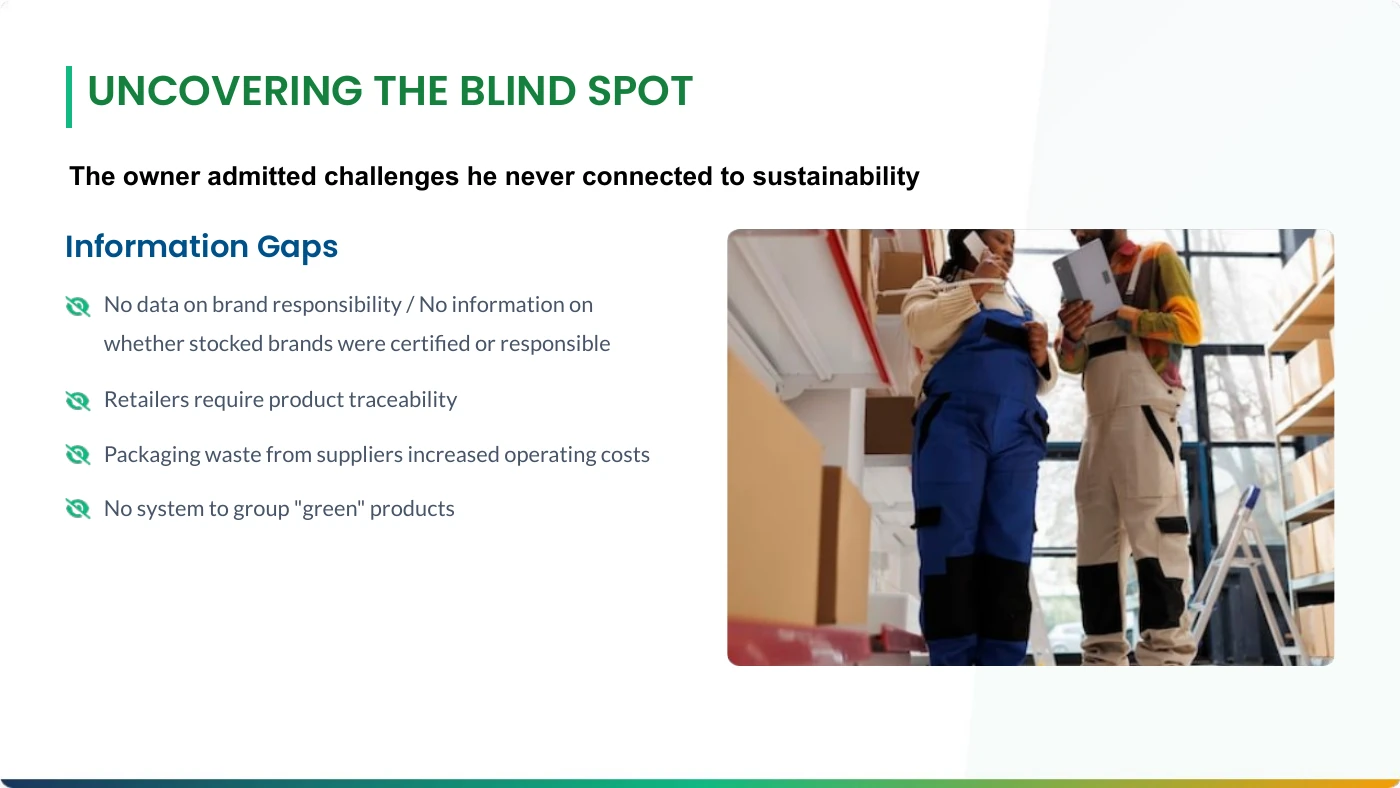
Information Gaps No data on brand responsibility / No information on whether stocked brands were certified or responsible Retailers require product traceability Packaging waste from suppliers increased operating costs No system to group "green" products UNCOVERING THE BLIND SPOT The owner admitted challenges he never connected to sustainability

Page 6

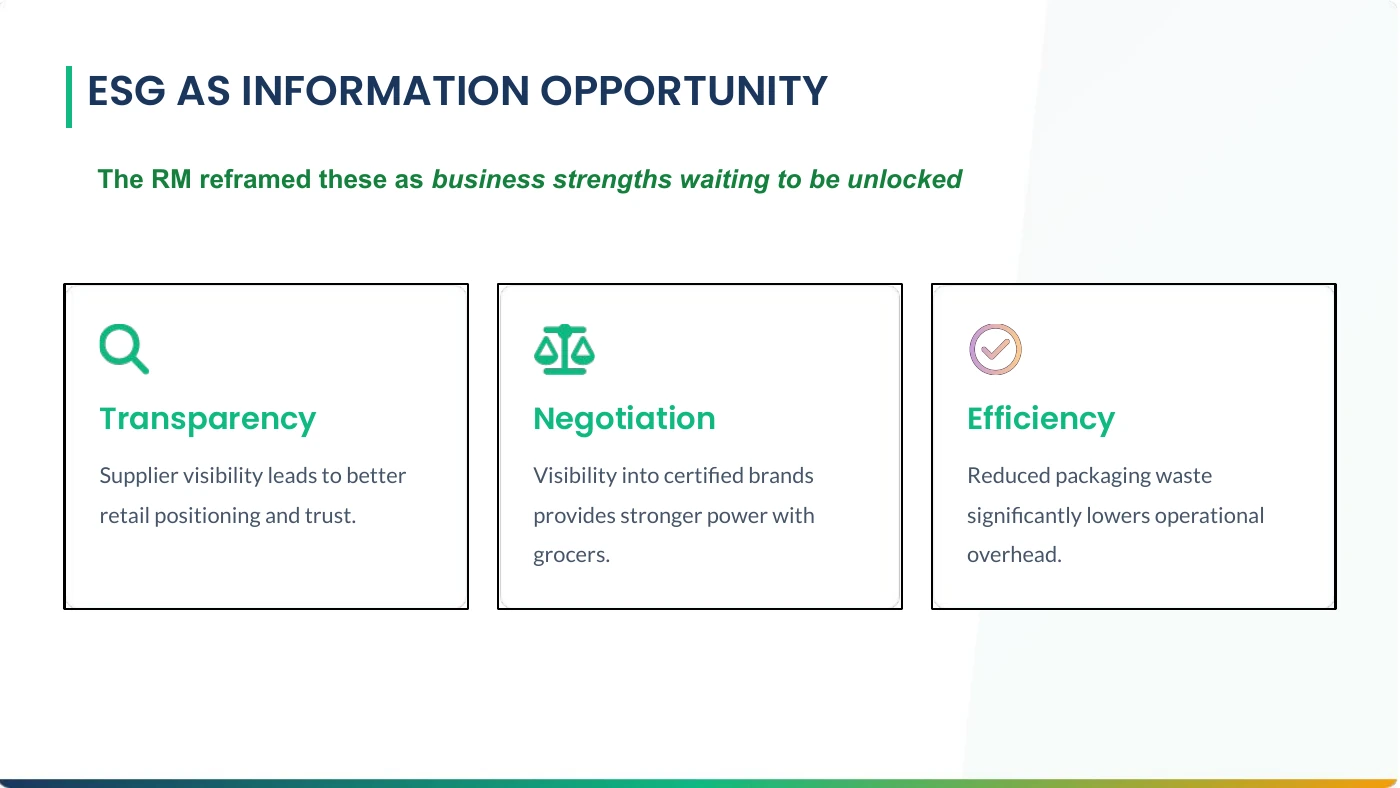
Transparency Supplier visibility leads to better retail positioning and trust. Negotiation Visibility into certified brands provides stronger power with grocers. Efficiency Reduced packaging waste significantly lowers operational overhead. ESG AS INFORMATION OPPORTUNITY The RM reframed these as business strengths waiting to be unlocked

Page 7

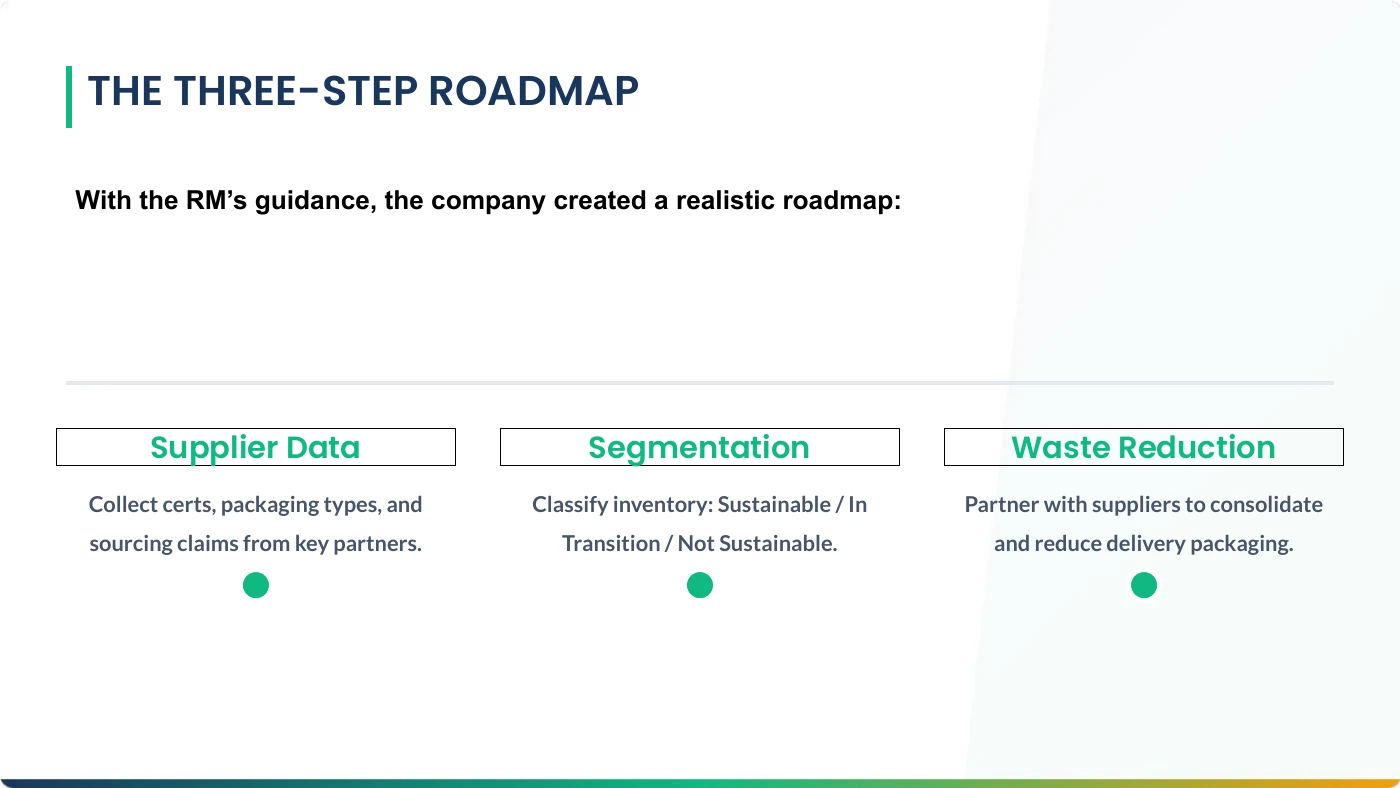
Supplier Data Collect certs, packaging types, and sourcing claims from key partners. Segmentation Classify inventory: Sustainable / In Transition / Not Sustainable. Waste Reduction Partner with suppliers to consolidate and reduce delivery packaging. THE THREE-STEP ROADMAP With the RM’s guidance, the company created a realistic roadmap:

Page 8

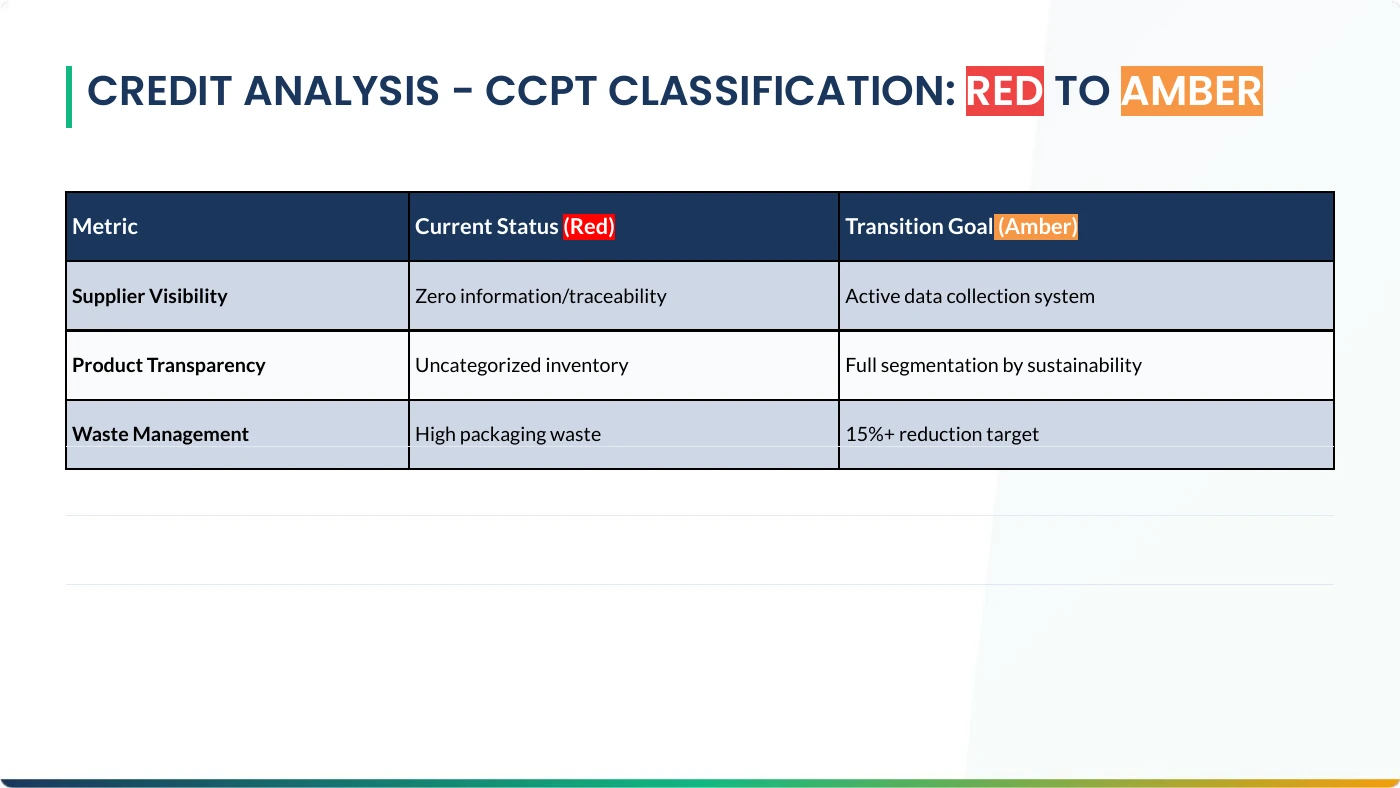
Metric Current Status (Red) Transition Goal (Amber) Supplier Visibility Zero information/traceability Active data collection system Product Transparency Uncategorized inventory Full segmentation by sustainability Waste Management High packaging waste 15%+ reduction target CREDIT ANALYSIS - CCPT CLASSIFICATION: RED TO AMBER

Page 9

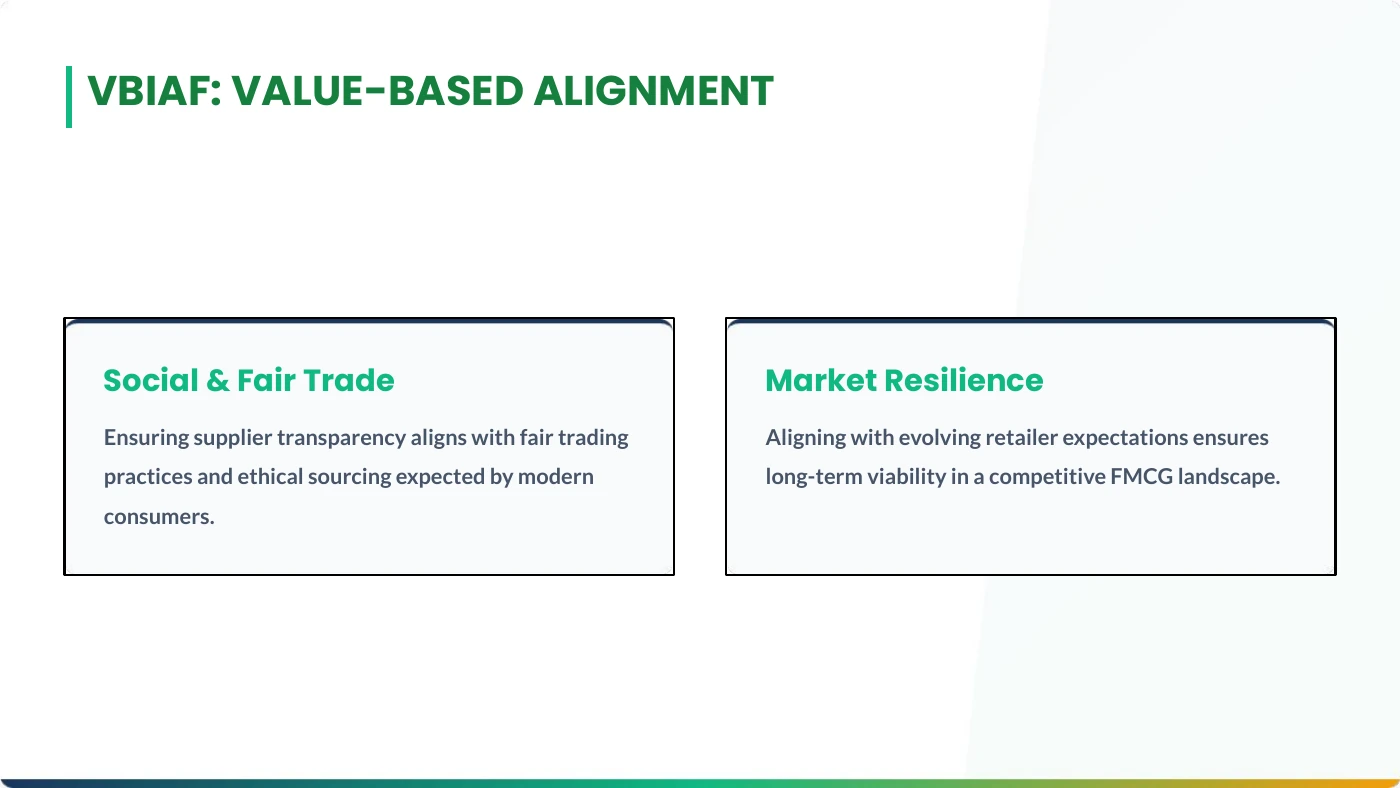
Social & Fair Trade Ensuring supplier transparency aligns with fair trading practices and ethical sourcing expected by modern consumers. Market Resilience Aligning with evolving retailer expectations ensures long-term viability in a competitive FMCG landscape. VBIAF: VALUE-BASED ALIGNMENT

Page 10

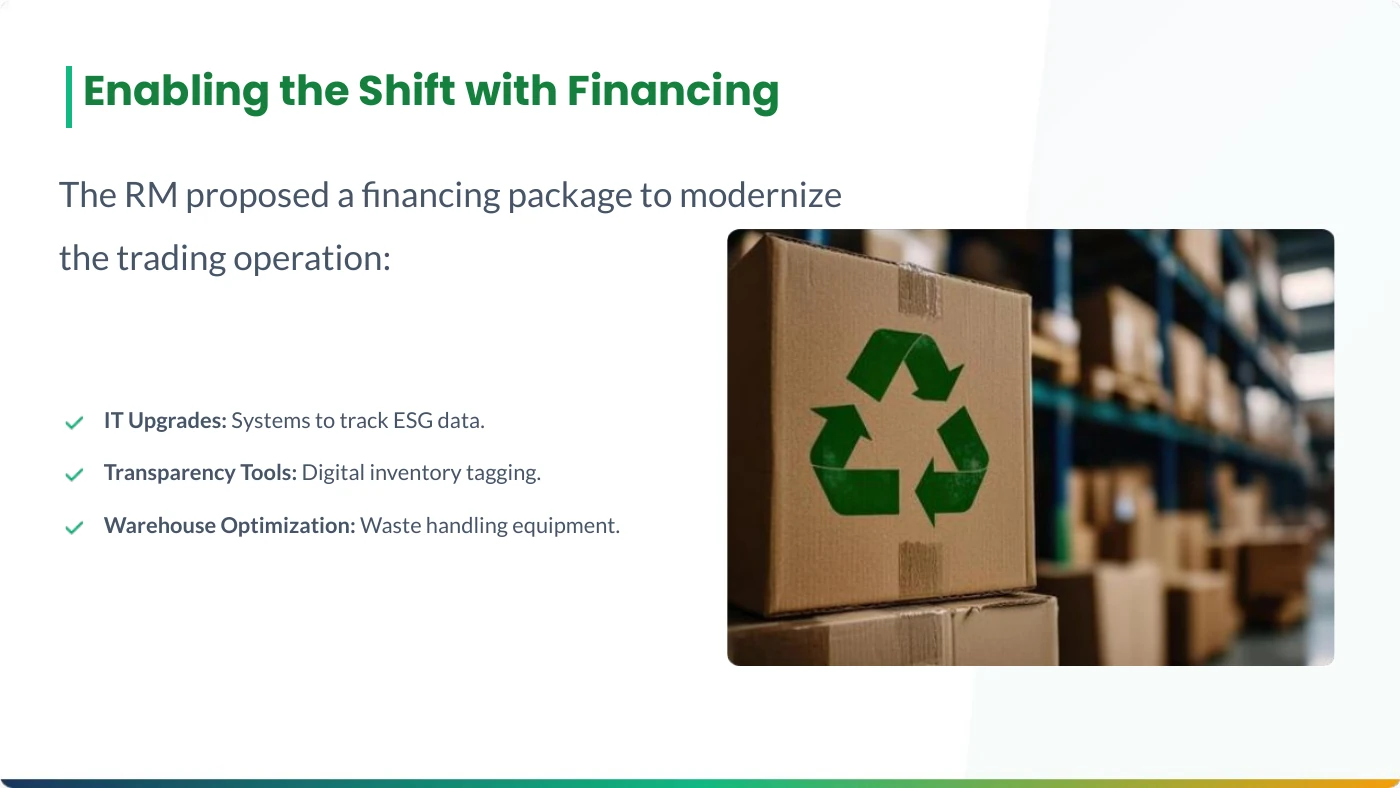
The RM proposed a financing package to modernize the trading operation: IT Upgrades: Systems to track ESG data. Transparency T ools: Digital inventory tagging. Warehouse Optimization: Waste handling equipment. Enabling the Shift with Financing

Page 11

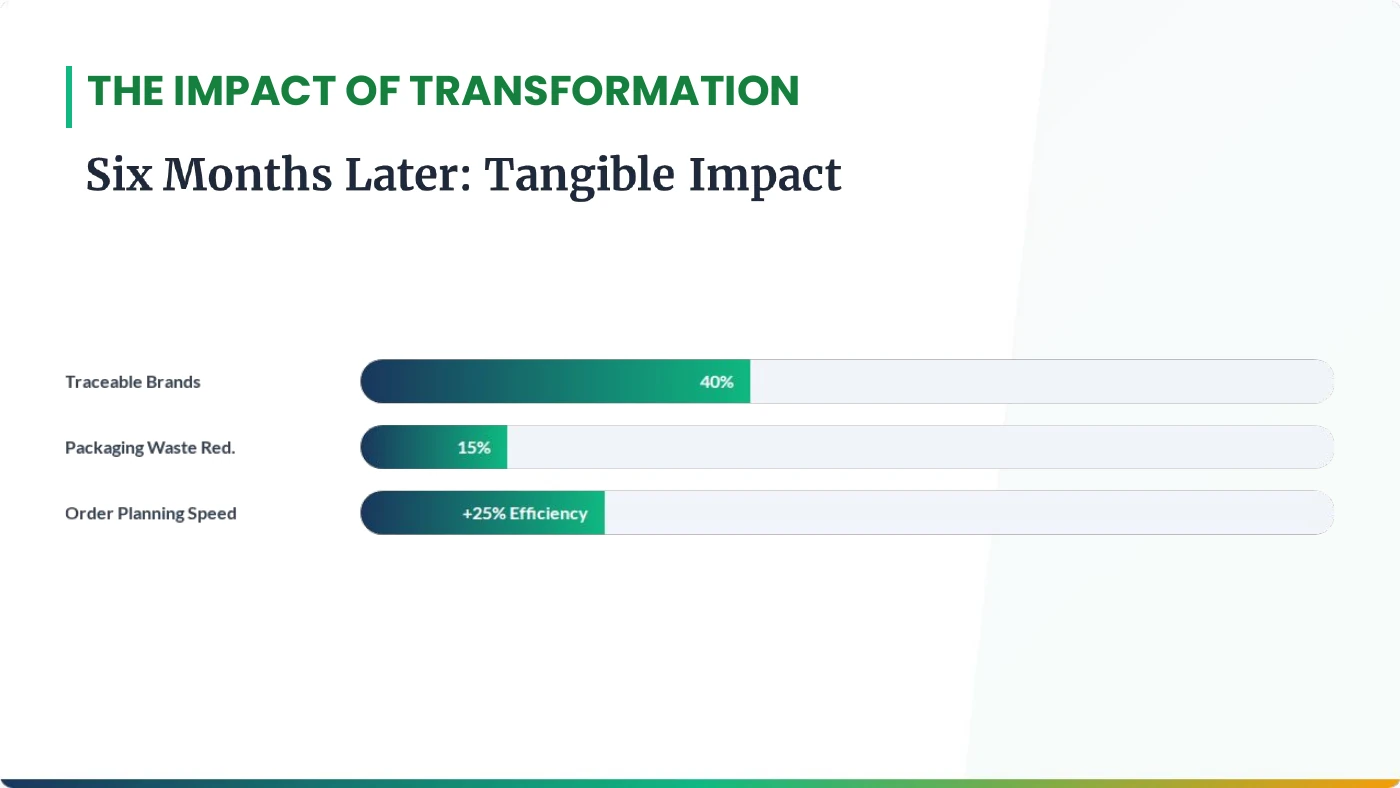
THE IMPACT OF TRANSFORMATION

Page 12

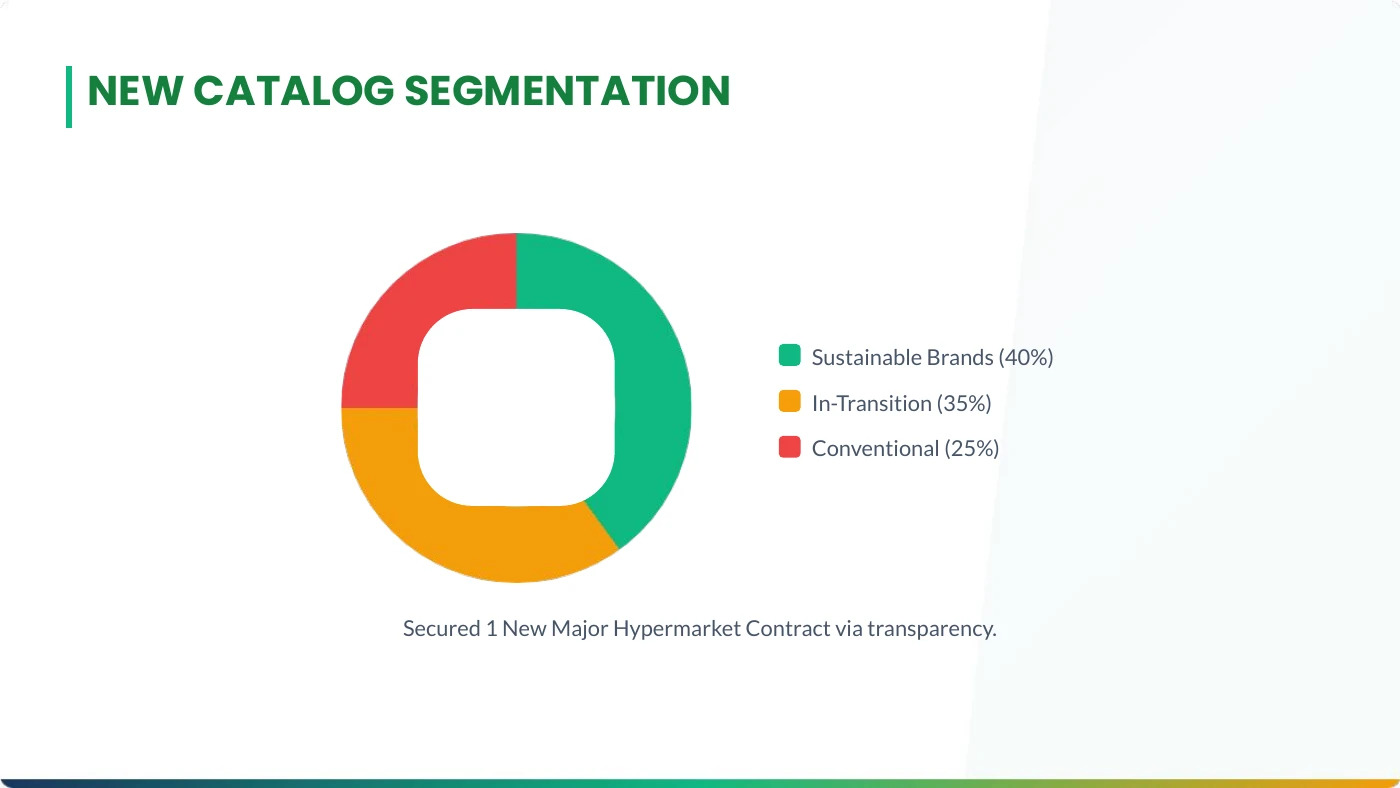
Secured 1 New Major Hypermarket Contract via transparency. Sustainable Brands (40%) In-Transition (35%) Conventional (25%) NEW CATALOG SEGMENTATION

Page 13

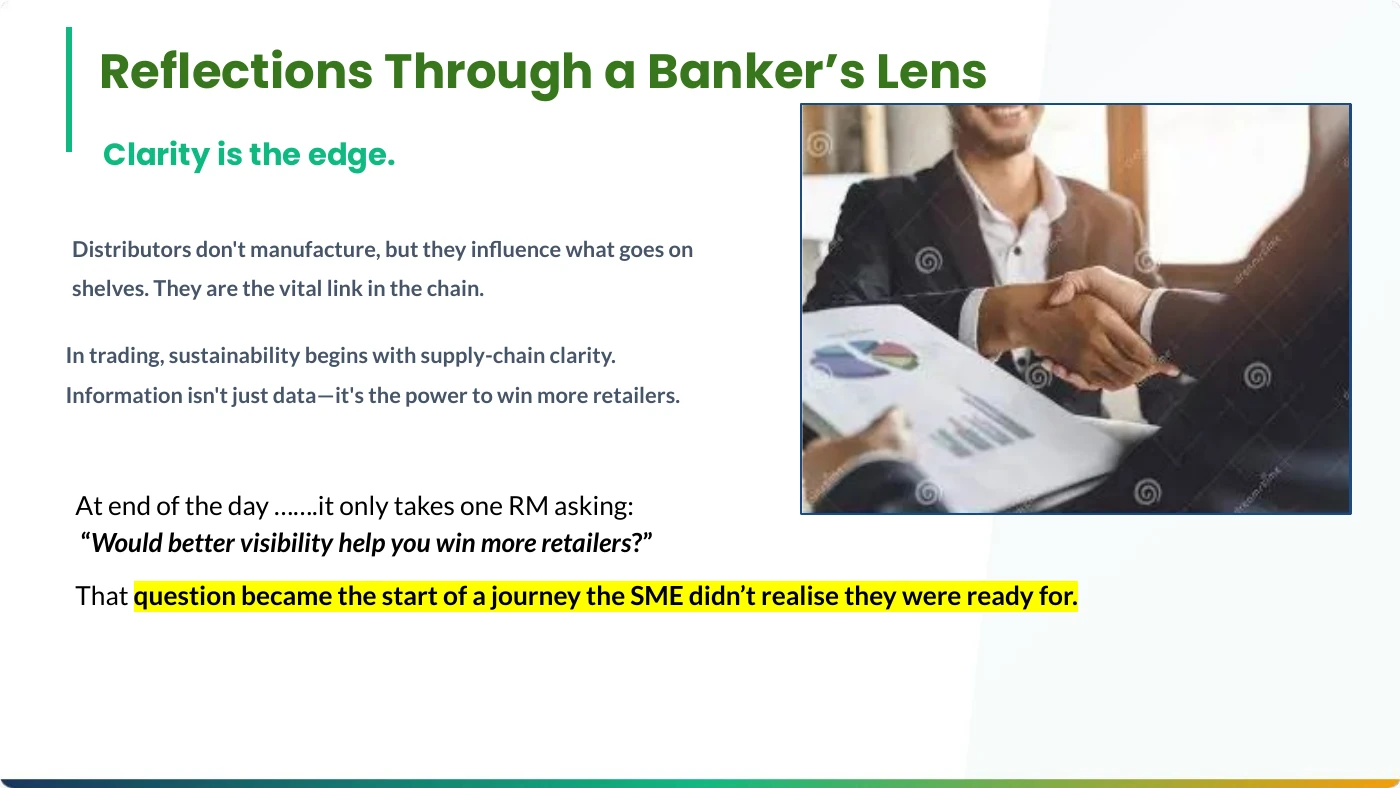
Reflections Through a Banker’s Lens Clarity is the edge. Distributors don't manufacture, but they influence what goes on shelves. They are the vital link in the chain. In trading, sustainability begins with supply-chain clarity. Information isn't just data—it's the power to win more retailers. At end of the day …….it only takes one RM asking: “Would better visibility help you win more retailers?” That question became the start of a journey the SME didn’t realise they were ready for.

Page 14

Questions?

Open the complete original PDF

In Yasotha’s words

Original post

Storytelling Series — Transition in Action Through a Banker’s Lens (Part 4)

"How an FMCG Trading SME Began Its Sustainability Journey from Red → Amber"

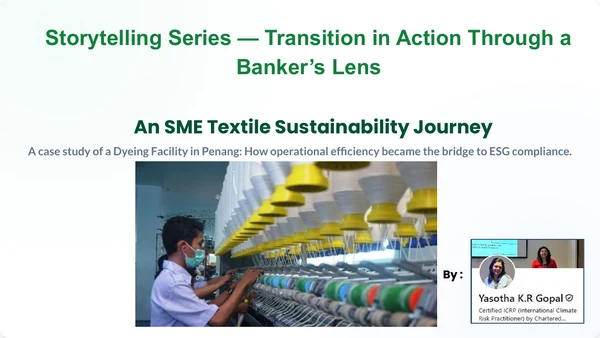
After sharing the story of a textile SME’s water and dye efficiency improvements, several readers asked for examples from more “service-oriented” industries, especially trading, where the connection to sustainability can feel vague, distant, or even irrelevant.

And it’s true: unlike manufacturing, trading companies don’t operate heavy machinery, manage boilers, or run production lines. Their operations are quieter, more administrative, and more logistics-driven.

Because of that, many SMEs in this space assume:

“Sustainability doesn’t apply to us… we don’t produce anything.”

But the reality is very different.

In today’s market, information, transparency, and responsible sourcing have become powerful differentiators for trading businesses, especially in FMCG, where retailers and consumers increasingly ask:

“What’s inside this product?” “Is it responsibly sourced?” “Does the brand have any sustainability certifications?” “Is the packaging recyclable or excessive?”

So, for this next story, we move from factory floors to warehouse aisles - to see how an FMCG trading SME discovered that transparency, not machinery, was the first step in its sustainability journey.
Yasotha K.R Gopal

Banking insight. Practical learning. Thoughtful transition.

LinkedIn

Briefing enquiry

Shape a useful first conversation.

Choose a few starting points, then copy the summary into the channel you prefer. This website prepares a summary; it does not send a message.

Continue on LinkedIn