Document & post

VBIAF vs CCPT - A Quick Cheat Sheet

Captured 13 August 2026 · LinkedIn displayed “10mo •” at capture. Original publication date unverified.

Read the original LinkedIn post Jump to original text ↓
CCPT & sustainable finance

Original illustrated document

10 pages to explore

Download PDF (2.1 MB)
Page 1 of VBIAF vs CCPT - A Quick Cheat Sheet. Read the extracted page text below or open the original PDF.

Page 1 of 10

Read the document text, page by page

Automatically extracted from the original PDF. Reading order and symbols may differ from the designed pages; the PDF remains the authoritative visual version.

Page 1

VBIAF vs CCPT: A Quick Cheat Sheet Bankers often ask: "What's the difference between VBIAF and CCPT?" Here's a comprehensive side-by-side reference guide that clarifies these two crucial sustainability frameworks and how they work together in Malaysian banking.

Page 2

The Essential Question Understanding these frameworks is crucial for effective sustainable finance implementation. They serve different but complementary purposes in guiding financial institutions towards environmental responsibility. What's the difference between VBIAF and CCPT? This is the most common question sustainability officers and SME finance professionals ask when navigating Malaysia's green finance landscape.

Page 3

VBIAF: The Spark /g90 Full Name Value-Based Intermediation Financing and Investment Impact Assessment Framework Primary Objective Guide banks to align financing decisions with values and long- term sustainable impact across society, environment, and economy Approach Principle-based guidance encouraging broad sustainable practices through the triple bottom line methodology

Page 4

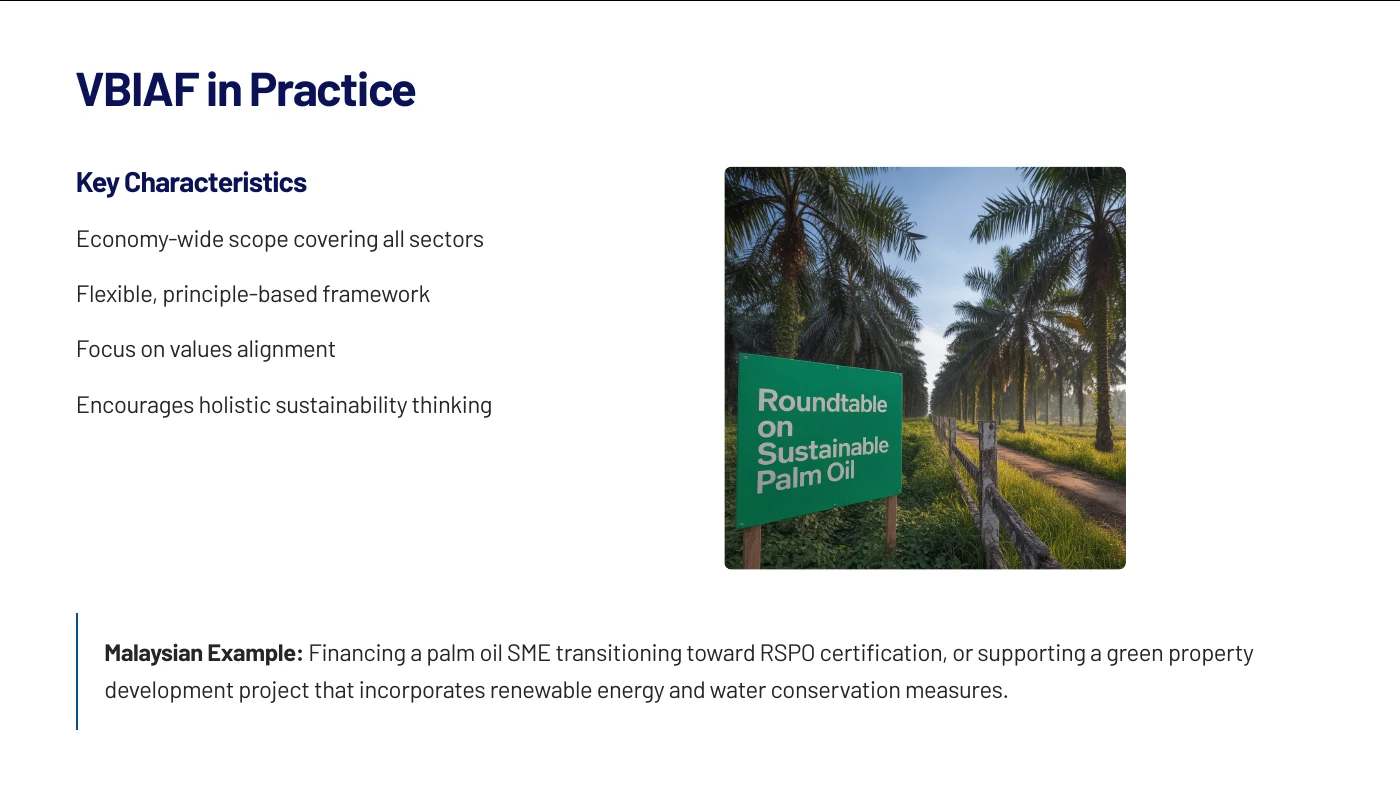
VBIAF in Practice Key Characteristics Economy-wide scope covering all sectors Flexible, principle-based framework Focus on values alignment Encourages holistic sustainability thinking Malaysian Example: Financing a palm oil SME transitioning toward RSPO certification, or supporting a green property development project that incorporates renewable energy and water conservation measures.

Page 5

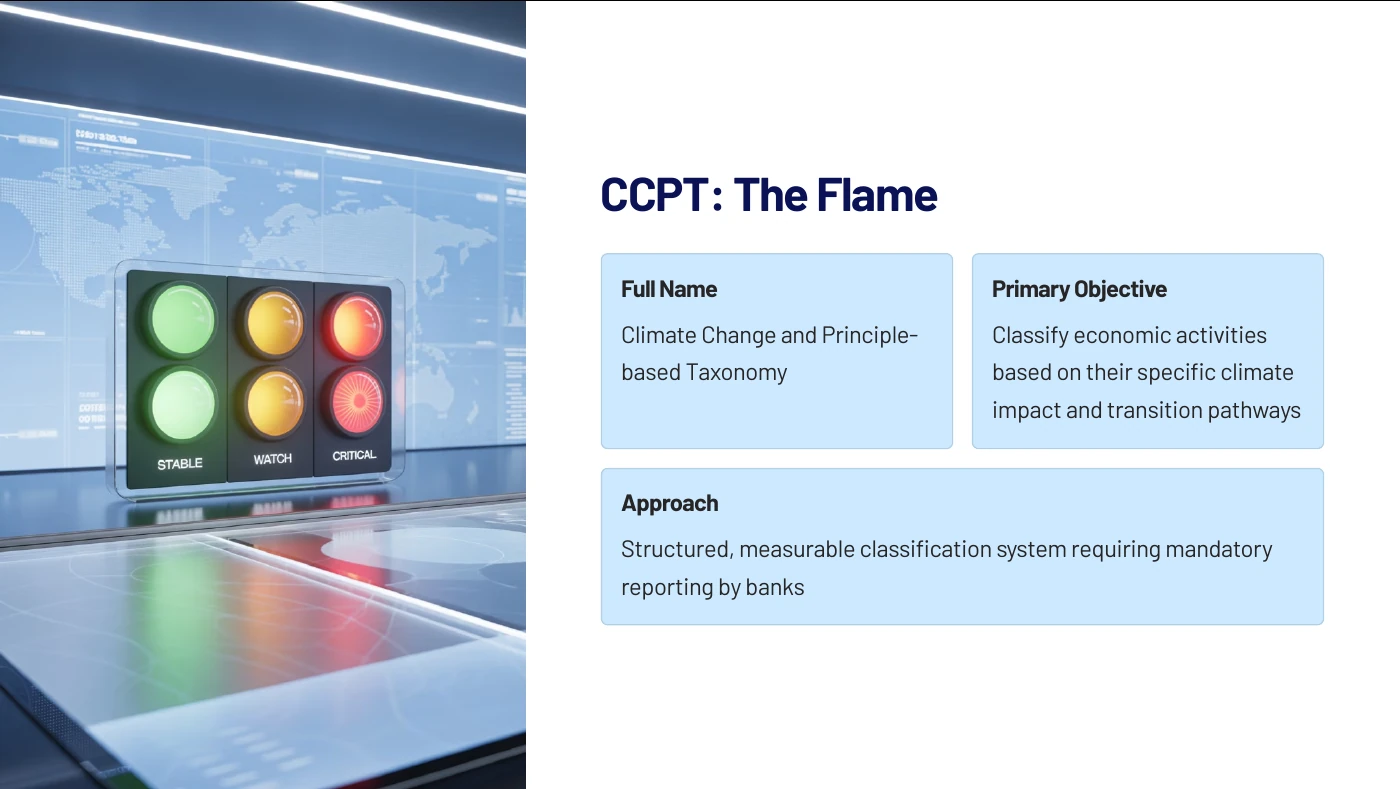
CCPT: The Flame /g6C6 Full Name Climate Change and Principle- based Taxonomy Primary Objective Classify economic activities based on their specific climate impact and transition pathways Approach Structured, measurable classification system requiring mandatory reporting by banks

Page 6

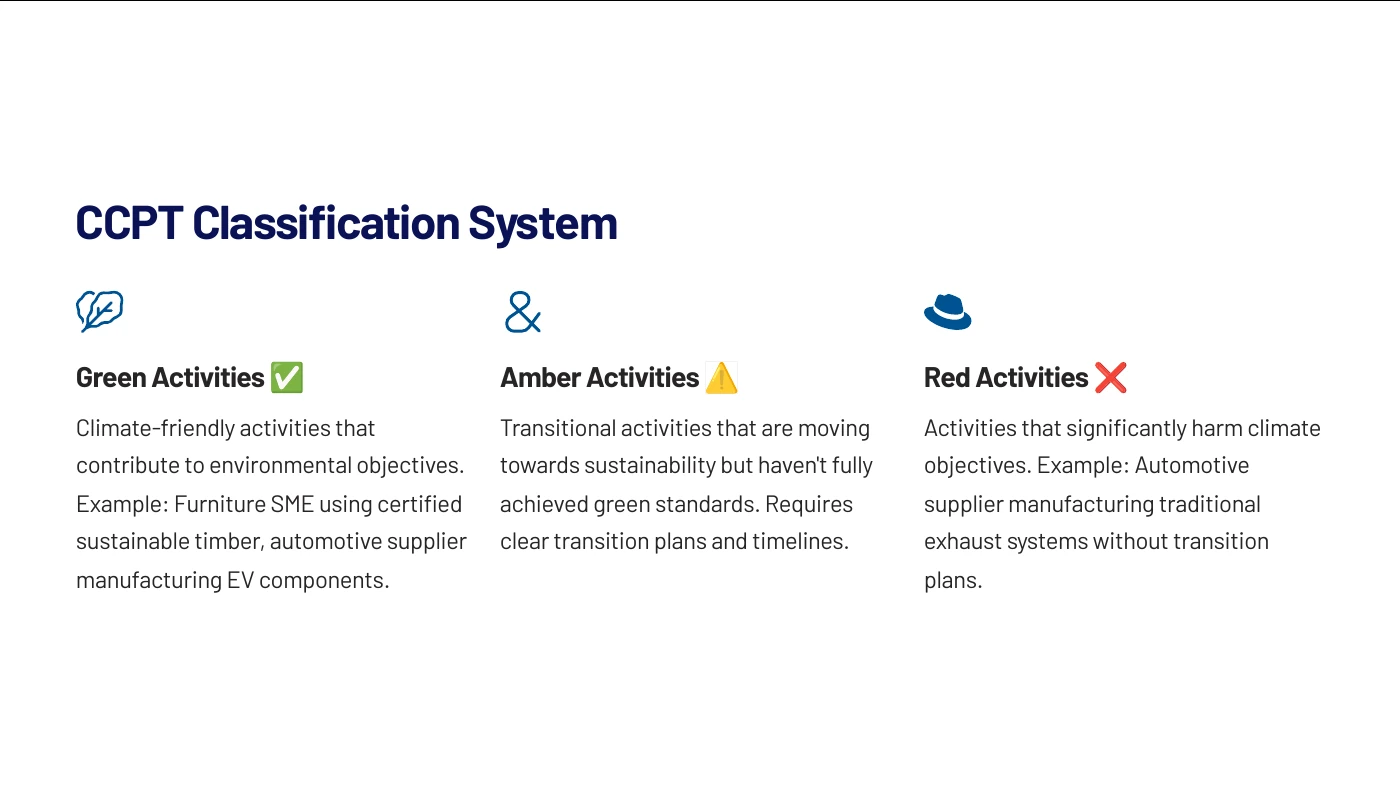
CCPT Classification System Green Activities ' Climate-friendly activities that contribute to environmental objectives. Example: Furniture SME using certified sustainable timber, automotive supplier manufacturing EV components. Amber Activities ¦ Transitional activities that are moving towards sustainability but haven't fully achieved green standards. Requires clear transition plans and timelines. Red Activities o Activities that significantly harm climate objectives. Example: Automotive supplier manufacturing traditional exhaust systems without transition plans.

Page 7

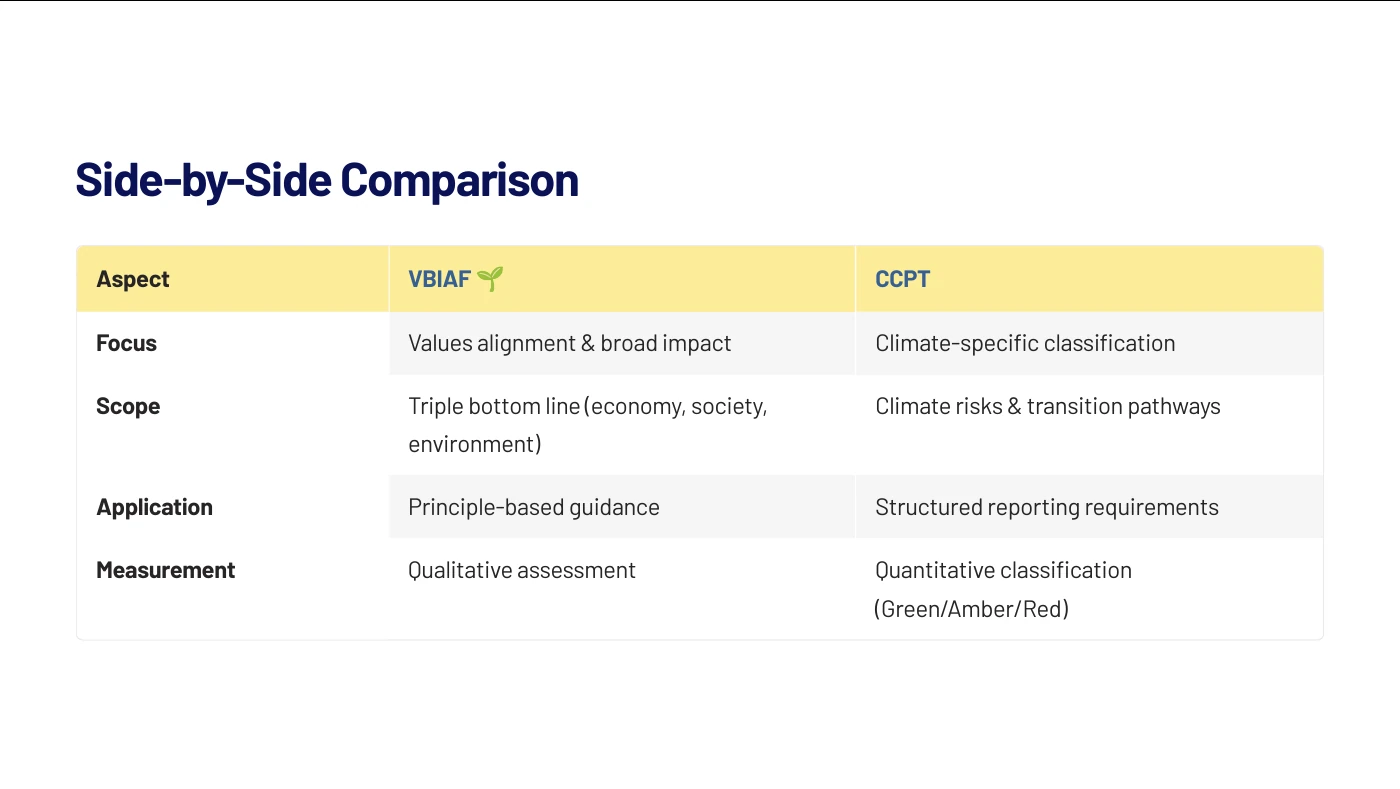
Side-by-Side Comparison Aspect VBIAF /g90 CCPT /g6C6 Focus Values alignment & broad impact Climate-specific cla ssification Scope Triple bottom line (economy, society, environment) Climate risks & transition pathways Application Principle-based guidance Structured reporting requir ements Measurement Qualitative assessment Quantitative classification (Green/ Amber/Red)

Page 8

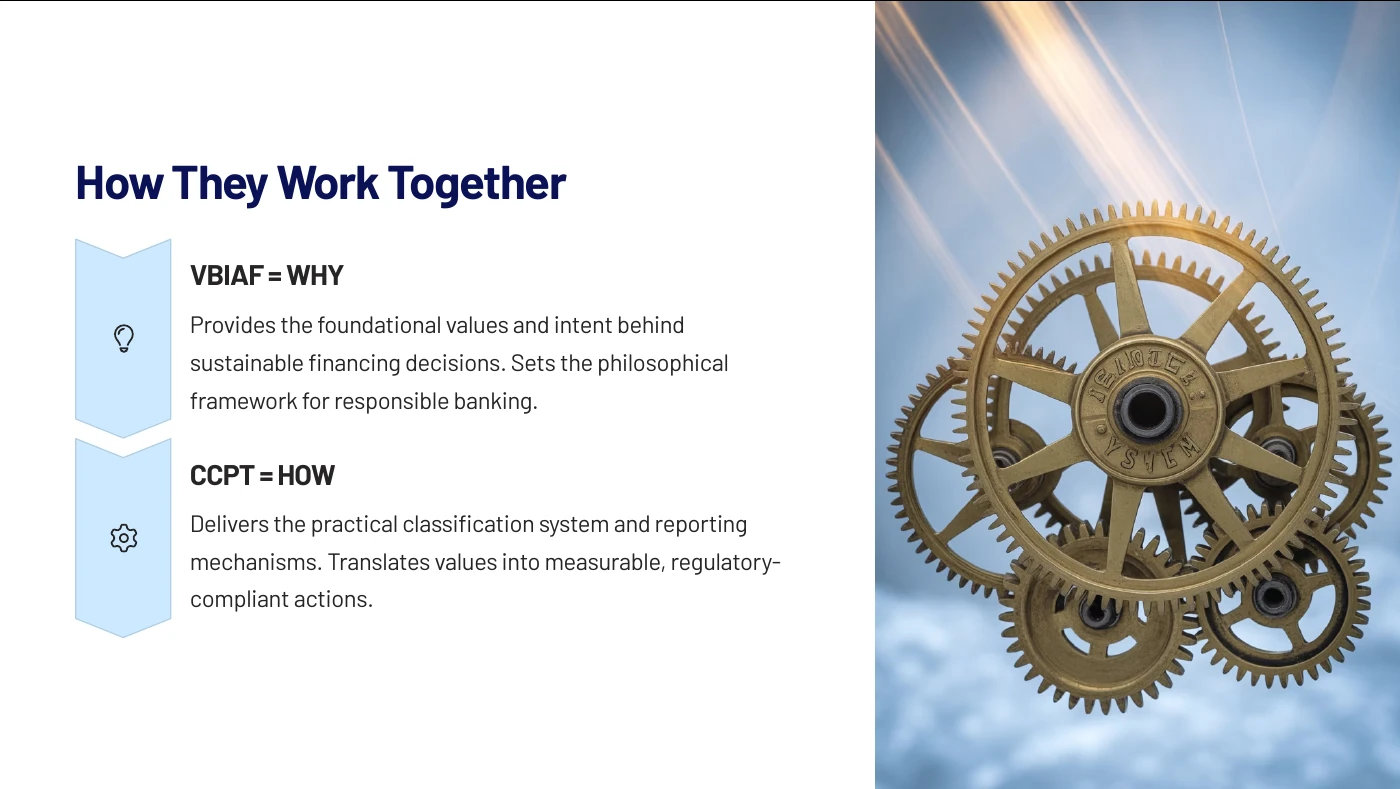
How They Work T ogether VBIAF = WHY Provides the foundational values and intent behind sustainable financing decisions. Sets the philosophical framework for responsible banking. CCPT = HOW Delivers the practical classification system and reporting mechanisms. Translates values into measurable, regulatory- compliant actions.

Page 9

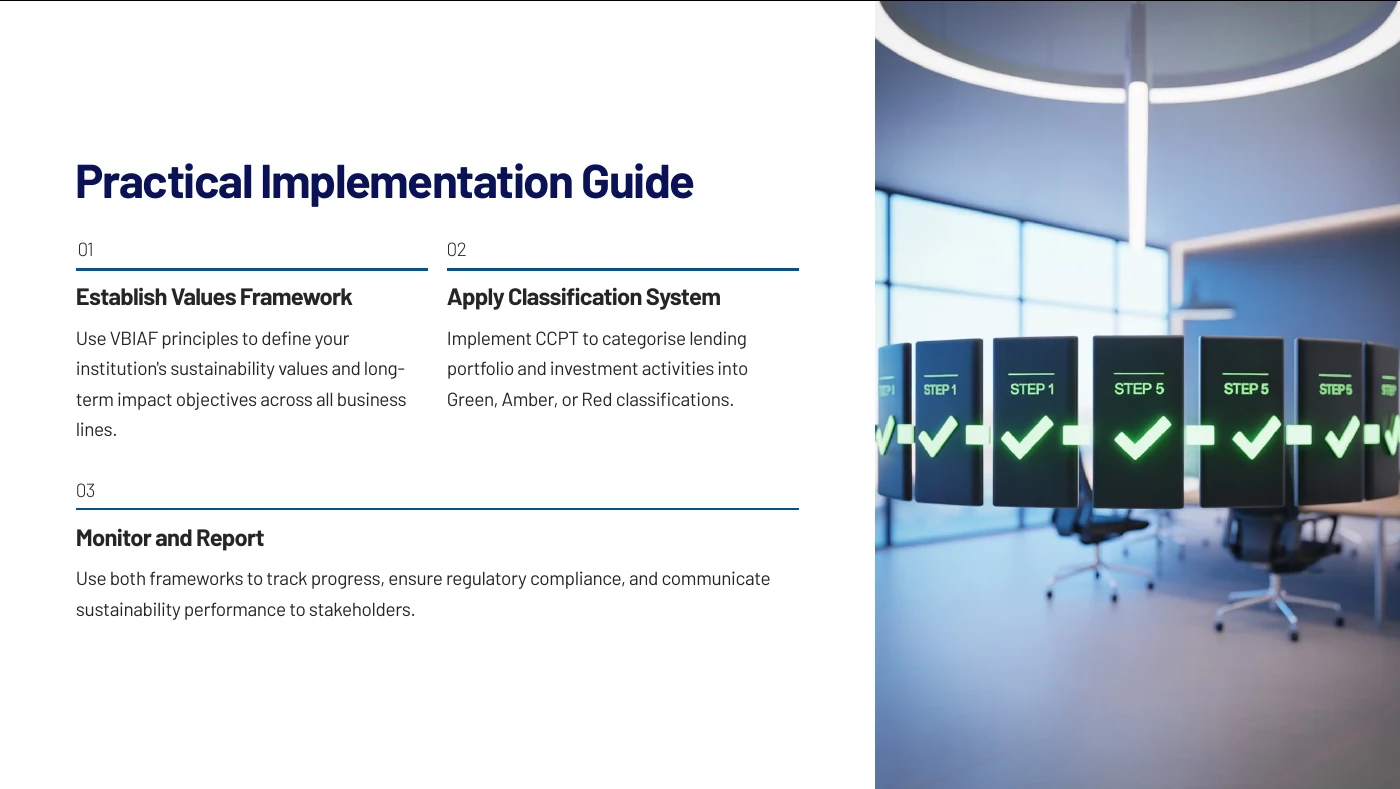
Practical Implementation Guide 01 Establish Values Framework Use VBIAF principles to define your institution's sustainability values and long- term impact objectives across all business lines. 02 Apply Classification System Implement CCPT to categorise lending portfolio and investment activities into Green, Amber, or Red classifications. 03 Monitor and Report Use both frameworks to track progress, ensure regulatory compliance, and communicate sustainability performance to stakeholders.

Page 10

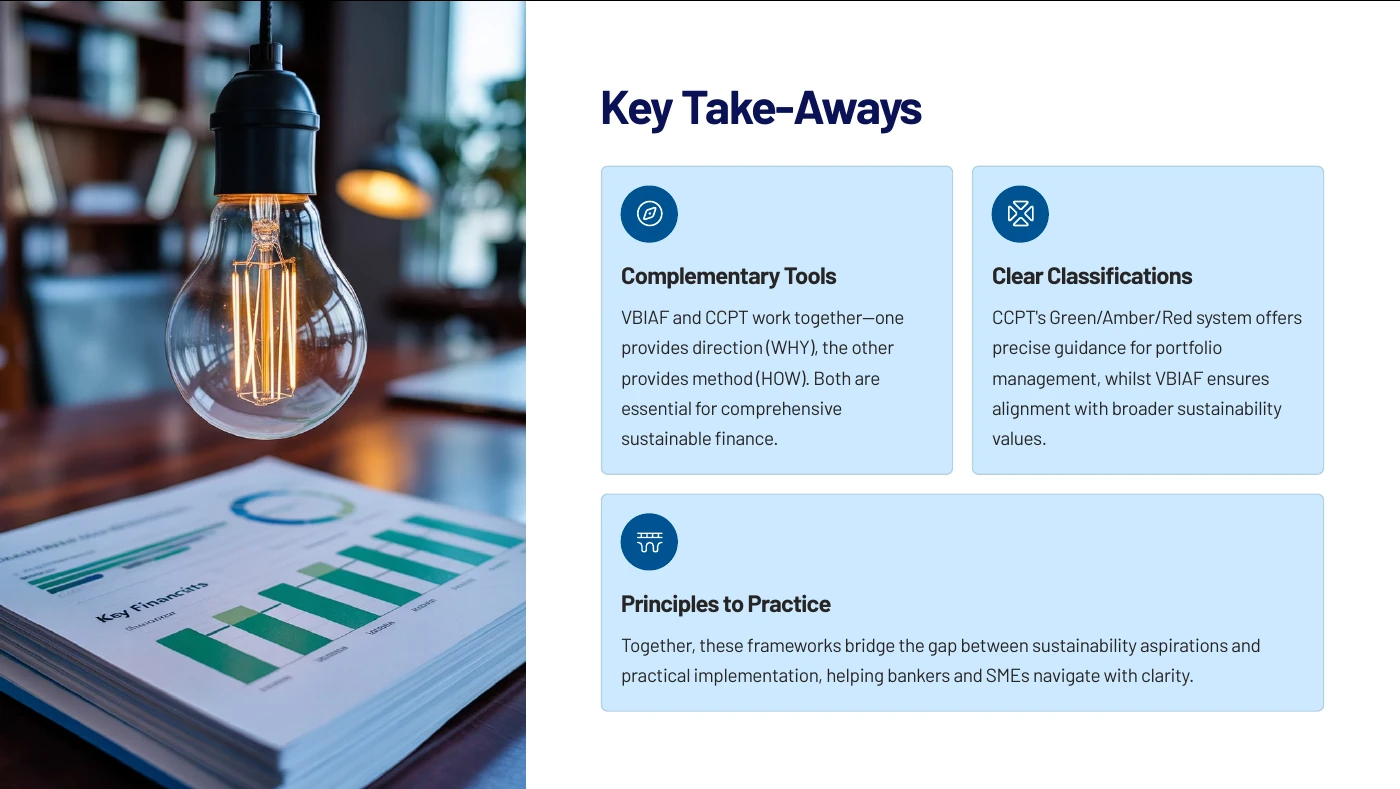
Key Take-Aways Complementary T ools VBIAF and CCPT work together4one provides direction (WHY), the other provides method (HOW). Both are essential for comprehensive sustainable finance. Clear Classifications CCPT's Green/ Amber/Red system offers precise guidance for portfolio management, whilst VBIAF ensures alignment with broader sustainability values. Principles to Practice Together, these frameworks bridge the gap between sustainability aspirations and practical implementation, helping bankers and SMEs navigate with clarity.

Open the complete original PDF

In Yasotha’s words

Original post

After completing my 3-part series on VBIAF and CCPT — from spark to flame — many have asked me a straightforward question:

👉 “Okay, but what’s the actual difference between VBIAF and CCPT?”

Fair point. Bankers and SMEs don’t always have the time to read long explanations — they need something simple, practical, and easy to share with colleagues or clients.

So, I’ve put together a quick VBIAF vs CCPT Cheat Sheet.

It’s not another theory piece — just a clear, side-by-side view of: - What each framework is for - How they differ in scope and application - Real Malaysian industry examples you can relate to

💡 Think of it as your “coffee-break guide” to explain VBIAF and CCPT without the jargon. 👉 Here’s the post: VBIAF vs CCPT: A Quick Cheat Sheet - refer to slides

Next up, I’ll share industry case studies — showing how VBIAF and CCPT apply differently across plantations, automotive, property, and food manufacturing in Malaysia.

“VBIAF to CCPT: Connecting Principles to Practice.”

Yasotha K.R Gopal

Banking insight. Practical learning. Thoughtful transition.

LinkedIn

Briefing enquiry

Shape a useful first conversation.

Choose a few starting points, then copy the summary into the channel you prefer. This website prepares a summary; it does not send a message.

Continue on LinkedIn